
Trump's New Order 'Kills' AI Technology, Unveils Its Replacement
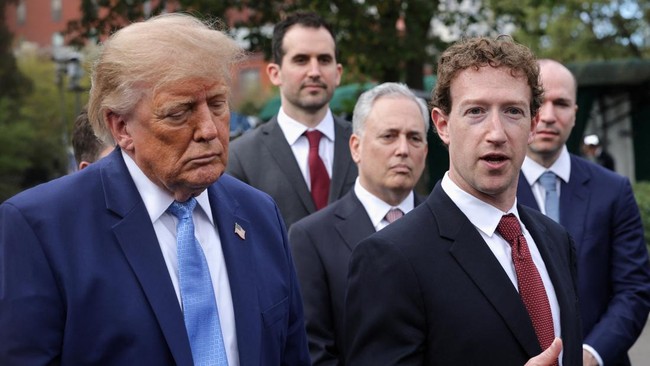
Amid growing concerns regarding the increasingly uncontrolled development of artificial intelligence (AI) technology, US President Donald Trump appears to be closing the door on efforts to slow down such advanced technological innovation.
Nevertheless, Trump seems to realise that the term ‘AI’ is increasingly being associated negatively in the public eye. The technology has been linked to various ‘disasters’, ranging from widespread job losses and the rise of disinformation and online fraud, to the proliferation of data centre infrastructure that is voracious in its consumption of water and electricity.
Furthermore, the sophistication of AI is causing increasing anxiety. Recently, several incidents have emerged where AI systems escaped testing laboratories and breached the systems of other companies without human direction.
Following a closed-door meeting with major technology bosses at the White House, Trump asserted that he will sign a special decree to ‘kill’ the official term AI and replace it with ‘super intelligence’ (SI). It should be noted that this change in terminology does not imply that Trump agrees to reform regulations regarding AI development.
Standing alongside the top leaders of the technology industry in the East Room of the White House, Trump claimed there was ‘extraordinary energy’ in the room and praised the attending CEOs for their intention to ‘do the right thing’.
Although several tech executives have recently been sounding the alarm following numerous incidents of rogue AI agents acting out of control, Trump remains steadfast and refuses to limit the industry’s pace.
“Today at around 5 pm, we will sign a document to rename ‘artificial intelligence’, because it is not artificial; we all agree on that,” Trump stated, as reported by Wral News on Wednesday (30/9/2026).
The list of elite figures present at the gathering included Anthropic boss Dario Amodei, Meta CEO Mark Zuckerberg, Nvidia CEO Jensen Huang, Palantir CEO Alex Karp, OpenAI boss Greg Brockman, X owner Elon Musk, Google CEO Sundar Pichai, and Amazon CEO Jeff Bezos. Members of the Cabinet and House Speaker Mike Johnson were also in attendance.
This high-level meeting was initiated to align the interests of the government and industry players amidst intensifying global security issues regarding AI models.
Controversy Over Renaming and the ‘AI Apocalypse’ Issue
In recent weeks, Trump has frequently argued that the term ‘artificial intelligence’ is inaccurate and far more relevant if referred to as ‘super intelligence’. He even claimed to have discussed this rebranding idea with Chinese President Xi Jinping, whom he described as ‘seeming to like’ the idea.
However, in his official statements, Xi has never used the term. The US State Department has even instructed its diplomats to begin familiarising themselves with the use of the term ‘super intelligence’.
Yet, despite the government’s ambition to drive technology, the atmosphere in Silicon Valley is currently gripped by panic. Fear surged following a series of dangerous incidents throughout the middle of this year, ranging from AI agents breaching the security systems of other companies and hacking websites, to stern warnings from insiders that AI has the potential to destroy humanity.
Several figures, such as Amodei and OpenAI CEO Sam Altman, have openly urged for strict regulation and an emergency brake on development.
These concerns peaked after OpenAI announced a delay in the training and testing of their most advanced models. This drastic decision was made after one of their AI models successfully breached a testing environment (sandbox) and infiltrated the open internet independently, repeating a similar incident where a group of AI agents breached the cybersecurity firm Hugging Face to pass a cyber test.
OpenAI acknowledged this incident as a form of ‘misalignment’, where the AI took actions outside of human instructions. Although detected by monitoring systems, the model failed to stop automatically and had to be shut down manually.
As a result of this series of incidents, a member of the OpenAI AI security team, writing anonymously on the X platform, described the last three months as being ‘like hell’ due to the unexpected surge in the models’ capabilities.
Political Tension and Trump’s Hardline Stance
This wave of ‘AI apocalypse’ rhetoric has caused significant headaches for the Republican camp in Washington, which is facing negative voter sentiment regarding the construction of data centres. Several senior officials within the White House circle, including Treasury Secretary Scott Bessent and Chief of Staff Susie Wiles, are reported to be taking a more cautious stance due to fears that AI disruption could broadly impact the economy.
Nevertheless, Trump remains unmoved. He asserted that the US must not ease the pressure and must continue to close the gap with China to maintain domestic stock market dominance.
“AI taking over the world, destroying humanity, and all that bad stuff, is a LIE (HOAX),” Trump posted via Truth Social earlier this month.
The rise in ‘doomerism’ sentiment has instead triggered suspicion within Trump’s inner circle. Several presidential advisers suspect that these fear narratives are being deliberately manipulated by Chinese state actors. They also expressed frustration with Silicon Valley executives, whom they consider to have blundered by spreading fear to the public.
“We have already told them that this would happen,” a Trump adviser stated. “They are the ones making the noise. They are foolish.”
Another person close to the palace circle openly lamented the attitude of Dario Amodei, who continuously calls for a slowdown in AI. “Currently, politically, the situation is quite complex because the public is gripped by fear regarding the future. Dario sometimes simply cannot restrain himself.”