
Trump's Iran War: Public Confidence Plummets Amid Chaotic U-Turns, Survey Shows
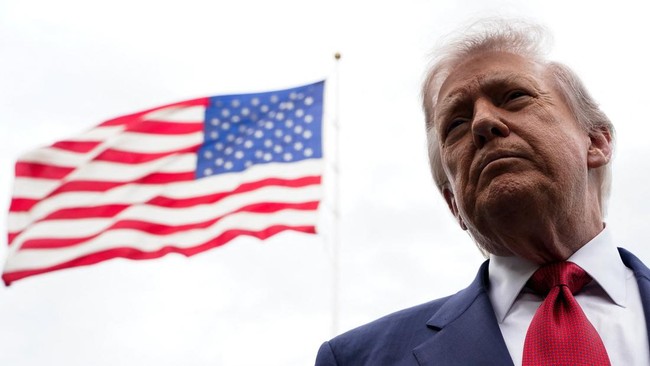
The war launched by US President Donald Trump against Iran is increasingly becoming a major domestic political burden. Amid unclear negotiations and shifting war objectives, most of the American public now wants the conflict ended swiftly. Citing CNN International on Wednesday, 27 May 2026, recent polls indicate Americans are losing confidence in Trump’s Iran strategy. Many believe the war lacked clear direction from the outset and is unlikely to deliver significant victories for Washington. Recent surveys reveal growing fatigue among Americans over the ongoing conflict. The public initially opposed the war, doubts it will yield positive outcomes, and does not believe Iran will make substantial concessions commensurate with the war’s cost. In short, public confidence in Trump’s ability to resolve the conflict effectively is extremely low. Last weekend’s Memorial Day highlighted the situation clearly. Initial signs of significant progress towards a US-Iran peace deal emerged, but when preliminary negotiation details leaked, hardline Republicans vehemently rejected them. Some Republican figures even warned that the deal could leave Iran stronger than before the war. On the other hand, should Iran maintain its hardline stance, it remains unclear what agreement would allow Trump to save face while ending the war without worsening the Republican Party’s electoral position. Multiple surveys indicate the American public wants the war halted as soon as possible. A Fox News poll last week showed only 39% of registered voters wanted US military operations to continue ‘as long as necessary to achieve US objectives’. Conversely, 61% preferred operations be limited to a ‘specific timeframe’. Similar results emerged from the New York Times-Siena College survey. 52% of registered voters said the US should end military operations even if no nuclear deal with Iran is reached. Only 37% wanted military operations to resume if the two sides failed to agree on Iran’s nuclear programme. The data also shows Americans are not optimistic about achieving a satisfactory agreement. Conversely, the public is sceptical of any negotiated outcome. The New York Times-Siena survey found only 22% believed the war would be ‘very successful’ in destroying Iran’s nuclear programme. This contrasts with Trump’s previous claim that Iran’s nuclear programme had been ‘eliminated’ last summer. Another 18% thought it would be ‘moderately successful’, while 50% were convinced it would fail entirely. Meanwhile, a Washington Post-ABC News survey revealed 65% of Americans were ‘not very confident’ or ‘not confident at all’ that a peace deal would stop Iran from developing nuclear weapons — Trump’s key red line. Nearly two-thirds of respondents also expressed only ‘fairly confident’ or less confidence in Trump’s ability to achieve his goals in Iran, according to a recent Pew Research Center survey. Even if a relatively favourable deal is reached, the public may not view the war as worthwhile. In the New York Times-Siena survey, registered voters stated by a 55% to 21% margin that the war against Iran was not worth the cost and consequences. Multiple surveys also show most Americans believe the war will worsen various issues. The Washington Post-ABC survey found majorities believed the war would increase terrorism risks for Americans (61% to 11%), damage US relations with other countries (56% to 12%), and worsen Middle East stability (49% to 21%). Trump’s biggest issue is not just the war’s unclear outcomes, but the erosion of public trust in his handling of Iran. A recent CNN survey showed only 20% of Americans have ‘very high confidence’ in Trump’s ability to make sound decisions on Iran. Conversely, nearly three times as many respondents — 59% — said they have little or no confidence in Trump’s handling of the conflict. Over recent months, Trump has also retreated from his previously hardline demands. He once claimed he would only accept ‘unconditional surrender’ from Iran. On other occasions, he stated his main goal was to eliminate Iran’s nuclear programme and stop Tehran from funding proxies like Hamas and Hezbollah. However, according to emerging negotiation terms, these demands now appear to be significantly softened. Analysts argue Trump made two major mistakes at the war’s outset: first, lacking a clear and realistic plan to end it; second, failing to convince Americans why the war was justified. Instead, Trump set unrealistically high victory standards, making success difficult unless the US escalates to a large-scale war that could prolong the conflict. Trump repeatedly told the public the war would be ‘worth the pain’ it caused. However, it is increasingly clear that the majority of Americans do