
Trump's Gaza Peace Plan Scaled Back to Tent Camp Pilot Scheme
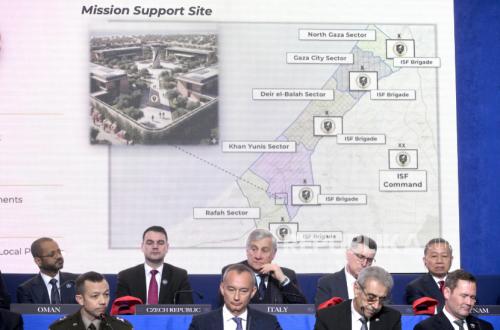
WASHINGTON – The Board of Peace (BoP), established by US President Donald Trump, has changed the scope of the Gaza recovery plan—which originally aimed to rebuild the territory. The plan now amounts to little more than a temporary camp containing “portable cabins” under Palestinian administration and policing, supported by a small-scale international security force.
According to a Guardian investigation published last week, this pilot scheme will be located in a buffer zone along the ceasefire line near Rafah. The design is far removed from the idea presented by Trump’s son-in-law, Jared Kushner, in a “free-market Gaza” briefing in January, which promised the provision of basic infrastructure within 100 days.
No construction work or preparations have yet begun for the scheme through the International Stabilisation Force (ISF)—a multinational peacekeeping force with a UN mandate established under the 2025 Gaza peace plan.
A logistics base for the ISF is nearing completion at the Kerem Shalom crossing between Israel and Gaza; the force is due to undergo training in Egypt alongside personnel from Morocco, Kosovo, and possibly Albania and Kazakhstan. The training process will take months, whilst the legal framework governing the force’s presence is still being negotiated with the Israeli government.
The pilot scheme was drawn up two weeks ago in Cyprus by members of the Board of Peace, representatives of the Trump administration, the Tony Blair Institute, and the National Committee for the Administration of Gaza.
Israeli forces will withdraw from the ceasefire line, and the camp will be monitored by the ISF as well as specially trained Palestinian police units.
Funding for the pilot programme is empty or of unknown status. Only a small fraction of the 17 billion US dollars pledged for Trump’s 20-point peace plan for Gaza has actually been made available.
The Board of Peace is attempting to access part of the 11 billion US dollars in Palestinian tax revenue and bank assets frozen, seized, and withheld by Israel—a move that has provoked outrage from the Palestinian Authority.
The Guardian reported that construction activity is likely to be minimal until the Israeli election on 27 October, which could bring down the right-wing coalition government of Israeli Prime Minister Benjamin Netanyahu.