
Trump's Fury Puts Iran Ceasefire in Limbo: "Neither Dead Nor Alive"
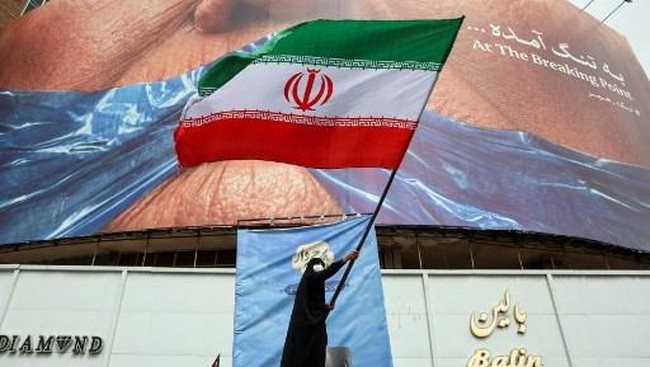
Jakarta, CNBC Indonesia - Efforts by the United States and Iran to maintain the ceasefire are once again on the brink after US President Donald Trump openly condemned Tehran’s counter-proposal for peace. The latest tensions highlight the vast divide between the two nations, even as the war that began at the end of February had temporarily subsided in recent weeks.
Trump’s statement comes as the Strait of Hormuz, a vital route typically handling about one-fifth of the world’s oil and gas supply, has yet to fully recover from Iran’s blockade. This situation continues to pressure global energy markets and raise fresh concerns about world economic stability.
Amid the diplomatic impasse, Iran insists its demands are legitimate, while Washington views Tehran’s response as threatening the ceasefire in place since 7 April. The situation is worsened by sporadic clashes around the Strait of Hormuz and southern Lebanon, indicating the conflict has not truly ended.
US President Donald Trump said on Monday (11 May 2026) local time that the ceasefire with Iran is now in a critical state—neither dead nor alive—after reading Iran’s response to the peace proposal submitted by Washington to end the war.
In its response, Iran demanded an end to the war across all fronts, including Lebanon, where the US ally Israel is still fighting the Tehran-backed Hezbollah group. Additionally, Iran seeks compensation for war damages, an end to the US naval blockade, guarantees of no further attacks, and the resumption of Iranian oil sales.
Tehran also reaffirmed its sovereignty over the Strait of Hormuz, a strategic route currently closed to most international shipping and previously serving as the passage for about one-fifth of the world’s oil and gas supply.
Trump assessed Iran’s response as endangering the sustainability of the ceasefire that has been in effect since early April.
“I think this is the weakest it’s been right now, after reading the garbage article they sent us. I haven’t even finished reading it,” Trump said.
Previously, the US proposed halting combat first before starting talks on more sensitive issues, including Iran’s nuclear programme.
However, Iran has held firm on its position. Iran’s Foreign Ministry spokesman Esmaeil Baghaei said the country’s demands are legitimate.
“Our requests are legitimate,” he stated.
Iran’s parliamentary speaker Mohammad Baqer Qalibaf also warned that Iran’s armed forces are prepared to respond firmly to any new form of aggression.
Trump has repeatedly threatened to end the ceasefire since the agreement took effect on 7 April. Nevertheless, he has also sought to calm public concerns following several naval clashes last week.
In energy markets, Brent crude oil prices rose 2.7% to around US$104 per barrel due to the impasse keeping the Strait of Hormuz nearly closed. Before the war began on 28 February, the narrow waterway was the main route for about one-fifth of global oil and liquefied natural gas supplies.
Disruptions from the near-total closure of the Strait of Hormuz have forced several energy producers to cut their exports. A Reuters survey also showed that OPEC oil production in April fell to its lowest level in more than two decades.
Shipping data from Kpler and LSEG indicates that tanker traffic in the Strait of Hormuz is now moving very limitedly compared to before the war. Last week, only three oil tankers were known to have exited the route, with their tracking devices turned off to avoid potential Iranian attacks.
Meanwhile, a second LNG ship from Qatar was reported attempting to cross the strait a few days after the first successfully passed through special arrangements involving Iran and Pakistan.
Although the full-scale war has subsided since early April, sporadic clashes around the Strait of Hormuz in recent days continue to test the ceasefire’s resilience.
In the midst of this, Turkish Foreign Minister Hakan Fidan is scheduled to hold talks in Qatar on Tuesday regarding the Iran conflict and navigation security in the Strait of Hormuz. Turkish diplomatic sources said Ankara has been coordinating with the US, Iran, and Pakistan since the war broke out.
Meanwhile, the next diplomatic and military steps remain unclear. Trump is scheduled to arrive in Beijing on Wednesday, and the Iran issue is expected to be a key agenda item in his talks with Chinese President Xi Jinping.
Trump is reportedly seeking to pressure China to use its influence to push Iran into accepting a deal with Washington.
However, Baghaei suggested that China could use the momentum of the visit to oppose US policies in the Gulf region.
“Our Chinese friends know very well how to use this opportunity to warn about the consequences of the US’s illegal actions and intimidation against regional peace and security,” Baghaei said.
In a statement broadcast last Sunday, Trump also emphasised that Iran has indeed been hit hard but is not yet finished.
“They’ve been beaten, but that doesn’t mean they’re done,” he said.
Meanwhile, Israeli Prime Minister Benjamin Netanyahu stated that the war is not over because there is still “work to be done” to eliminate Iran’s enriched uranium, dismantle enrichment facilities, and address Tehran’s proxy forces and ballistic missile capabilities.
In an interview with CBS News’ “60 Minutes” programme, Netanyahu described diplomacy as the best path but did not rule out the use of military force.