
Trump's Claim Refuted: Iran Still Has Advanced Drones to Strike US
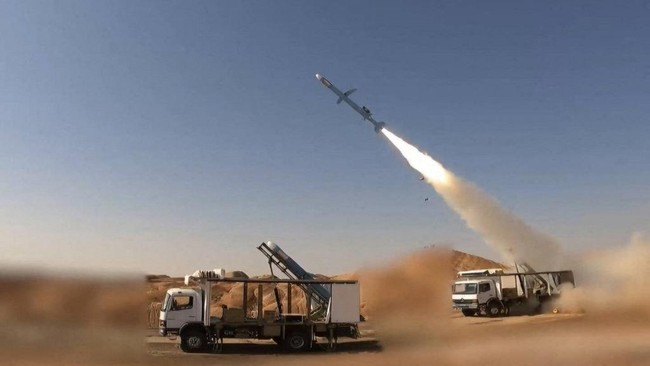
Iran has stated it used a new air defence system to shoot down a US MQ-9 Reaper drone near the Strait of Hormuz earlier this week. The incident demonstrates Tehran’s continued capacity to retaliate against US and Israeli strikes despite months of military site bombardments.
Iranian media reported the drone fell near Qeshm Island in the Strait of Hormuz. The interception marks the first combat use of the locally developed Arash-e Kamangir system, though independent verification of Iran’s claim remains unconfirmed.
The loss of the US drone near one of the world’s most sensitive shipping routes occurred as Washington reportedly launched new strikes on Iranian military sites near Bandar Abbas. Iran’s Islamic Revolutionary Guard Corps (IRGC) then claimed to have attacked US airbases in retaliation.
Quoting Al Jazeera on 29 May 2026, Iran’s claims have raised questions about the extent of its remaining air defence capabilities and whether Tehran can withstand further attacks if ceasefire negotiations fail.
Iran’s semi-official Fars News Agency reported that Arash-e Kamangir can detect stealth technology, though few technical details were provided.
Iranian media described it as a warning to hostile aircraft operating near Iranian airspace and maritime borders, especially as Tehran seeks to leverage its partial control of the strait in ceasefire talks with the US.
“This operation, conducted using a system with stealth capabilities, is a clear and firm message from Iran,” said an unnamed official quoted by Al Jazeera.
The name Arash-e Kamangir, meaning “Arash the Archer” in Persian, references a Persian mythological hero. While Iran’s military progress claims are hard to verify independently, experts consider the concept plausible given Tehran’s heavy investment in domestically produced, mobile air defence systems to threaten drones without relying on fixed, easily detectable radars.
Mark Hilborne, senior lecturer at King’s College London’s School of Security Studies, noted that despite limited verified information on Arash-e Kamangir, the attack fits a broader pattern. He added that simple, low-cost systems can put far more complex US systems at high risk.
“Iran has become quite self-sufficient in various missile designs and, like Ukraine, has cleverly transformed the economics of warfare. Cheap, simple systems can threaten much more complex ones,” Hilborne told Al Jazeera.
The Reaper drone’s downing could force the US to rely more on expensive multi-million-dollar missiles rather than drones when attacking Iran. Meanwhile, Tehran can continue using relatively cheap Shahed drones for production, potentially giving it a long-term economic advantage in prolonged conflict.
Security analyst Alex Almeida from Horizon Engage suspects Arash-e Kamangir is not a revolutionary new weapon but an evolution of Iran’s shift towards low-cost mobile air defenses. He believes the system uses electro-optical guidance or heat-seeking technology, making it easy to deploy and launch.
“I suspect this is a further development of one of those systems. It doesn’t rely on fixed guidance from traditional air defence radar sites. It probably uses some form of electro-optical guidance or heat-seeking – essentially a portable SAM (surface-to-air missile) system that’s simple to set up and launch,” Almeida told Al Jazeera.