
Trump's $5,000 Dividend: Campaign Promise or Realistic Prospect?
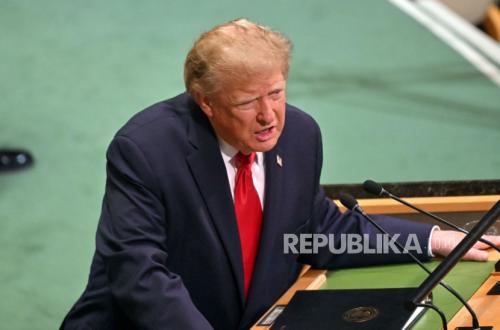
The United States midterm elections on 3 November 2026 are not merely a battle for Congressional seats. The outcome has the potential to determine how much room President Donald Trump will have to execute his political agenda during the final two years of his second term, while simultaneously shaping the fight towards the 2028 US Presidential Election.
The Republican Party currently controls the White House and both chambers of Congress, but with a slim majority. Therefore, the struggle for the House and Senate is a decisive battle between maintaining a unified government under the Republican Party or returning at least one chamber of Congress to the Democrats.
The Wall Street Journal (WSJ), on Monday (28/9/2026), reviewed the scenarios that could unfold if the Republican Party manages to retain the House and Senate. In such a scenario, Trump would enter the final two years of his administration without having to face a Congress controlled by the opposition.
The consequences could extend far beyond Capitol Hill. Trade agendas, immigration, artificial intelligence, and foreign policy will face different political hurdles compared to a situation where Democrats take control of one chamber.
A victory would also hold personal political significance for Trump. If the Republican Party can defend Congress in the midterms—elections that historically prove difficult for the president’s party—Trump’s influence over the direction of the Republican Party heading into 2028 could remain immense.
Names such as Vice President JD Vance, Secretary of State Marco Rubio, and Senator Ted Cruz may emerge in conversations regarding the future of the Republican Party. However, WSJ analysis depicts a scenario where the path to the 2028 Republican presidential nomination remains heavily influenced by Trump.
The $5,000 Big Bet
One of Trump’s promises capturing the most attention ahead of the midterms is what is referred to as the “Trump Dividend”. During the Republican midterm convention in Dallas in September, Trump promised a $5,000 USD payment to every adult American citizen if the Republican Party retains the House and Senate.
“If the Republicans win, you win with us and you get $5,000,” Trump said when announcing the idea in Dallas, as reported by the Associated Press.
However, the promise faces major questions regarding funding and legal authority. The Associated Press estimates that the programme would require more than $1 trillion USD and necessitates Congressional approval. House Speaker Mike Johnson also stated that Congress would need to act to realise such payments.
Reuters calculates that if approximately 240 million adult citizens each receive $5,000 USD, the cost of the programme could reach around $1.2 trillion USD. Tariff revenues, cited as one potential funding source, remain far below this requirement, making questions regarding the impact on the deficit and inflation a crucial part of the debate.
Consequently, a Republican victory does not automatically mean a $5,000 cheque will be sent directly to American citizens. Congress retains authority over federal spending, and concrete plans along with their funding sources must pass through the legislative process.
Interestingly, this promise, which has become one of Trump’s most prominent messages, has not yet been fully adopted by other Republican candidates.