
Trump Wins! G7 Finally Agrees to Release 100 Million Barrels of Diesel Reserves
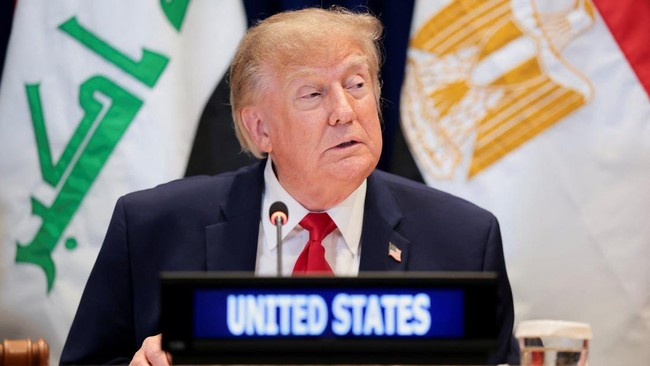
G7 member nations have agreed to release 100 million barrels of oil reserves to mitigate the increasingly high surge in diesel prices. This decision was reached after the administration of US President Donald Trump continued to push European nations to open their fuel reserves.
G7 leaders stated that the release of reserves will commence immediately and continue for four months. Most of the supply will be released in the initial stage, with a large-scale release of diesel during the first 20 days, coordinated through the International Energy Agency (IEA).
“In the coming days, we will hold a meeting within the context of the IEA to discuss the possibility of additional diesel releases if necessary,” said G7 leaders in a joint statement, as reported by CNBC International on Saturday (3/10/202<0xA0>6).
Diesel prices in the US hit record highs in September and remain at elevated levels. On Friday, the average US diesel price stood at US$6.37 per gallon.
The G7 consists of France, Canada, Germany, Italy, Japan, the UK, and the US. France currently holds the presidency of the group. The European Union also participated in the G7 meeting.
Just before the G7 announcement, Trump stated that European nations had agreed to the large-scale release of diesel reserves. Trump noted that Europe had “agreed to release a large amount of Diesel Oil that they hold in large quantities.”
The global fuel supply crisis is occurring amidst Ukrainian attacks on Russian oil refineries and energy supply disruptions in the Middle East due to the Iran war.
The Trump administration previously pressured European nations to utilise diesel reserves as an alternative before the US took more extreme measures, such as an export ban.
US Treasury Secretary Scott Bessent said on Thursday that US partners in Europe “must accelerate the fulfilment of their existing commitments and immediately provide additional supply to address ongoing disruptions.”
In the latest agreement, G7 leaders also agreed to “refrain from energy and energy product export restrictions” among member nations. They also called upon “all producers to refrain from implementing bans that could exacerbate market tensions.”
This move is crucial for the Trump administration, which faces political pressure from Republican members to address rising fuel prices ahead of the midterm elections in November. Trump had previously stated he was considering a diesel export ban from the US; however, the plan faced strong opposition from the US oil industry and business community. Trump now appears to be moving away from that option due to concerns that a diesel export ban could drive up domestic petrol prices.
The potential US diesel export ban had previously caused significant concern in Europe. As one of the world’s largest diesel exporters, a US decision would directly impact European energy supplies. According to the IEA, approximately half of the EU’s diesel imports in August originated from the US. This highlights the bloc’s heavy dependence on US supplies should Washington implement export restrictions.
EU Trade Commissioner Maros Sefcovic stated that he had discussed diesel supplies and price surges with his counterpart, US Trade Representative Jamieson Greer. “We are very interested in working together to lower prices, both for diesel and other products from oil and gas supplies,” Sefcovic told reporters in Milwaukee during a G20 trade ministers meeting, according to Reuters.
Sefcovic added that if the US were to take steps to restrict diesel exports, such a decision would be unexpected and could potentially have a negative impact on Europe’s economic prospects.
Meanwhile, the G7 move is also linked to a previous IEA decision. In March, IEA member nations agreed to provide 400 million barrels of crude oil and refined products to address supply disruptions caused by the Iran war. At that time, European nations promised approximately 107 million barrels, 68% of which were fuel products. Meanwhile, Asian and Oceanian nations provided 108 million barrels, consisting of 40% fuel and 60% crude oil. The US committed to providing 172 million barrels, all of which were crude oil, with an additional 23 million barrels coming from other American nations.
However, US Energy Secretary Chris Wright said on Tuesday that the implementation of these commitments has been uneven. “The United States and Japan have met their commitments,” Wright said. However, he added that “some European member countries have only released a small fraction of the crude oil and petroleum products they promised.”
Wright’s statement followed the US Department of Energy’s announcement of the release of up to 40 million barrels of crude oil as part of Washington’s commitment in March.