
Trump Updates on US-Iran War Fate, Sends Son-in-Law to Meet Tehran Officials
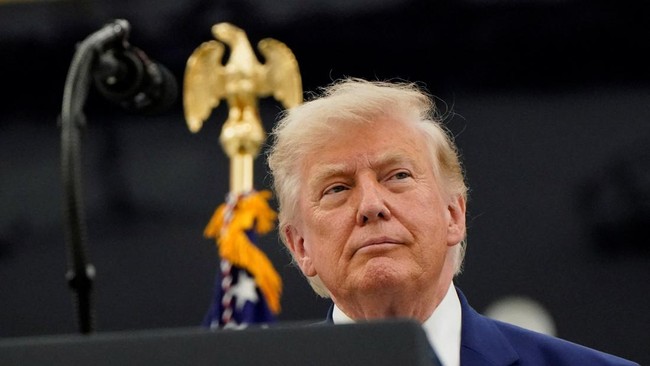
The United States (US) government and Iran are preparing to hold a new round of emergency talks in the Qatari capital, Doha, on Tuesday (30/06/2026). The diplomatic meeting plan was confirmed directly by US President Donald Trump in a bid to de-escalate the armed clashes that flared in the Middle East region over the past weekend. Citing CNBC reports, Trump announced that Tehran had submitted a formal request to hold the roundtable meeting. The announcement came after both sides agreed to temporarily stand down from exchanging fire at sea to guarantee safe passage for international commercial tankers in the Strait of Hormuz. “IRAN HAS ASKED FOR A MEETING. IT WILL TAKE PLACE TOMORROW IN DOHA!,” Trump wrote on his Truth Social account on Monday (29/06/2026). As of now, there has been no official reaction or statement from the Iranian Ministry of Foreign Affairs regarding the claim made by Washington. To finalise the initial peace draft, Secretary of State Marco Rubio and Special Envoy Steve Witkoff are scheduled to provide a strategic briefing before the US Congress, followed by the departure of Witkoff and Trump’s son-in-law and special peace envoy, Jared Kushner, to Qatar to lead the negotiations. White House Spokesperson Karoline Leavitt stressed that Washington will maintain its commitment to a 60-day ceasefire in accordance with the applicable Memorandum of Understanding (MOU). However, she warned that the US military would not hesitate to launch a lethal counter-strike if Tehran again provoked military action at the maritime border. “As far as we are concerned, we are keeping our side of the ceasefire. Violence will be met with violence,” Leavitt stated in an interview with Fox News. Leavitt added that the US possesses the best and most powerful military in the world, and the president retains the right to use it. However, she emphasised that the MOU will continue to be discussed as the ceasefire holds, with the hope that both countries can reach a good agreement. Before the emergency peace agreement was announced, tensions had reached a nadir after US fighter jets bombed Iranian military sites, which Tehran retaliated against by raining ballistic missiles on US military bases in Kuwait and Bahrain. The incident enraged Trump, who threatened to wipe the Islamic Republic of Iran off the map if it continued to disrupt freedom of navigation in the Strait of Hormuz, which controls 20% of the world’s oil supply. “There may come a point where we can no longer be reasonable, and we will be forced to finish the job militarily that we started so successfully. If that happens, the Islamic Republic of Iran will cease to exist!” Trump threatened on Sunday (28/06/2026). Despite the heated geopolitical situation, US Central Command confirmed that commercial shipping lanes in the vital strait have now been reopened and can be freely traversed by foreign vessels. The positive signals from the diplomatic table were immediately welcomed by global energy markets, with Trump hailing the drop in US crude oil and gas prices, which have now fallen to their lowest levels since before the war broke out on 28 February.