
Trump Threatens to Strike Iran Hard, Tehran Responds with Missiles on Israel
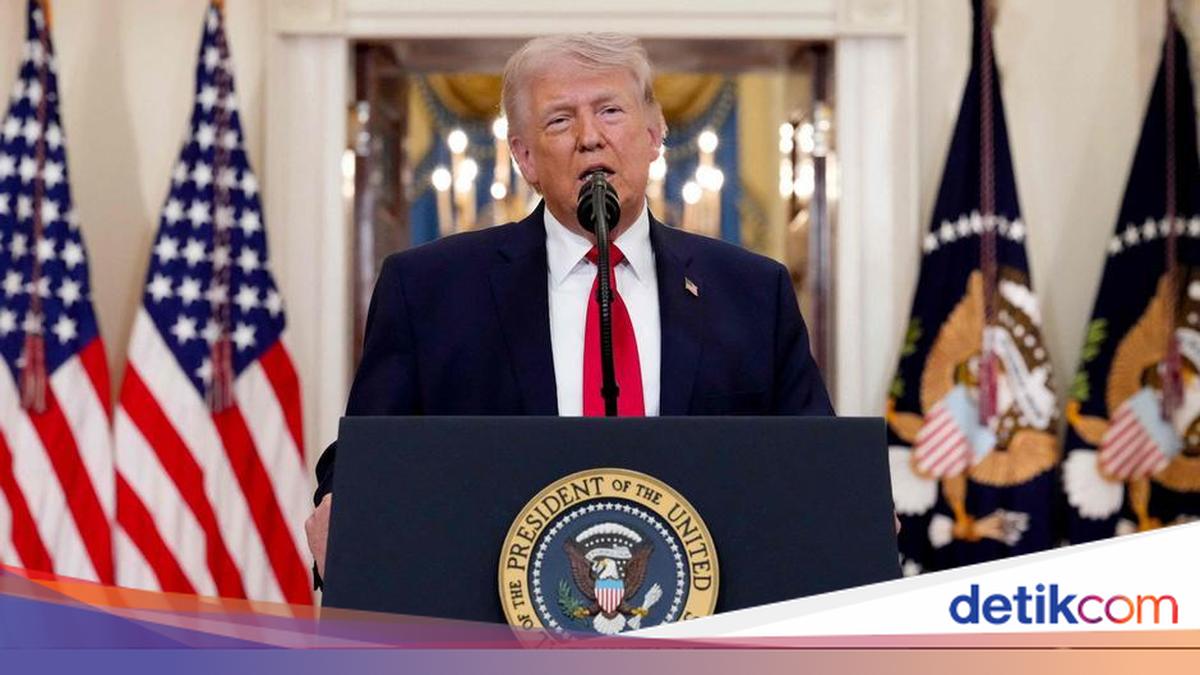
In a major address from the White House on Monday evening (1 April) local time, US President Donald Trump stated that Washington’s military operations are nearly achieving their main goals, but attacks on Iran will continue in the near future. “We will hit them very hard in the next two to three weeks,” Trump said. “We will take them back to the Stone Age, where they belong.” Trump claimed that the United States has destroyed Iran’s navy and air force and crippled the country’s ballistic missile and nuclear programmes. He asserted that Washington holds full advantage in this conflict. “We hold all the cards. They have nothing,” Trump stated. However, Trump did not provide a clear timeline for when the war would end. He also did not explain the status of Iran’s enriched uranium or how the global energy trade route through the Strait of Hormuz would be reopened. Trump had previously threatened to attack Iran’s energy infrastructure if Tehran did not reopen the strait. On the other hand, public support in the US for the war against Iran is reportedly declining amid growing concerns over the economic impact of the conflict. A survey conducted by Ipsos for Reuters showed that 60% of American voters disapprove of the war, while only 35% support it. As many as 66% of respondents said the United States should seek to end its involvement in the conflict as quickly as possible, even if it means not all war objectives are achieved. President Donald Trump’s speech on Wednesday evening did not address these concerns much. In the speech, Trump provided no clear schedule for ending the conflict, although he stated that military objectives are nearly achieved. Iran counters threat with missile attack Tehran responded harshly to Trump’s speech. Iran fired missiles at Tel Aviv, triggering Israel’s air defence system and air raid sirens in the city. Iran’s Khatam Al-Anbiya military command warned that the United States and Israel must prepare for larger attacks. “With faith in the Almighty God, this war will continue until you experience permanent and certain humiliation, disgrace, regret, and surrender,” the Iranian military statement said. The latest attack occurred as Jewish residents in Israel celebrated Passover, an important holiday in Jewish tradition commemorating the liberation of the Israeli people from slavery in ancient Egypt. This led some residents to celebrate the holiday in bomb shelters. Meanwhile, the militant group Hezbollah also launched drones and rockets from Lebanon into northern Israel. According to Lebanese authorities, Israeli attacks in the country since the start of the conflict have killed more than 1,300 people. In Iran itself, government officials condemned Trump’s speech as irrational statements. An Iranian presidential spokesperson said the remarks actually strengthened the country’s resolve. “Trump is trapped in irrational statements,” said Elias Hazrati on Iranian state television. Energy prices rise, financial markets pressured Trump’s speech failed to ease global market concerns. Oil prices surged sharply following the statement. Brent crude rose to around $106–108, or about Rp1.8 million per barrel, while US crude exceeded $104 per barrel. Petrol prices in the United States also rose above $4 per gallon, the first time since 2022. The rise in energy prices is expected to spread to other sectors. Analysts warn that higher fuel costs will drive up food prices due to increased transportation and packaging expenses. Asian stock markets also fell following Trump’s speech. Japan’s Nikkei index and South Korea’s Kospi dropped sharply, reflecting investor fears that the conflict could last longer. According to market analyst Stephen Innes from SPI Asset Management, the message from Trump’s speech indicates that the conflict is far from over. “The message delivered clearly shows that this matter is not finished,” he said. “And in financial markets, unfinished business is oxygen for volatility.” Concerns also come from international institutions. World Bank Managing Director Paschal Donohoe said the war has the potential to worsen global inflation, employment, and food security. In various countries, the impact is already being felt. Airlines in China have raised fuel surcharges, civil servants in Malaysia have been asked to work from home to save energy, while small countries like Bhutan are experiencing long queues at fuel stations. “We are helpless,” said Karma Kalden, a resident of Bhutan’s capital, Thimphu, as fuel prices soared. With ongoing attacks and major global energy routes threatened, the Iran–US–Israel conflict is now not just a regional crisis, but also a threat to global economic stability.