
Trump Threatens to Limit Diesel Exports, Indonesia Secure with B50 Strategy
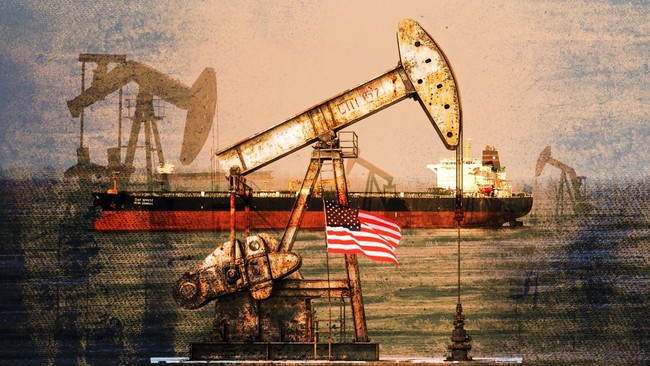
The United States is set to be the world’s largest diesel exporter in 2025, with volumes reaching 1.26 million barrels per day, accounting for approximately 15.4% of total global exports. Russia follows in second place with exports of around 783,400 barrels per day (9.5%), followed by Saudi Arabia at 678,200 barrels per day (8.3%).
India and South Korea complete the top five global diesel exporters, each with volumes exceeding 500,000 barrels per day. Overall, the five largest exporting nations control about 46.9% of the global diesel supply. The US market share is supported by massive refining capacity; as of January 2026, the US operates 130 refineries with a crude oil distillation capacity of approximately 18.2 million barrels per day.
Diesel plays a critical role in economic activity, powering trucks, agricultural machinery, and cargo ships. Consequently, changes in export policies from major supplying nations can directly impact global energy supplies and prices.
By region, Europe is the largest diesel exporting territory, accounting for approximately 2.90 million barrels per day, or 35.3% of global exports. The Asia-Pacific region ranks second with 2.38 million barrels per day (28.9%), followed by North America at 18.1% and the Middle East at 15.0%.
However, Europe’s high export volume does not entirely reflect domestic production. Countries such as the Netherlands, Singapore, and Belgium serve as major trading and re-export hubs, where imported diesel is stored, blended, and then re-sent to other nations. Despite being the largest regional exporter, Europe remains a net importer of diesel overall and continues to rely on supplies from the US, India, and the Middle East to meet domestic demand.
Export restrictions represent a new emerging risk. US President Donald Trump stated on 22 September 2026 his support for the idea of limiting diesel exports, although the White House denied reports regarding a planned 90-day export ban the following day. Russia had previously implemented diesel export restrictions in July, which were later extended until the end of September.
Combined, the US and Russia contribute nearly a quarter of global diesel exports in 2025. Therefore, export restrictions from both nations could potentially tighten global supplies. However, such policies carry risks; if export demand drops, US refineries may reduce crude oil processing levels. This could potentially suppress the production of not only diesel but also petrol and aviation fuel.
While export restrictions may bolster domestic diesel supplies in the short term, in the long term, they could actually reduce the overall production of petroleum products.
Indonesia is currently working to reduce its dependence on diesel imports through mandatory biodiesel. The Ministry of Energy and Mineral Resources (ESDM) noted that diesel imports fell from approximately 8.3 million tonnes in 2024 to around 5 million tonnes in 2025, following the implementation of the B40 mandate. Domestic biodiesel utilisation throughout 2025 reached 14.2 million kilolitres, which helped reduce diesel imports by about 3.3 million kilolitres.
This initiative will continue with the implementation of B50 in 2026, consisting of a 50% palm-based biodiesel and 50% diesel blend. The government aims for this policy to cover the remaining diesel import requirements, which previously stood at around 3-4 million kilolitres per year. While global diesel supply volatility remains relevant to Indonesia, particularly regarding energy prices and trade, a larger share of domestic biodiesel will reduce Indonesia’s direct exposure to the risk of supply disruptions from major exporting nations.
Source: jawawa.id (https://jawawa.id/newsitem/trump-threatens-to-limit-diesel-exports-indonesia-secure-with-b50-strategy-1790520703)
Originally published by CNBC Indonesia (https://www.cnbcindonesia.com/research/20260927155535-128-771237/trump-ancam-batasi-ekspor-solar-indonesia-aman-punya-senjata-b50), translated from Indonesian