
Trump Temporarily Halts Project Freedom, Oil Prices Drop
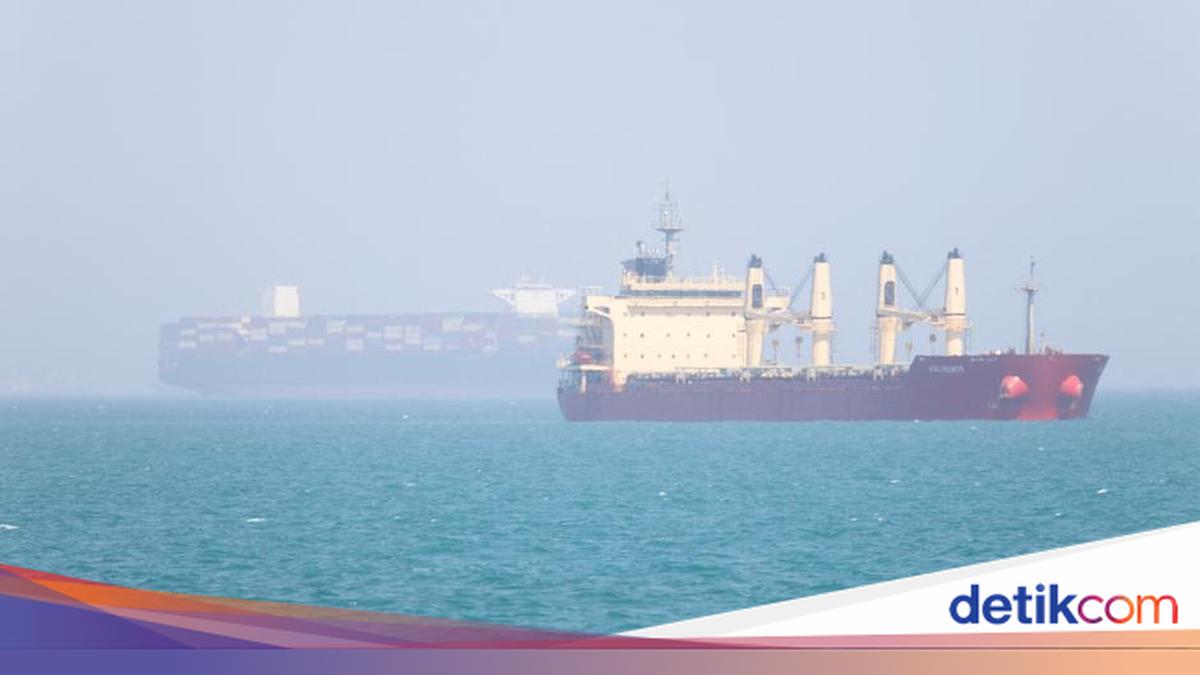
A few hours earlier, US Secretary of State Marco Rubio explained that the operation, which had only been running for one day, aimed to escort stranded tanker ships out of the Gulf area. This is because the Strait of Hormuz has been closed since the conflict erupted. The situation has disrupted around 20 per cent of global oil supplies and triggered a global energy crisis.
In a statement on X, Trump said that “Project Freedom” would be temporarily halted. He stated that this would also allow assessment of whether a peace agreement with Iran could be finalised soon.
As of Wednesday morning (6 May), there has been no direct response from Iran regarding the statement. When asked for comment, the US government has not provided details on the progress of negotiations with Iran or the duration of the operation’s suspension.
Shortly after the announcement, US crude oil prices fell by more than $2.30 (Rp40,000) to below $100 (Rp1.7 million) per barrel. This is a figure worth monitoring following the surge in energy prices over the past two months.
Previously, Rubio and other senior officials stated that Iran must not control traffic in the Strait of Hormuz. Iran is said to have effectively closed the route with threats of mines, drones, missiles, and fast boats. In response, the US has blockaded Iranian ports and deployed its military escorts. On Monday (4 May), the US military said it had destroyed several small Iranian boats, drones, and cruise missiles.
Previous military operation declared complete
Before launching Project Freedom, which is now paused, the US had initiated a joint operation with Israel on 28 February. That operation was declared complete. “Operation Epic Fury is complete,” Rubio said. “We do not want new escalation.”
According to Trump, one of the main objectives of the attack was to ensure Iran does not develop nuclear weapons. This is an accusation denied by Iran. However, Iran is said not to have surrendered more than 900 pounds of its uranium.
On-the-ground reality: UK and UAE report facing attacks
Amid the operation’s suspension, the British Maritime Agency reported that a cargo ship was attacked in the strait. However, details remain unclear.
US Secretary of War Pete Hegseth previously stated that shipping lanes have been successfully secured. Hundreds of commercial ships are now able to pass through. He added that the four-week ceasefire with Iran is still holding. “For now, the ceasefire remains in effect, but we will continue to monitor very closely,” he said.
The Chairman of the US Joint Chiefs of Staff, Dan Caine, said that Iranian attacks on US forces still have the potential to trigger large-scale combat operations again. On the other hand, the United Arab Emirates reported that its defence systems faced renewed missile and drone attacks. It claims the attacks originated from Iran. However, Iran denies the accusations.
The UAE Ministry of Foreign Affairs described the attacks as a serious escalation and a direct threat to national security. The UAE also stated that it has full rights to retaliate. Iran rejects the allegations. It states that its military actions are only aimed at deterring US aggression.
IMF: Impact of Iran war still felt after conflict ends
The war, which has spread to Lebanon and the Gulf region, has killed thousands and shaken the global economy. The head of the International Monetary Fund (IMF) estimates that its impacts will still be felt for three to four months. Even if the conflict ends soon.
Diplomatic efforts to end the conflict have yet to find a breakthrough. The US and Iran have held face-to-face negotiations only once, while efforts for follow-up meetings have not succeeded.
Iranian Foreign Minister Abbas Araqchi stated that peace talks are still ongoing with mediation from Pakistan. He was also reported to have arrived in Beijing on Wednesday (6 May) to meet with the Chinese Foreign Minister to discuss regional and international developments.