
Trump Tariffs Threatened with Cancellation as US Court Intervenes
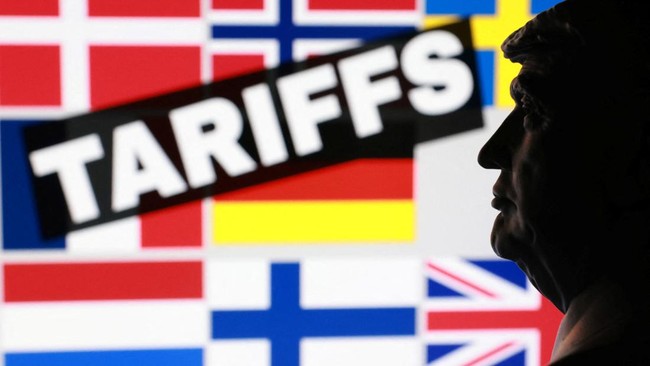
The latest global tariff policies of US President Donald Trump are facing renewed legal challenges. The U.S. Court of International Trade in Manhattan has begun testing the legality of tariffs that cover almost all US imports.
A hearing on Wednesday (30/09/2026) brought together a group of small businesses and a coalition of 25 states, led by the Democratic Party, against the Trump administration. The plaintiffs argue that the use of Section 301 to impose these tariffs has exceeded presidential authority and lacks specific investigations into each individual country.
Plaintiffs’ lawyer, Pratik Shah, stated that the government is using the issue of forced labour as a pretext to revive Trump’s global tariff regime, which had previously faced legal hurdles. “We know that this is not the only reason they are doing this,” Shah said during the trial, as reported by CNBC International on Thursday (01/10/2026).
The latest tariffs have been set at 10% or 12.5% on goods from 60 countries subject to USTR investigations, with certain product exceptions. The US government stated that the policy is aimed at pressuring countries deemed to have failed to prohibit and enforce bans on goods produced using forced labour.
Shah argued that the simultaneous use of Section 301 against dozens of countries is an unprecedented move. According to him, the government should provide specific findings and grounds for each country, rather than using a single, blanket approach for all targeted nations.
The US government has denied these allegations. Department of Justice lawyer Eric Hamilton stated that the USTR has conducted analyses of each country using data, economic studies, case studies, public hearing testimonies, and various responses before concluding that the investigated practices burden US trade.
The tariffs themselves came into effect in July, following a USTR investigation that began in March 2026 involving 60 economies. The USTR noted that the process involved more than 1,600 written comments, over 100 witnesses in public hearings, and consultations with more than 45 governments subject to the investigation.
This case represents the latest legal challenge to Trump’s tariff strategy after the US Supreme Court limited the use of the government’s emergency tariff powers in February. The judges have stated they will issue a ruling as soon as possible, which could determine whether the Section 301 tariffs remain in effect or must be cancelled or reviewed.