
Trump Suffers Decisive Defeat Against Iran, Here is the Evidence
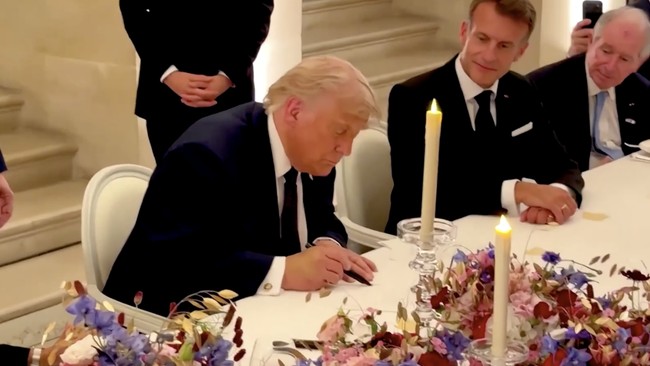
The peace memorandum of understanding (MoU) signed by United States President Donald Trump with Iran at the Palace of Versailles, France, is being judged as a major setback for Washington’s geopolitics. This legal step has become a symbol of acknowledgement that the US failed to achieve its primary targets in the Middle East despite launching large-scale military operations since last year.
The draft document containing 14 peace clauses shows how many red lines previously set by the US have now been erased. When compared to the strict negotiation document proposed by the US in 2025 before bombing Tehran’s nuclear facilities, Trump has now been forced to soften and retreat diplomatically in this latest agreement.
“Only a person with a disregard for history equal to Donald Trump would agree to sign an American peace agreement with Iran at Versailles, a place synonymous with national humiliation. And only a person with a mischievous sense of humour like Emmanuel Macron would be willing to propose the location,” wrote an analysis by Patrick Wintour, the Diplomatic Editor, regarding the irony of the signing location.
In the 2025 draft agreement, Washington demanded that Iran have no domestic uranium enrichment capacity and be obliged to export all its uranium reserves. However, at the G7 Summit in Évian yesterday, Trump officially recognised Iran’s right to continue domestic uranium enrichment under the pretext that other countries in the Gulf region also have similar programmes.
The US government has also relaxed oversight rules by allowing the dilution of high-grade uranium stockpiles to 3.67% to be carried out within Iran under the supervision of the International Atomic Energy Agency (IAEA). In order to reactivate Iran’s crude oil export permits, the US was even forced to open sanctions waivers on the financial services, banking, transportation, and maritime insurance protection sectors.
“Expanding authorisations to financial transactions will fracture the core architecture of US oil and financial sanctions on Iran. Yet, these sanctions are the strongest economic leverage the US holds over the regime outside of a naval blockade,” explained Miad Maleki, a former US Treasury Department official and senior fellow at the Foundation for Defense of Democracies.
This major concession granted by the White House was ironically made solely to persuade Iran to reopen the Strait of Hormuz shipping lanes, which had been paralysed by the war. Based on the MoU draft, the guarantee of free navigation without levies could apparently expire in just 60 days. After this deadline, Iran will hold full control alongside Oman to determine new maritime service tariff administration through discussions with other Gulf states.
Furthermore, the US-initiated Iranian reconstruction fund scheme worth US$350 billion risks being futile because Washington refuses to contribute a single cent. The scheme relies on the generosity of Arab Gulf states to fund the rebuilding of their enemy’s infrastructure. On the other hand, the release of US$24 billion in frozen Iranian domestic assets held abroad is deemed insufficient to quell Tehran’s economic crisis.
Many diplomats assess that this emergency deal is no better than the Joint Comprehensive Plan of Action (JCPOA) from the Barack Obama era in 2015, which was stricter in weapons verification. In Trump’s MoU, the scope of nuclear restrictions is left hanging without strong legal commitment, as Iran merely repeated verbal denials without a tangible missile programme dismantlement mechanism. Tehran’s unilateral statement of intent denial is considered irrelevant by international observers. For them, on-the-ground verification methods are the most crucial aspect, and in that regard, the US position has not advanced from before.
“The only president I would not want to emulate is the late, great Herbert Hoover. I do not want to see an economic disaster happen to the world, and if you let this war continue, that global crisis could really happen,” Donald Trump admitted bluntly regarding his reasons for recklessly signing the emergency MoU to avoid the threat of a global macroeconomic recession and the depletion of world oil reserves within weeks.