
Trump Signals Shift to Ukraine Peace Push After Iran Deal, Sparking European Unease
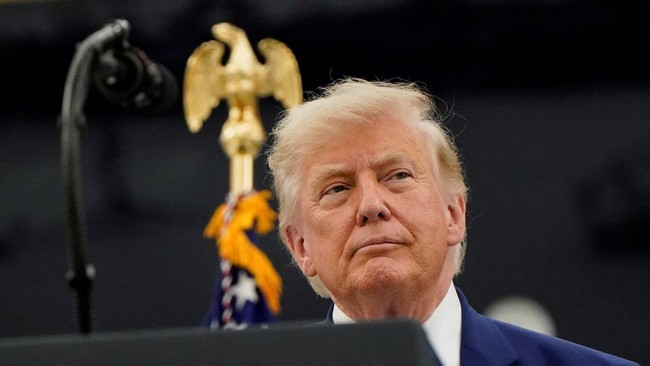
The effort to end the Russia-Ukraine war could once again become a top international diplomatic agenda after US President Donald Trump signalled Washington would shift its focus to the conflict once the crisis involving Iran is resolved. The signal has stirred unease among European Union officials who worry the US will reopen direct negotiation channels with Moscow without fully involving Europe. Trump made the remarks on the sidelines of the G7 summit in France on Tuesday (16/6/2026), following separate talks with Russian President Vladimir Putin and Ukrainian President Volodymyr Zelensky. According to Trump, both leaders showed openness to reaching a peace deal. “Now that this [Iran war] is over, we will focus on [the Ukraine conflict] and see if we can get it settled,” Trump told reporters, referring to a memorandum of understanding he signed on Friday. The possibility of renewed direct diplomacy between Washington and Moscow was not entirely welcomed in Europe. Several EU officials are reportedly concerned their position will be marginalised again if the US decides to negotiate directly with Russia. “Trump’s distraction is not a bad thing,” one EU diplomat told Politico. The concern arises because European countries have been among Ukraine’s main backers, through both military and economic aid. French President Emmanuel Macron publicly stressed that Europe must be part of every conflict resolution process. “The right negotiation is one where Ukraine and Russia sit together at the negotiating table, and Europe and America are on their side,” Macron told TF1. According to Macron, the scale of support Europe has provided to Kyiv means the region cannot be sidelined in discussions about Ukraine’s future. After US-Russia diplomatic relations thawed following years of deep freeze under President Joe Biden, Russia, Ukraine, and the US have held three rounds of negotiations to find a way out of the war. Although no peace deal has been reached, the talks recorded several concrete advances, including a large-scale prisoner exchange, the repatriation of fallen soldiers’ remains, and the exchange of peace memoranda between the relevant parties. However, fundamental differences remain the main obstacle. One unresolved issue is Moscow’s demand for Ukrainian forces to withdraw from the Donbass region. A fourth round of negotiations, previously expected to take place in March, was postponed after Washington diverted its focus to the Iran war. Kremlin Spokesman Dmitry Peskov described the situation as a situational pause while awaiting renewed US engagement. A significant development in the diplomatic process occurred after a summit meeting in Alaska, where Moscow and Washington stressed the need for a long-term settlement rather than a temporary ceasefire pushed by Ukraine and its European allies. Trump subsequently proposed a 28-point peace roadmap. Based on a draft leaked to the public, the proposal required Ukraine to abandon its NATO membership ambitions, relinquish claims over certain territories, and limit its military strength to 600,000 personnel. Russia welcomed the proposal and considered it a possible basis for achieving peace. However, several key points were later amended or removed following pressure from the EU and the UK. The latest 20-point version reportedly includes a demilitarised zone, Western security guarantees for Ukraine, a peacetime Ukrainian military strength of 800,000 personnel, a reconstruction fund for Ukraine, and a pathway to EU membership. Moscow confirmed it has received the latest proposal but declined to disclose its details. Russia also accused European countries of altering the original framework and undermining peace efforts. Amid the search for a peaceful path, European countries themselves do not share a fully unified view. Hungary and Slovakia are two countries that openly encourage direct dialogue with Moscow and have criticised policies they believe only prolong the conflict. Conversely, Poland, the Baltic states, and most EU leaders argue that political, economic, and military pressure on Russia must be maintained. European Commission President Ursula von der Leyen reiterated this position on Monday, calling support for Ukraine the top priority for G7 nations. France and Germany have adopted a more moderate stance, continuing to support aid to Kyiv while acknowledging that long-term peace is impossible without direct negotiations with Russia. This approach was tested last week when envoys from France, the UK, and Germany met Russian Deputy Foreign Minister Mikhail Galuzin in Moscow. According to Russia, the diplomats merely repeated demands regarding a ceasefire and security guarantees for Ukraine, and Moscow argued that countries supplying weapons to Kyiv cannot act as neutral mediators.