
Trump Scraps Emission Rules: Boom or Bust for Indonesian Coal Producers?
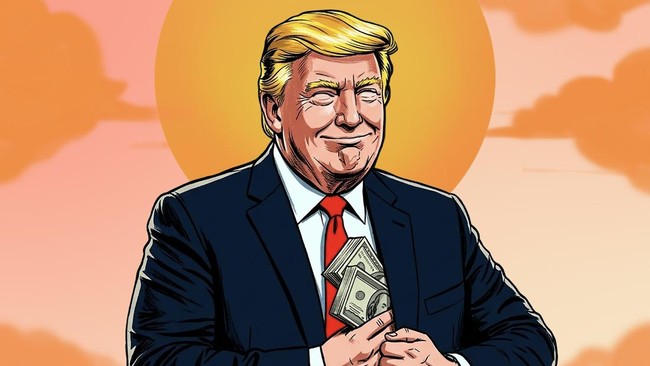
Jakarta, CNBC Indonesia - The administration of US President Donald Trump has once again dismantled climate policies from his predecessor’s era.
This time, the US Environmental Protection Agency (EPA) has revoked rules limiting greenhouse gas emissions from coal-fired and natural gas power plants.
The move has drawn attention because the United States remains one of the world’s largest contributors to greenhouse gas emissions. According to data from the European Commission’s Emissions Database for Global Atmospheric Research (EDGAR), the US is the world’s second-largest emitter after China.
Citing the BBC, the EPA said repealing most of the Biden-era climate rules could cut costs by around US$310 billion while also lowering energy prices.
The EPA judged that the previous rules had exceeded the agency’s authority and forced plant operators to adopt emission control technologies deemed insufficiently proven for widespread deployment.
EPA Administrator Lee Zeldin said the new policy was intended to keep America’s energy supply affordable and reliable.
“America produces energy better and cleaner than any other country in the world, and our power plants should not be unfairly targeted,” Zeldin said, quoted by the BBC.
Part of Trump’s Energy Agenda
The repeal aligns with Trump’s agenda to ‘unleash American energy’ by promoting domestic energy production and cutting regulations seen as burdensome to industry.
Trump has long taken a position at odds with the previous administration’s climate policies. In his speech at the United Nations last year, Trump even called climate change ‘the greatest scam ever perpetrated’.
His administration has also again withdrawn the US from the 2015 Paris Agreement, the international accord that sets voluntary targets for countries to reduce emissions that cause global warming.
Quoting the Associated Press (AP), the power plant rules now revoked form part of nearly three dozen environmental regulations targeted for deregulation since early 2025.
Under the Biden era, some coal-fired power plants were required to cut emissions significantly, including through the use of carbon capture technology, or face the risk of closure. Those rules have now been scrapped.
The EPA has also proposed a new rule that could limit the ability of future administrations to regulate greenhouse gas emissions from power plants. The proposal is not yet final and must still undergo public consultation.
US Power Sector in the Spotlight
The policy is significant because the electricity sector is one of the main sources of emissions in the United States.
Data from the US Energy Information Administration (EIA) shows the power generation sector accounted for around 30.3% of total US energy-related CO2 emissions in 2025, second only to the transport sector at around 38.2%.
In nominal terms, energy-related CO2 emissions from power generation reached around 1.49 billion tonnes in 2025, underscoring the sector’s considerable role in the US emissions profile.
Over the past two decades, emissions from the US power sector have actually tended to decline as coal use has diminished. However, Trump has long pushed for a revival of the coal industry and has repeatedly criticised renewable energy such as wind and solar power.
Even so, regulatory easing may not be enough to revive coal. The main challenge remains economic, particularly after the cost of clean energy technologies such as solar power fell sharply over the past decade.
Environmental and Health Risks
The repeal immediately drew criticism from environmental and public health groups, who argue that deregulation could increase pollution while worsening the impacts of climate change.
Quoting Reuters, the previous Biden-era rules were estimated to reduce greenhouse gas emissions by around 1 billion tonnes through 2047. The policy was also assessed to deliver net benefits of hundreds of billions of dollars through reduced health and environmental impacts.
Nathaniel Keohane, President of the Center for Climate and Energy Solutions, described the EPA’s move as a major setback. According to him, repealing power plant emission standards ignores both scientific and economic grounds while weakening protections for public health.
Meanwhile, the EPA considers potential health damage from power plant emissions still too uncertain to be linked directly to the sector. Zeldin also stressed that protections against hazardous air pollutants remain in place.
Repeal Could End Up in Court
The new policy is expected to face lawsuits from environmental groups and various other parties.
Debate over the EPA’s authority to regulate emissions has been long-running, including when the US Supreme Court in 2022 curtailed part of the agency’s authority to regulate greenhouse gas emissions from the power sector.
Now, the Trump administration is seeking to narrow the regulatory space further. Quoting Reuters, the EPA is not only repealing Biden-era emission limits but also pushing measures that could prevent similar regulations from being reimposed in future.
However, the impact on US emissions remains unclear. Even with federal deregulation, a number of states maintain their own emission standards, while economic factors continue to drive the shift away from coal towards other energy sources.
With the power sector still among the largest sources of US emissions, the direction of Trump’s policy means emission reduction efforts increasingly depend on technological developments, energy costs and state-level policies, rather than federal regulation alone.
What Does It Mean for Indonesia?
The Trump administration’s repeal of power plant emission rules could be a breath of fresh air for the US coal industry, as coal-fired plants will face lower regulatory pressure and reduced emission abatement costs, giving plants previously threatened with retirement the opportunity to operate longer.
The policy could also increase coal demand from US power plants, with the EPA even estimating coal production for the power sector could rise more than tenfold.
However, the impact on Indonesian coal is not automatically positive. If the surge in US production pushes more coal into the export market, global supply could rise and depress world coal prices, while making the US a stronger competitor for exporters such as Indonesia.
Conversely, if the additional US production is mostly absorbed by domestic power plants to meet electricity demand, especially amid surging demand from data centres and AI, coal supply in the international market could actually become tighter.