
Trump Says Starlink Access for Kyiv Remains Open Amid Escalation in Ukraine-Russia War
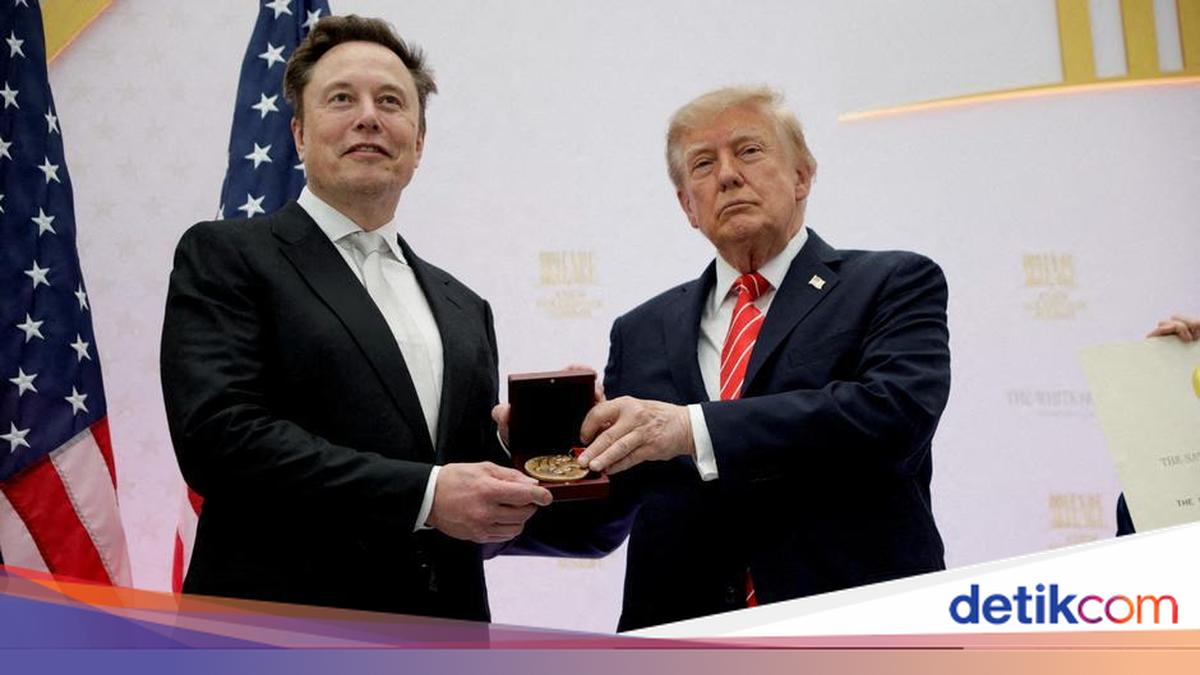
In a joint statement with Finland’s prime minister on Thursday (23 October), Ukrainian President Volodymyr Zelenskyy said Starlink’s system speed had not yet been restored for his military.
“We are working on it,” Zelenskyy said, adding that he hoped to discuss the issue with US Secretary of State Marco Rubio.
“I don’t want to comment on that. You know, whether I make the call or someone else makes the call, it makes no difference,” President Donald Trump told reporters in Washington on Thursday. He added that the important thing was that Musk had lifted speed restrictions on Starlink, the satellite internet service operated by his company, SpaceX.
However, reports from Ukraine on Thursday indicated that the service was still restricted. Kyiv has not officially confirmed that the restrictions have been lifted.
The White House and Musk had previously denied deliberately restricting the service, despite reports of Starlink problems in Ukraine for more than a week. Zelenskyy said the disruption was hampering Ukrainian drones both in defending against Russian jet-powered drones and in carrying out their own attacks.
Zelenskyy has become increasingly willing to criticise the Trump administration, as he sees US sympathies shifting towards Moscow.
Russia-Ukraine escalation
On Thursday (22 October), Russia again struck the Ukrainian capital, Kyiv, with ballistic missiles, while Ukraine sent hundreds of drones towards Moscow. Both countries were reported to have intensified their attacks following US special envoy Steve Witkoff’s recent visits to both.
Ukraine accused Russia of firing 21 ballistic missiles in three waves. Three of them, Ukrainian President Volodymyr Zelenskyy said, carried cluster munitions—small bomblets that can spread across a wide area and endanger civilians. The use of cluster munitions is banned under the Convention on Cluster Munitions, agreed by 100 countries in August 2010. Russia’s Defence Ministry did not respond to the accusation.
Russia, meanwhile, accused Ukraine of launching 630 drones targeting Moscow up to the early hours of Thursday (22 October).
Zelenskyy said two people had been killed and 34 injured, including five children, in attacks in Ukraine. Local authorities said a Russian strike on a market in Lozova, near Kharkiv in the north-east, killed two people and injured 36. One person was killed in the south-eastern Dnipropetrovsk region.
In Russia’s border region of Belgorod, one man was killed and another injured in a Ukrainian drone attack, local officials said.
With the front line largely stagnant, both sides have stepped up long-range air attacks this year. Russia has particularly targeted Ukraine’s electricity network, while Ukraine has targeted Russian oil refineries. Both have also attacked data centres, commercial warehouses and shipping in the Black Sea.
Amid the ongoing conflict, Belarusian news agency Belta reported that Russia and Ukraine had exchanged the remains of war casualties. Moscow handed over 252 bodies, while Ukraine handed over 25.
On Wednesday (21 October), Russia said it was willing to resume US-mediated talks with Ukraine in November, after Russian President Vladimir Putin met US envoy Steve Witkoff for discussions in St Petersburg. Ukrainian President Volodymyr Zelenskyy said he hoped the talks would take place in early November.
US-Russia efforts and new developments in Oslo talks
“The American side has picked up on some new developments [in Oslo] and informed us about them. But these developments are, so to speak, not entirely satisfactory,” Kremlin adviser Yuri Ushakov said on Thursday (22 October).
A senior Russian official said the Putin-Witkoff meeting was relatively brief and not substantive. The US side brought a set of proposals drawn up in Oslo and handed them to Putin for review, the official said.
Another source in Kremlin circles said the US proposals included a scenario in which Ukraine would hand over all of its Donbas territory to Russia in exchange for future security guarantees from NATO. Russia has said it launched the war—the deadliest in Europe since the Second World War—in part to prevent Ukraine from joining NATO.
Moscow has repeatedly said it will not stop fighting unless Ukraine cedes more territory, limits its armed forces and permanently rules out joining an alliance.
Ukraine says Russia’s invasion is an unprovoked war of conquest and rejects Moscow’s terms, which it says amount to surrender, even though this leaves Ukraine vulnerable to future Russian attacks.
A meeting between the US envoy and Ukraine’s president in Oslo on 23 October was intended to ease tensions between Ukraine and the US, after Trump announced an agreement to buy Russian diesel and lift sanctions on Moscow.
Kyiv says Washington has failed to provide early-warning data on Russian missile launches, restricted SpaceX’s satellite system used to direct Ukrainian drones, and withheld missile defence systems bought on Ukraine’s behalf by European countries. Washington denies making policy changes intended to deliberately impede Ukrainian forces.
How the Ukraine war and the Strait of Hormuz affect US fuel prices
Ahead of November’s US midterm elections, Donald Trump has often blamed Ukrainian attacks on Russian oil refineries for driving up energy prices in the US. This has created a political problem for the president. Analysts, however, say the main driver of higher fuel prices remains the US-Iran war.
Trump’s accusations come as the Republican Party faces poor prospects in the November midterms, partly because of soaring fuel prices. Diesel at US petrol stations reached a record US$6.53 a gallon (around Rp31,000 per litre) in late September, up from US$3.75 a gallon (around Rp17,800 per litre) before the war, according to the American Automobile Association. Rising energy costs have fuelled inflation across the economy.
Julien Mathonniere, an analyst at Energy Intelligence, said Ukrainian attacks accounted for about a third of an estimated global diesel shortfall of 1.7–1.8 million barrels a day. But James Henderson, a researcher at the Oxford Institute for Energy Studies, told AFP that the impact of Ukrainian drone strikes on global oil-product prices was very small.
Energy exports from the Gulf have plunged since US-Israeli attacks on Iran in February forced Tehran to block the Strait of Hormuz, a vital route for oil and gas shipments. At the same time, shipping costs have surged and major refining capacity in the Middle East has been disrupted, adding further upward pressure on oil prices.
Relations between Kyiv and Washington have deteriorated further this month after Trump announced a controversial deal with Moscow to lift certain sanctions and allow Russian diesel imports, in an effort to curb price rises. The US president said on Wednesday that he believed an end to the Russia-Ukraine war might be closer than ever, while the Kremlin said it was ready to resume trilateral talks with Kyiv and Washington next month.
For now, however, the attacks continue. “There is not much that can be done in the short term to bring diesel prices down,” said Jorge Leon, an analyst at Rystad Energy.
Even if the Russia conflict ended or an energy ceasefire were reached, the impact “would not really make a major difference to the US midterm elections”, he added.
Repairs to damaged infrastructure take time, while continued conflict in the Middle East is pushing energy prices higher.
Source: jawawa.id (https://jawawa.id/newsitem/trump-says-starlink-access-for-kyiv-remains-open-amid-escalation-in-ukraine-russia-war-1792756422)
Originally published by detikcom (https://news.detik.com/dw/d-8721133/trump-jamin-akses-starlink-terbuka-bagi-kyiv-saat-eskalasi-ukraina-rusia), translated from Indonesian