
Trump Reignites Trade War, Global Economy Now More Vulnerable
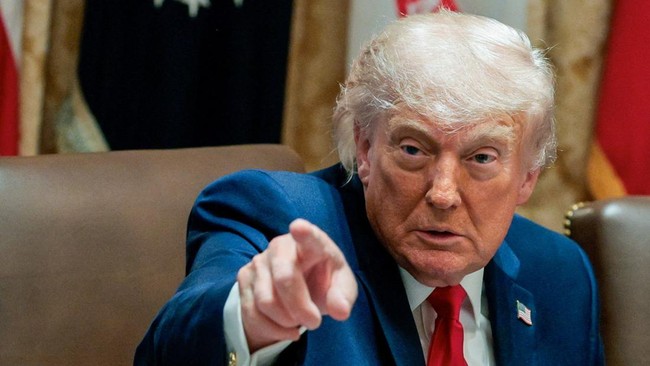
Jakarta, CNBC Indonesia – United States President Donald Trump has once again shaken global trade by imposing a new wave of import tariffs on 60 major trading partners, including the European Union, China, the United Kingdom and Canada.
The tariffs, which took effect on Friday local time, range from 10% to 12.5%, replacing the temporary 10% tariffs that expired on 24 July. Although the initial market reaction was relatively calm because the policy had been anticipated, analysts believe the impact this time could be greater, as it emerges amid a far more fragile global economy.
Emma Moriarty, portfolio manager at CG Asset Management, said the latest policy shows the Trump administration is increasingly confident in maintaining its tariff strategy even as the world economy faces pressure from geopolitical conflict and supply chain disruption.
“This step not only demonstrates the Trump administration’s commitment to tariff policy, but also shows that commitment amid global energy shocks and mounting supply chain obstacles. For markets, the implication is clear: we must prepare for a scenario of low growth and high inflation,” said Moriarty, as quoted by CNBC International on Tuesday (28/7/2026).
The situation differs from the “Liberation Day” tariff wave of April 2025, which briefly triggered panic in the markets. This time, the policy was announced as world oil prices once again exceeded US$100 per barrel due to the ongoing US–Iran conflict, making the risks to inflation and economic slowdown all the greater.
Unlike previous rounds of tariffs, the White House is now relying on Section 301 of the Trade Act of 1974, after the US Supreme Court ruled in February that the previous tariff scheme was unlawful. The US government cited suspected forced labour practices as the main justification for the policy. Countries that have implemented or committed to certain bans face a 10% tariff, while other countries face 12.5%, covering around 99.4% of US imports.
Alan Siow, co-head of the Emerging Market Corporate Debt division at Ninety One Asset Management, believes the Trump administration has successfully adapted to these legal obstacles. According to him, the minimal retaliation from other countries and the absence of any significant inflation spike so far have made the White House ever more confident in continuing its tariff policy.
Martin Jacob, professor of accounting and control at IESE Business School, said the latest move indicates that tariffs are no longer merely a short-term negotiating tool, but are starting to be positioned as a permanent policy within US economic strategy.
Echoing this view, Matthew Ryan, chief market strategist at Ebury, said the use of Section 301 closes the legal loophole previously exploited to overturn the old tariffs.
“With that legal loophole closed, markets may need to start factoring in tariffs as a structural burden on global growth, rather than merely a temporary risk that can be resolved through negotiation,” he said.
Ryan added that investors’ attention is now also focused on the Federal Open Market Committee (FOMC) decision. The surge in oil prices caused by geopolitical conflict is seen as increasing the likelihood of the Federal Reserve raising interest rates again at the end of the year, a shift from previous projections that expected rates to hold steady before starting to be cut in 2027.
Source: jawawa.id (https://jawawa.id/newsitem/trump-reignites-trade-war-global-economy-now-more-vulnerable-1785203473)
Originally published by CNBC Indonesia (https://www.cnbcindonesia.com/news/20260728075636-4-754275/trump-nyalakan-lagi-perang-dagang-kali-ini-dunia-disebut-lebih-rentan), translated from Indonesian