
Trump Prepares Thousands of Fighter Jet-Hunting Missiles, Costing Hundreds of Trillions
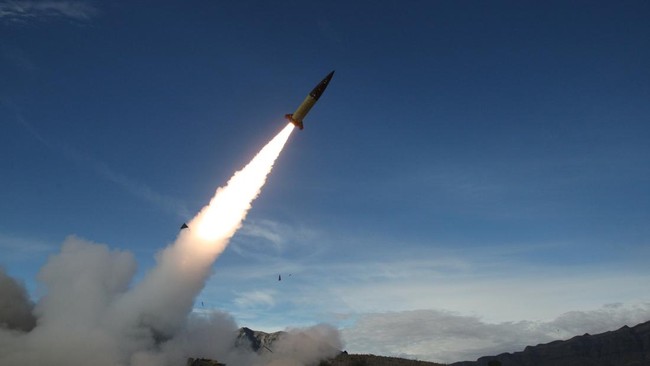
No matter how advanced a fighter jet may be, it holds little value without missiles capable of reaching and pursuing enemy aircraft. In modern aerial combat, pilots do not need to wait until an enemy aircraft is visually identified; targets can be detected via radar from a distance and engaged before the two aircraft ever come into close proximity.
One of the most widely used weapons for this purpose is the Advanced Medium-Range Air-to-Air Missile (AMRAAM). This missile can be launched beyond visual range, using its own onboard radar to track and intercept targets. This capability makes the AMRAAM a critical asset for US fighter jets and those of its allies.
Amidst the increasing demand for missiles, the Pentagon has awarded a contract worth a maximum of US20.7billiontoRaytheontorampupAMRAAMproductionuntil2033.ThemaximumvalueofthiscontractisequivalenttoapproximatelyRp371.8trillion(assuminganexchangerateofRp17, 960/US). The missiles produced will be used to meet the military requirements of the US and 16 other nations.
This massive contract extends for five years, with an option for an additional two years. If all options are exercised, the production process will continue until 2033. The US$20.7 billion figure makes it the largest contract in the history of the AMRAAM programme, dwarfing the previous record of US$3.5 billion set in 2025.
However, Raytheon will not receive the entire amount immediately. The US$20.7 billion represents the maximum ceiling, which will be drawn down gradually based on orders, funding, and programme execution. At the time of the award, the initially available funds consist of US$154.27 million from the Foreign Military Sales programme and US$85,715 from the US Air Force procurement budget, totalling approximately US$154.35 million—only 0.75% of the maximum contract limit.
According to Reuters, the contract remains subject to change, as full funding depends on US Congressional budget approvals. Without budget certainty, Raytheon cannot yet commit the full investment required to expand its factories and supply chains.
Raytheon aims to produce at least 1,900 AMRAAM missiles annually, which would be the highest production rate in the missile’s history. If this capacity is maintained, Raytheon could produce around 9,500 missiles during the primary five-year contract period, potentially reaching 13,300 if the two-year option is utilised. It should be noted that these figures represent factory capacity rather than a fixed number of missiles ordered under the contract.
Production of the AMRAAM has already seen significant increases. Raytheon noted that production in 2025 is nearly double that of 2024. The company is also investing in facility expansion, workforce increases, and technological enhancements, while supporting hundreds of small to medium-sized suppliers. Raytheon is even exploring joint production with other nations to accelerate supply.
AMRAAM is a medium-range air-to-air missile designed to destroy enemy aircraft before the pilot can visually acquire the target. Once launched, the missile moves towards the target using data from the aircraft; as it closes the distance, its active radar takes over to guide it to impact. This allows a pilot to launch multiple AMRAAMs at several targets simultaneously while performing manoeuvres to evade counter-attacks.
The US Air Force states that the AMRAAM is smaller and lighter than previous generations, offering better performance against low-flying targets and in various weather conditions. Beyond fighter jets, the missile can also be launched from land via the NASAMS air defence system, which protects Washington’s airspace and is operated by over a dozen countries, including Ukraine.
Raytheon reports that the fifth-generation AMRAAM can now be used on 14 different platforms and is operated by 44 countries, having recorded over 7,000 launches in tests and combat.
The AMRAAM orders are not solely for US military stockpiles. Through this contract, 16 nations will also receive the missiles via US government military sales programmes. Of these 16 nations, 11 are in Europe and 12 are NATO members. The high number of European nations is linked to the ongoing Russia-Ukraine war, with countries such as Poland, Finland, Sweden, and Norway strengthening their air defences due to regional instability.
Similar needs are evident in the Asia-Pacific region, albeit facing different threats. Australia, Japan, and Taiwan have also ordered AMRAAMs as Chinese military activity in the region increases, as they continue to bolster their aerial combat capabilities to remain competitive in an intensifying military landscape.
Source: jawawa.id (https://jawawa.id/newsitem/trump-prepares-thousands-of-fighter-jet-hunting-missiles-costing-hundreds-of-trillions-1790690013)
Originally published by CNBC Indonesia (https://www.cnbcindonesia.com/research/20260929162215-128-771894/trump-siapkan-ribuan-rudal-pemburu-jet-tempur-habis-ratusan-triliun), translated from Indonesian