
Trump Powerless, Yielding to America's True 'Rulers'
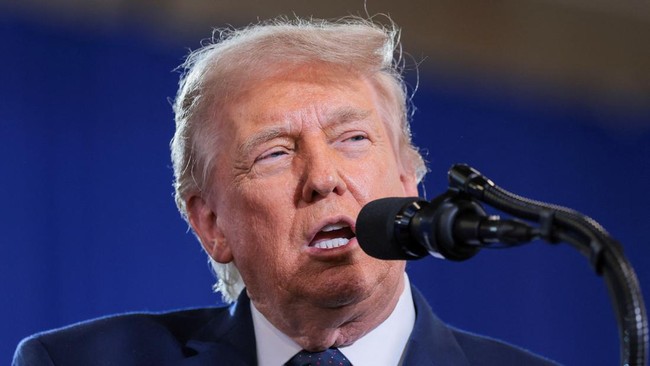
US President Donald Trump is known for his close ties with the titans of Silicon Valley. During various overseas visits, Trump has frequently accompanied ‘world elites’ such as Elon Musk of SpaceX/Tesla, Jensen Huang of Nvidia, and Tim Cook of Apple.
Trump’s proximity to big tech bosses is not a new phenomenon. During his 2024 presidential campaign, Trump received substantial financial support from technology companies. These tech giants play a pivotal role in the US economy, which has prompted Trump to defend them against European Union regulations, such as the Digital Markets Act (DMA) and the Digital Services Act (DSA).
Trump has also previously threatened states that attempt to implement regulations regarding AI, a technology that has become the focal point of global competition. He maintains that innovation should not be hindered by excessive bureaucracy.
However, Trump found himself in a difficult position as pressure mounted from various sectors regarding the risks of AI implementation. Ultimately, after several delays, Trump signed an executive order concerning AI policy on Tuesday (2/6) local time, aimed at easing fears regarding the potential cyber security threats posed by AI. Notably, the rules signed by Trump appear much ‘softer’ than the version the White House had planned last month.
This represents another victory for the AI industry and tech giants, reinforcing who the true ‘rulers’ of the US are. Trump appeared unable to resist the influence of the world’s wealthiest technology leaders.
Trump personally signed the order on Tuesday, according to two White House officials familiar with the matter, as reported by POLITICO. The President participated in a high-level meeting at the White House on Monday (1/6) to discuss the next steps for the order.
The final text requires several AI companies to voluntarily submit their advanced new models for government review 30 days before public release. This window is intended to allow federal agencies to assess potential threats to financial systems, national security, and sensitive computer networks.
A previous draft had mandated a 90-day voluntary review period. The AI industry had resisted this initial draft, arguing that the review period was too long.
“Advanced AI capabilities make our nation stronger, but also present new national security considerations,” Trump wrote in the order. “We will continue to lead America-first cybersecurity efforts that enhance our national security and our global AI dominance,” he added.
Previously, Trump was scheduled to sign a 90-day version of the rules on 21 May 2026, in the presence of tech executives. However, just hours before the signing, Trump abruptly rejected the draft, citing fears that overly strict regulations would hamper US competitiveness against China in the AI race.
The previous draft had been accepted by high-level White House officials and reviewed by giants such as OpenAI, Anthropic, and Google. Shortly before the signing, White House AI adviser David Sacks reportedly warned Trump about the impact of maintaining the 90-day requirement.
Similar to the previous draft, the final order directs the US Treasury to coordinate with AI industry officials to establish a “cybersecurity information hub” within 30 days. This initiative will involve voluntary partnerships with AI developers and critical infrastructure owners to identify and patch vulnerabilities discovered by new AI models.
Additionally, the order instructs the Pentagon to secure its networks within 30 days and directs the Department of Justice to pursue criminal cases against anyone using AI models to hack computer systems. The government will also have 30 days to issue directives requiring federal agencies to bolster their network defences in light of newly discovered vulnerabilities.