
Trump Opens the Door to Russia at G20; Germany Says There Will Be No Normalisation
JAKARTA — Germany has openly opposed efforts by the United States to restore Russia to normal international relations while the war in Ukraine continues. Berlin’s objection comes as President Donald Trump’s administration begins easing some economic sanctions on Moscow, while European countries seek to maintain pressure to end Russia’s invasion.
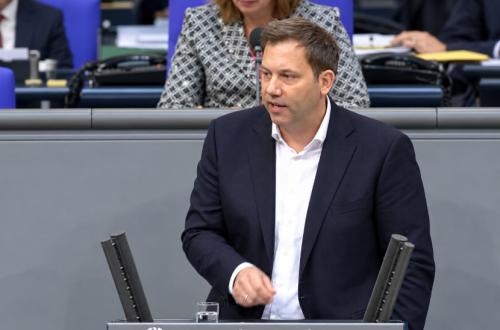
German Finance Minister Lars Klingbeil made the remarks on the sidelines of a meeting of G20 finance ministers and central bank governors in Bangkok, Thailand, on Thursday, 15 October 2026. He said he had seen signs that the Trump administration was seeking to restore relations with Russia despite Moscow’s continuing military operations in Ukraine.
“I see efforts, particularly by the United States, to bring Russia back on to the international stage,” Klingbeil said, according to Reuters on Thursday, 15 October 2026.
Klingbeil stressed that European countries would not treat Russia as though international relations had returned to normal. Russia’s invasion of Ukraine, he said, remained a fundamental issue that could not be ignored simply because Russia was once again taking part in diplomatic forums.
“There will be no pretending that Russia is now back as a normal member of the G20 and can simply take its seat at the negotiating table. Not with me, and not with the other European countries either,” he said.
The remarks followed the attendance of Russian Finance Minister Anton Siluanov at the G20 meeting in Bangkok. His appearance came about a month after the United States hosted a similar meeting in Asheville, North Carolina, where Siluanov made his first in-person appearance at a G20 forum since Russia invaded Ukraine in February 2022.
Russia has never been expelled from the G20. However, since the invasion of Ukraine, the participation of Russian officials in international forums has faced opposition and diplomatic pressure from several Western countries.
Germany’s objection, therefore, is not about Russia’s membership but about efforts to restore Moscow’s diplomatic standing as though the war were no longer an issue. The differing approaches point to growing policy tensions between the Trump administration and some of its European allies.
US defends dialogue with Russia
The United States takes a different view of Russia’s presence at international forums. Washington considers direct communication with Moscow necessary to create a path towards ending a war that has lasted for more than four years.
US Deputy Treasury Secretary Erin Browne said her government supported Russia’s participation in G20 meetings. She said diplomacy required communication between the parties to a conflict, even when political relations were extremely poor.
“We believe that, in order to resolve a crisis, it is very important to open up dialogue and conversation,” Browne said.
In her view, conflicts cannot be resolved if the parties concerned refuse to communicate. Browne also said allied countries had not raised their objections directly with the US delegation during the meeting.
She said Trump remained committed to reaching a peaceful resolution to the Russia-Ukraine war. Washington sees reopening channels of communication with Moscow as one way to encourage negotiations, which have so far stalled.
The approach has nevertheless caused concern in several European capitals. Leaders in the region fear that easing economic pressure on Russia before a peace agreement is reached could weaken Ukraine’s position in negotiations.
Germany does not oppose holding talks with Russia. Klingbeil said diplomatic communication remained necessary, but that any settlement must involve Kyiv and must not come at the expense of Ukraine’s interests and sovereignty.
“Negotiations are always useful. But I want to make clear that they must not be conducted at Ukraine’s expense or without involving the Ukrainian people and President Zelensky,” Klingbeil said.
UK seeks tougher sanctions on Russian shipping
Amid differing views on how to deal with Moscow, the United Kingdom has called for stronger sanctions on shipping networks suspected of helping Russia maintain its energy export revenues.
UK Finance Minister John Healey said countries supporting Ukraine should maintain economic pressure on President Vladimir Putin’s government. He specifically called for tighter restrictions on shipping services that allow Russia to evade oil trade sanctions.
“My message to finance ministers today on Ukraine is that we must maintain tough economic sanctions on Russia,” Healey said.
He emphasised the need for tighter restrictions on shipping services that support Russia’s shadow fleet. The network of vessels has drawn the attention of Western countries because it is suspected of transporting oil through arrangements that make sanctions harder to enforce.
The term “shadow fleet” refers to a network of tankers with ownership, management or insurance structures that are difficult to trace. Some vessels also use practices that make international energy trade harder to monitor.
The UK has imposed various sanctions on ships and supporting services considered to help Russia generate revenue to finance the war. London sees restrictions on the energy sector as one of the most important tools for limiting Moscow’s ability to sustain its military operations.
Britain’s approach contrasts with a step being considered in Washington. The Financial Times reported on Thursday, 15 October 2026, that the Trump administration was examining the possibility of easing sanctions on some tankers linked to Russia and Iran.
The US government is considering the move to reduce pressure on the cost of transporting oil and fuel. Rising energy prices amid the conflict in the Middle East have become an economic challenge for Washington ahead of the November 2026 midterm elections.
Source: jawawa.id (https://jawawa.id/newsitem/trump-opens-the-door-to-russia-at-g20-germany-says-there-will-be-no-normalisation-1792133509)
Originally published by Republika (https://news.republika.co.id/berita/tmzjfa451/trump-buka-pintu-rusia-di-g20-jerman-tidak-ada-normalisasi), translated from Indonesian