
Trump Makes New Breakthrough, Prepares World's Largest 'Economic War'
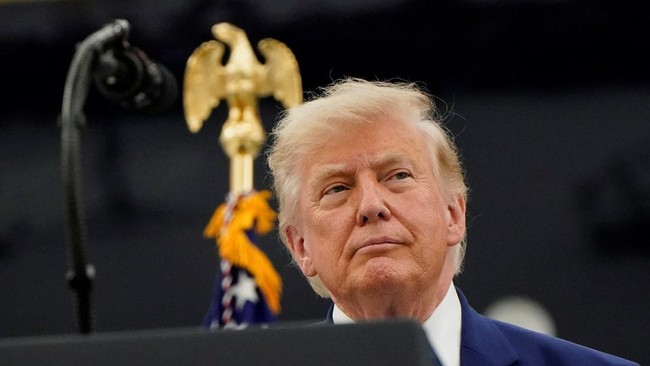
United States (US) President Donald Trump has again increased pressure on Iran. This time, Trump threatened to launch what he called “the most devastating economic operation ever conducted against any country”, while also warning countries that help Tehran evade US sanctions.
In a post on Truth Social, as quoted on Thursday (20/8/2026), Trump described the move as “economic war and isolation on an unprecedented scale.”
Trump also stressed that Iran had been given the opportunity to reach an agreement with Washington, but according to him Tehran failed to take advantage of it.
“No one has given the Islamic Republic of Iran a greater opportunity to make a deal than I have,” Trump said. “Unfortunately for them, they failed to take it.”
Trump claimed Iran’s military capabilities have suffered major damage. He said Iran’s navy, air force, and military production facilities have been destroyed and the country’s currency has become worthless.
According to Trump, the Iranian regime is now “hanging by a thread.”
However, Trump’s threat was not only aimed at Iran. He also warned other countries that still provide economic support to Tehran.
Trump said any country whose financial institutions, companies, airports, or government entities provide a “lifeline” to Iran will face enormous economic consequences.
Trump specifically named a number of channels that he said must be closed immediately to narrow Iran’s economic room for manoeuvre.
These channels include oil smuggling, currency exchange routes, cash transfers, foreign exchange houses, ship registration, and front companies.
He also reiterated that Iran will never be allowed to acquire nuclear weapons.
The latest threat expands the economic pressure campaign that the Trump administration has been running since April through Operation Economic Fury. The operation is aimed at cutting off what Washington calls sources of funding for global terror and the Iranian regime’s revenue streams.
However, from Iran’s perspective, the policy is seen as an obstacle to resolving the conflict through negotiations.
Iranian Foreign Minister Abbas Araghchi previously accused Washington of increasing sanctions pressure after several previous rounds of sanctions failed to force Tehran to surrender. According to Araghchi, the approach is actually a barrier to efforts to find a way out through negotiation.
Nevertheless, the biggest question regarding the effectiveness of US economic pressure on Iran lies with China.
Bob McNally, President of Rapidan Energy Group, said China has far deeper financial, logistical, and trade ties with Iran than any other country.
According to McNally, Beijing is one of the most decisive factors in whether Washington’s economic pressure campaign can truly isolate Tehran.
China itself has previously shown willingness to take retaliatory action.
Therefore, the US ability to pressure Iran’s economic network will ultimately depend heavily on the extent to which China is willing to follow Washington’s pressure.
The immediate impact of Trump’s new sanctions threat on the oil market is also expected to remain limited.
McNally said the oil market is unlikely to move much just because of the sanctions threat, unless Iran’s hardline leaders respond by escalating militarily.
However, according to him, the market is beginning to lose optimism about the possibility of a near-term and sustained reopening of the Strait of Hormuz.
“The oil market has become slightly less optimistic about a sustained reopening of Hormuz in the near term,” McNally said on CNBC.
The issue of the Strait of Hormuz is an important factor in the latest developments.
Ship traffic through the strategic waterway remains far below normal pre-war conditions. Targeting of ships by Iran and the US naval blockade of Iranian ports have led most ship operators to avoid the route.
Data from Lloyd’s List Intelligence shows there were only 73 ship transits through the Strait of Hormuz in the week ending 16 August. That number was down from 91 transits the previous week.
Lloyd’s List Intelligence said only a small group of operators remain active on the route.
The low shipping activity shows that disruption to one of the world’s most important energy trade routes is still ongoing. The situation also keeps the oil market sensitive to developments in the Iran-US conflict, especially if Trump’s latest economic threat is followed by a military response from Tehran.