
Trump Loses US Midterm Elections: What Does It Mean for Germany?
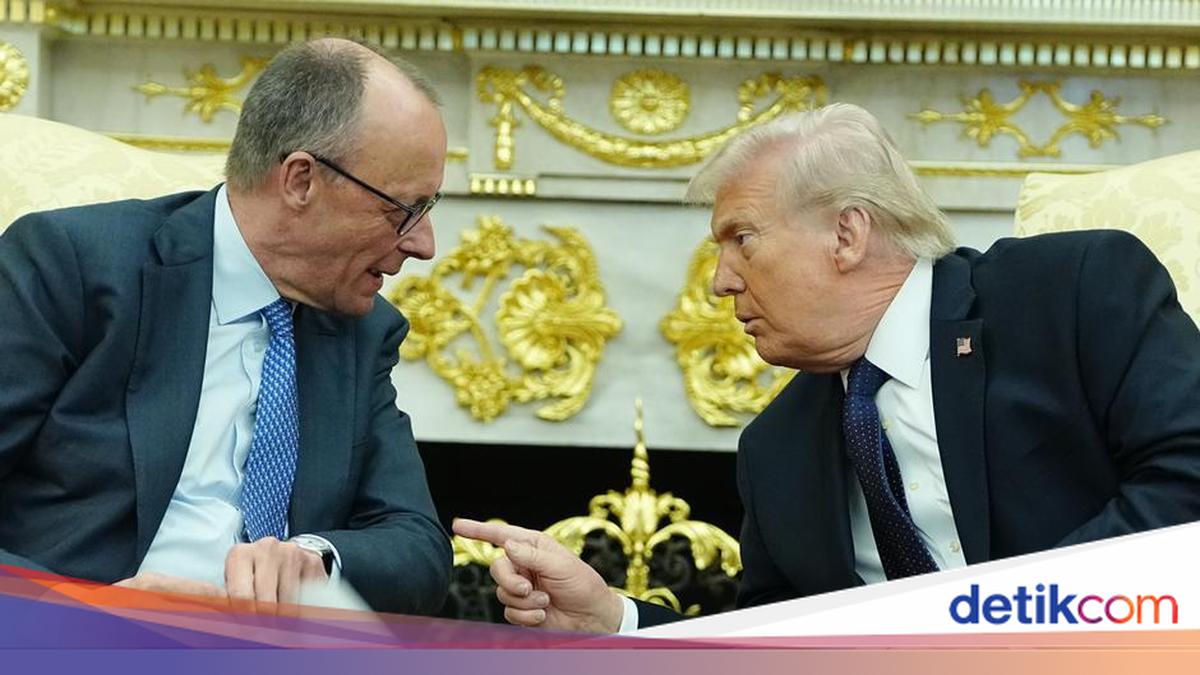
The Democratic Party has won the US midterm elections, while the Republicans have lost their majorities in both chambers of Congress.
For the remainder of his term, Trump’s domestic policies are expected to face greater constraints. However, the US President still has considerable power over foreign policy. What does this mean for German-American relations, which have seemed increasingly strained during Trump’s leadership?
Hope for a more stable global political order
The Federal Government under Chancellor Friedrich Merz does not wish to comment on the US midterm election results. The US remains an important partner, a government spokesperson said. “We will continue our close co-operation with the US,” the spokesperson added.
Germany has a stake in the transatlantic relationship and is working to uphold it: the pursuit of a stable international order, rules-based trade and a strong NATO.
Vice-Chancellor Lars Klingbeil congratulated the Democrats on their decisive midterm victory. “That certainly gives us cause for optimism,” the SPD leader said in Berlin. Until now, the trend had been towards right-wing populism. Now, the centre-right has gained votes in the US. “We are ready to co-operate,” he added.
What do the results mean for Ukraine?
Federal Foreign Minister Johann Wadephul (CDU) is optimistic that new momentum could emerge in support of Ukraine. “I am quite optimistic that there will now be more dialogue in Congress, including between the two US parties, about what they can do together to support Ukraine,” Wadephul said in Berlin.
“I am convinced that both parties held back during the election campaign for the time being, and I know that both parties have committed supporters of Ukraine in Congress.”
For Germany, the US election results generally mean “continuity and change”. The Federal Government wants to maintain close co-ordination with Washington.
“Given the global challenges, but also the close ties between Germany and the US in defence, including shared security, the economy, technology and science, it is important that we do not allow the rift to become too wide,” Wadephul said.
Pistorius: NATO must become more European
German Defence Minister Boris Pistorius (SPD) offered his sincere congratulations to the Democrats on their historic victory. He does not expect major changes for Germany. “That depends somewhat on what the US President plans to do after this election, and we do not know that yet,” the Defence Minister said at a security conference in Berlin.
The European pillar of NATO must be strengthened in any case. “For years, the US has increasingly focused on the Indo-Pacific and other regions of the world.” NATO must therefore become more European “so that it can remain transatlantic”, Pistorius stressed.
Will military strikes against Iran continue?
“I believe that from today onwards he [Trump] will focus more on his political legacy,” Peter Beyer, a CDU MP and US specialist, told DW.
Trump still has significant executive powers and could act more forcefully or aggressively in foreign policy. “I think we can be fairly sure that we will soon see another joint attack on Iran with Israel.”
Beyer also expects Trump to continue his interventionist policies, as seen in Cuba and Venezuela. Tariff and trade policy is particularly important for Germany.
“We want transatlantic trade, and we will continue to pursue it.” It can be assumed that existing policies will continue. “Hopefully without further escalation,” the MP said.
Republicans lose, but ‘Trumpism’ remains
Norbert Röttgen, a CDU foreign policy politician, believes the US midterm results at least give Donald Trump an opportunity to adopt a more open stance. The German MP said that something was now shifting significantly and Trump could not simply ignore the message from voters.
However, this is not the end of “Trumpism”, the political movement associated with Trump. The movement and political forces that enabled him to build his influence have suffered a defeat, but they still exist.
Brantner: Europe cannot expect Washington to change
German opposition politicians reacted more bluntly than politicians from the governing CDU and SPD. Franziska Brantner, deputy leader of the Greens, described the midterm results as an extraordinary victory for the Democrats.
“It is a real relief to see that there is an alternative to US President Donald Trump and his policies, which have harmed people not only in the US but around the world,” Brantner told rbb24-Inforadio.
However, US policy remains unpredictable, Brantner warned. The EU has no reason to breathe a sigh of relief. “Quite the opposite: we must truly rely on Europe and our own strength.”
Trump has made clear that he does not respect the European Union, wants to divide it and is increasingly withdrawing support from Ukraine. This means, Brantner stressed, that Europe must take on greater responsibility.
Criticism from Germany’s Left Party
For Ines Schwerdtner, deputy leader of the Left Party, the Republicans’ defeat was a natural consequence. “As elsewhere, right-wing politicians in the US have no real solutions to people’s everyday problems,” the MP said.
“Instead, Trump wages wars of aggression, tramples on international law, serves the interests of the oligarchic class, drives up prices and tries to cover all this up with incitement and policies that divide society — things that make no sense to the public,” Schwerdtner said.
The Federal Government must change its approach to the US, demanded Lea Reisner, the Left Party parliamentary group’s spokesperson for international relations. In her view, the government is “too submissive to Trump and does not take a firm enough stand”.
“On tariffs, the EU has swallowed a harmful deal; on NATO, it has agreed to a five per cent target, and the money for that is now unavailable for housing, public care and education.”
AfD does not celebrate
Unlike all the other parties in Parliament, the far-right Alternative for Germany (AfD), which is known to support the MAGA movement, does not regard the Republicans’ defeat as a positive development.
AfD leader Alice Weidel said the Republicans lost because Donald Trump had promised a more restrained foreign policy but failed to deliver. In Weidel’s view, the Iran war in particular was one of the main factors behind the poor election result.
Meanwhile, Markus Frohnmaier, the AfD parliamentary group’s foreign policy spokesperson in the Bundestag, emphasised the similarities between the AfD and the Republicans: “The two parties have a great deal in common in terms of ideological outlook and political goals.”
He said those similarities could be seen in efforts to preserve cultural and national identity, curb migration and fight left-wing ideology.
Sigmar Gabriel’s view of the 2028 US election
Former German Foreign Minister Sigmar Gabriel (SPD) expects little change in German-American relations. Earlier, on X, he wrote: “If the Republicans lose, Trump will be under domestic pressure and will have even more room to manoeuvre on the international stage.” However, he hopes Trump will stop moving closer to Russia and reunite with the EU in supporting Ukraine.
“For the Democrats, the real work is only just beginning,” wrote Gabriel, chair of Atlantik-Brücke, on X, referring to the 2028 presidential election.
“Instead of seeking ‘revenge’, they should ask why the Trump movement was so successful in the past. That will determine whom the party puts forward in the 2028 election.”
Source: jawawa.id (https://jawawa.id/newsitem/trump-loses-us-midterm-elections-what-does-it-mean-for-germany-1793965884)
Originally published by detikcom (https://news.detik.com/dw/d-8741539/trump-kalah-di-pemilu-sela-as-apa-dampaknya-bagi-jerman), translated from Indonesian