
Trump Loses, Oil Crashes: Is Indonesia Set to Announce Good News Today?
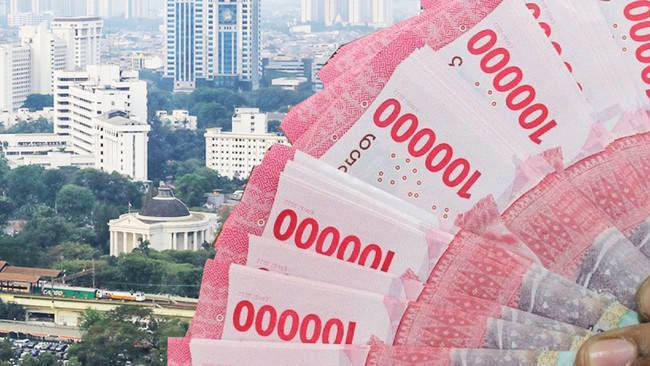
Indonesia’s financial markets are expected to strengthen across the board today. A full analysis of the outlook for the country’s financial markets can be found on page 3 of this article.
The Jakarta Composite Index (JCI) rebounded in trading on Wednesday (4 November 2026), closing up 15.48 points, or 0.32%, at 4,919.77 after plunging 3.78% the previous day.
The JCI came under pressure at the start of the session, falling to around 4,826. In the second session, it moved largely sideways before turning higher after 2pm local time.
The gains gathered pace towards the close, bringing the index near its intraday high of around 4,920.
Trading volume totalled 26.7 billion shares, with transactions worth Rp10.8 trillion. A total of 190 shares rose, 439 fell and 88 were unchanged.
Investor attention was focused on the US midterm elections, global oil prices and the results of a meeting of the Financial System Stability Committee (KSSK). Domestically, reports of wiretapping also drew market attention amid rising uncertainty.
The rupiah weakened against the US dollar on Wednesday (4 November 2026), reversing a slight gain recorded the previous day.
Refinitiv data showed the rupiah closed at Rp18,155 per US dollar, down 0.11% from Tuesday’s close of Rp18,135. During the session, it traded between Rp18,100 and Rp18,180 per dollar.
The rupiah fell despite a weaker US dollar in global markets. At 3pm local time, the US Dollar Index (DXY) was down 0.45% at 101.405.
The rupiah’s recent weakness has also drawn the attention of Bank Indonesia (BI). BI Governor Destry Damayanti said the currency had been affected by external developments, including geopolitical conflict in the Middle East and tighter US monetary policy.
“The weakening has been influenced by the escalation of geopolitical conflict in the Middle East, tighter US monetary policy and global investor sentiment towards emerging-market assets,” Destry said at a KSSK press conference on Tuesday (3 November 2026).
Destry said the rupiah had briefly strengthened to around Rp17,800 per dollar at the end of September 2026, before coming under renewed pressure throughout October and into early November.
Markets were also watching for the release of US trade balance data for September 2026, scheduled for Wednesday evening Indonesian time.
For context, the US trade deficit widened to US$105.6 billion in August from US$92.8 billion in July, its largest since March 2025. The increase came after imports surged by US$17.2 billion to a record US$420.8 billion, while exports rose by US$4.5 billion to US$315.2 billion.
Investors are monitoring the US trade figures for clues about the American economy and the dollar’s future direction.
In the government bond market, the yield on Indonesia’s 10-year government securities rose to 7.739% on Wednesday (4 November 2026), from 7.707% in the previous session.
The 3.2-basis-point increase indicated pressure on government bond prices. Yields move inversely to bond prices: when yields rise, prices fall, and vice versa.
On Wall Street, stocks surged on Wednesday (4 November 2026). A decisive victory for the Democratic Party in the US midterm elections, combined with President Donald Trump’s acceptance of the result, eased political uncertainty that had weighed on financial markets.
Democrats won majorities in both the House of Representatives and the Senate, as well as several key gubernatorial races, including in Texas.
The result could give Democrats the power to counterbalance Trump’s policies. He has championed business-friendly tax cuts, but has also imposed import tariffs and pursued a war with Iran that has contributed to inflation.
The Dow Jones Industrial Average jumped 1,569.40 points, or 3.03%, to 53,356.12. The blue-chip index returned above 53,000 for the first time since 8 September.
The gain was also its largest since 9 April 2025, when Trump announced a 90-day pause on reciprocal tariffs for several countries. The S&P 500 rose 1.58% to 7,688.62, while the Nasdaq Composite gained 1.44% to 25,736.51.
The rally accelerated after US crude prices plunged by more than 8%. Vice-President JD Vance blamed the Iran war as one of the reasons Republicans lost the election on Tuesday. Brent crude also fell by more than 8%.
Peter Boockvar, chief investment officer at One Point BFG Wealth Partners, said the election result would increase pressure on the government to end the war.
“Pressure to end the war will grow. The American people have clearly expressed their dissatisfaction with inflation and petrol prices, among other issues. Perhaps this result will encourage efforts to end the war. We shall see,” he said, as quoted by CNBC International.
Trump told The New York Times that he was fully prepared to accept the election result. He also told The Wall Street Journal that he and the Republicans would work with Democrats.
Jay Woods, chief market strategist at Freedom Capital Markets, said the initial response from Trump, accepting the result, had also helped drive the stock-market rally.
“Uncertainty still hangs over the market, but one thing is certain: the government will face political gridlock. Historically, that has been good for markets,” he said.
Shares linked to economic activity and likely to benefit from greater stability led the gains. Walmart rose 3%, while Bank of America gained around 4% as investors began looking beyond technology stocks.
Before the election, investors had worried that a sweeping Democratic victory could hurt some market sectors, particularly stocks associated with building artificial intelligence (AI) infrastructure.
They feared a Democratic victory could pave the way for tighter restrictions on data-centre construction across the US. Those concerns grew after Gina Hinojosa won the Texas governorship. She had pledged to impose an immediate moratorium on data-centre construction in a state that is one of the industry’s main hubs.
CoreWeave shares fell on Wednesday. Shares in Elon Musk’s SpaceX, which is headquartered in Texas, also declined, while Nvidia fell by around 3%.
Market sentiment was also supported by historical evidence that stocks tend to perform well when control of the US government is divided between the two parties. Such a split limits the government’s ability to enact policies and regulations, providing businesses with greater certainty.
Andrew Slimmon of Morgan Stanley Investment Management said markets favoured political gridlock.
“Markets like gridlock. They do not like one party having too much power,” he said.
Indonesia’s financial markets are expected to strengthen today, with the US election result and the steep fall in oil prices seen as potential positive catalysts.
Domestically, investors are focused on Indonesia’s third-quarter 2026 economic growth figures, developments in the capital market and plans to expand BPJS Kesehatan assistance.
The following are key developments for market participants to watch.
1. US election: Trump and Republicans suffer a decisive defeat
Democrats have pledged to use their sweeping midterm-election victory to curb President Donald Trump’s power.
The result opens the possibility of political gridlock in Washington over the next two years. In his first public appearance after the election, Trump instead showcased a ballroom project at the White House.
Democrats took control of both the Senate and the House after winning in several Republican strongholds. Public anger over Trump’s policies — particularly the US war with Iran, which has worsened inflation and the cost of living — was a major factor behind the result.
This is the first time Trump has faced a Congress controlled by Democrats. House Democratic leader Hakeem Jeffries said his party would prioritise the cost of living and scrutinise the Trump administration.
“We do not work for Donald Trump. We work for the American people. The era when the House was an extension of the Trump administration is over,” he said, as quoted by Reuters.
Trump acknowledged that the Iran war had contributed to the Republican defeat, but continued to defend his decision to attack Iran. Vance, by contrast, openly described the war as the main reason his party lost.
The Democratic victory also made history in several states. In Texas, Democrats won a Senate seat for the first time since 1988 and defeated Governor Greg Abbott. Kansas elected its first Democratic senator in nearly a century.
After taking office in January, Democrats are expected to use their congressional majority to investigate the Trump administration, obstruct some legislative priorities and block presidential nominees.
The Democratic gains extended across almost the entire US. The party won more than two dozen House seats previously held by Republicans, including in several districts Trump carried by wide margins in the 2024 election.
The election also produced several historic firsts. Keisha Lance Bottoms became the first Black woman elected governor in the US, while Deb Haaland became the first Native American woman to win a governorship.
2. US trade deficit narrows
The US trade deficit narrowed slightly to US$105 billion in September 2026, from US$105.7 billion in August. It was also below the market forecast of US$108 billion.
The narrower deficit was supported by a 1.9% rise in exports to US$321.5 billion, the highest level in five months. The increase was driven mainly by computers, soybeans, crude oil, computer accessories, civilian aircraft and pharmaceutical products. Exports of non-monetary gold, however, fell.
US imports continued to rise, increasing 1.2% to a record US$426.6 billion. The increase was driven primarily by purchases of computers, computer accessories and pharmaceutical products. Imports of semiconductors, non-monetary gold and crude oil declined.
The largest US trade deficits were with Mexico, at US$28.7 billion; Vietnam, US$25.3 billion; Taiwan, US$21.9 billion; China, US$17.9 billion; the European Union, US$14.2 billion; and South Korea, US$12.8 billion. The US recorded a US$4.4 billion trade deficit with Canada.
3. US employment data
The US private sector added 86,000 jobs in October 2026, exceeding the market expectation of 69,000. The figure matched September’s increase, which was revised downwards. Hiring remained solid for a second consecutive month, with businesses of varying sizes adding staff.
By sector, trade, transport and utilities recorded the largest increase, with 39,000 jobs added. Education and health services followed with 28,000, while leisure and hospitality added 19,000.
Professional and business services, however, shed 27,000 jobs for the third consecutive month. Natural resources and mining lost 8,000 jobs, while the information sector fell by 2,000.
ADP Chief Economist Nela Richardson said wage growth for workers changing jobs had reached its fastest pace since March 2024. The increase was supported by base pay, bonuses, overtime and longer working hours.
4. US services sector loses momentum
The US ISM Services Purchasing Managers’ Index (PMI) fell to 54.5 in October 2026 from 54.9 in September. It was also below the market expectation of 54.8 and marked a three-month low. Although the index remained above 50, the slowdown indicated that growth in the US services sector was losing momentum.
The decline was driven mainly by slower business activity, which fell to 53.8 from 56.5, and a drop in new orders to 55.9 from 59.8. The inventories index also declined, to 55.4 from 57.8.
ISM Chair Steve Miller said import tariffs and rising fuel costs remained major supply-chain concerns. Some businesses had yet to feel the full impact of these higher costs or pass them on to consumers.
ISM warned that price pressures could rise again if tariff-related costs and oil prices did not ease. Even without further increases, costs already incurred could still push consumer prices higher.
5. Oil prices plunge
Global crude prices plunged by more than 8% on Wednesday (4 November 2026), reaching their lowest levels in more than two months.
The decline followed the Republican Party, led by President Donald Trump, losing control of Congress in the midterm elections. Investors judged that the political shift could increase pressure on Trump to end the US-Israeli war against Iran.
Brent crude fell 8.7% to US$94.62 a barrel, while West Texas Intermediate (WTI) dropped 8.3% to US$88.12. Both benchmarks closed at their lowest levels since 31 August.
The Republican defeat weakened Trump politically. With Democrats controlling both the House and the Senate, the US government’s military options could be more constrained, raising the prospect of peace talks with Iran.
Vance questioned the decision to go to war and described the Iran conflict as the main reason Republicans lost. Trump also acknowledged that the war had contributed to his party’s poor election result.
Further downward pressure on oil came from Trump’s statement that the US had no immediate plans to attack Iran. Qatar also stepped up mediation efforts to prevent an escalation of the conflict.
The risk of war has not disappeared, however. Iran’s Supreme Leader Ayatollah Mojtaba Khamenei said hostility from the US towards Tehran would continue regardless of which party held power in Washington.
On the supply side, crude and refined-product exports from Gulf countries fell to 17.1 million barrels a day in October from 18.9 million barrels a day in September.
US crude inventories fell by 865,000 barrels to 409.8 million barrels in the week ending 30 October. This was contrary to analysts’ expectations of an 877,000-barrel increase.
6. OJK reports 25 companies in the IPO pipeline as investor interest grows
The Financial Services Authority (OJK) said corporate interest in raising funds through Indonesia’s capital market remained high, with 25 public-offering plans in the pipeline.
OJK Board of Commissioners Chair Friderica Widyasari Dewi said that, as of 28 October 2026, fundraising in the capital market had reached Rp202.04 trillion.
Source: jawawa.id (https://jawawa.id/newsitem/trump-loses-oil-crashes-is-indonesia-set-to-announce-good-news-today-1793839885)
Originally published by CNBC Indonesia (https://www.cnbcindonesia.com/research/20261104155247-128-782324/trump-kalah-minyak-ambruk-ri-siap-umumkan-kabar-gembira-hari-ini), translated from Indonesian