
Trump Intensifies Iran Sanctions, China Becomes Toughest Test for Treasury Secretary Bessent
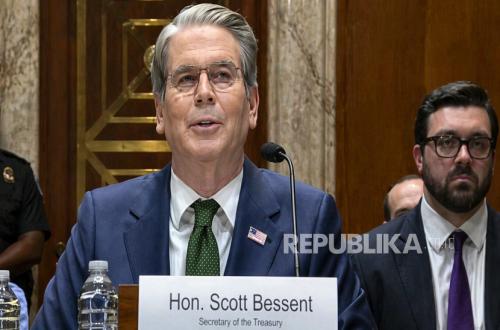
United States President Donald Trump is preparing to increase pressure on Iran through economic channels. After months of conflict without a political resolution, Washington has placed US Treasury Secretary Scott Bessent in a key position in efforts to narrow Tehran’s economic space.
Bessent is scheduled to outline further US government measures against Iran on Monday, 24 August 2026. The Trump administration has signalled that these measures will go beyond conventional sanctions packages and target trade networks, finance, shipping, and third parties deemed to be helping Iran maintain its economic activity.
In an interview with CNBC, as reported by Reuters on Thursday, 20 August 2026, Bessent said Washington would impose the toughest sanctions in history against Iran.
The statement indicates a shift in the focus of Washington’s pressure. The conflict is no longer being waged solely through military force, but also through bank accounts, oil tankers, oil trading, intermediary companies, payment networks, and access to the international financial system.
Trump previously stated his administration would increase economic pressure on Tehran. As reported by Reuters on Thursday, 20 August 2026, Trump threatened Iran with economic warfare and isolation on an unprecedented scale.
The Associated Press reported on Friday, 21 August 2026, that Trump called the campaign an economic D-Day. Washington also threatened to take action against countries, companies, financial institutions, and other parties that continue to provide economic channels for Tehran.
The strategy could rely on secondary sanctions. Through this mechanism, Washington can force foreign companies to choose between maintaining trade with Iran or retaining access to the US market and financial system.
This is where Bessent’s task becomes far more complicated than simply issuing new sanctions lists.
The biggest obstacle to America’s efforts to isolate Iran is China. Data from Kpler cited by Reuters shows China purchased more than 80 percent of Iran’s seaborne oil exports in 2025. Most of that oil flowed to independent Chinese refineries.
Beijing has so far shown no willingness to follow Washington’s pressure. Reuters reported on Thursday, 20 August 2026, quoting Chinese officials who asserted that sanctions and pressure would not help resolve the Iran issue. Beijing again called for a political and diplomatic solution.
The situation places Washington in a dilemma. The US can impose sanctions on Chinese refineries, trading companies, or financial institutions connected to Iran. However, the further Washington targets Chinese companies, the greater the risk of economic conflict with Beijing.
Thus, the success of Trump’s strategy hinges on a fundamental question: how far is America willing to pressure China in order to isolate Iran?
Pressure on Iran’s oil trade was already visible before Bessent’s new package was announced. Reuters reported on Friday, 21 August 2026, citing Kpler data, that Iranian oil shipments to China fell to around 785,000 barrels per day in June 2026.
The figure is estimated to have increased to around 823,000 barrels per day in July. However, the average recorded so far in August has dropped sharply to around 534,000 barrels per day.
The August figure is still provisional because the month has not yet ended. By comparison, Kpler data shows China’s purchases of Iranian oil averaged around 1.4 million barrels per day throughout 2025.
The decline does not mean Beijing has followed Washington’s demands. Reuters reported that the reduced supply is also linked to pressure on Iran’s shipping routes. Tanker movements have become more difficult and some vessels have switched off tracking devices, meaning oil flows cannot always be fully monitored.
Iranian oil inventories held on tankers outside US pressure zones are also reported to have fallen from around 105 million barrels to around 80 million barrels. The situation is beginning to affect buyers in China.
A number of independent refineries are reported to be seeking alternative oil, including from Brazil and Iraq. The tight supply is also reducing the profits Chinese buyers typically earn from large discounts on Iranian oil.