
Trump in Beijing: Diplomatic Momentum or Dead End?
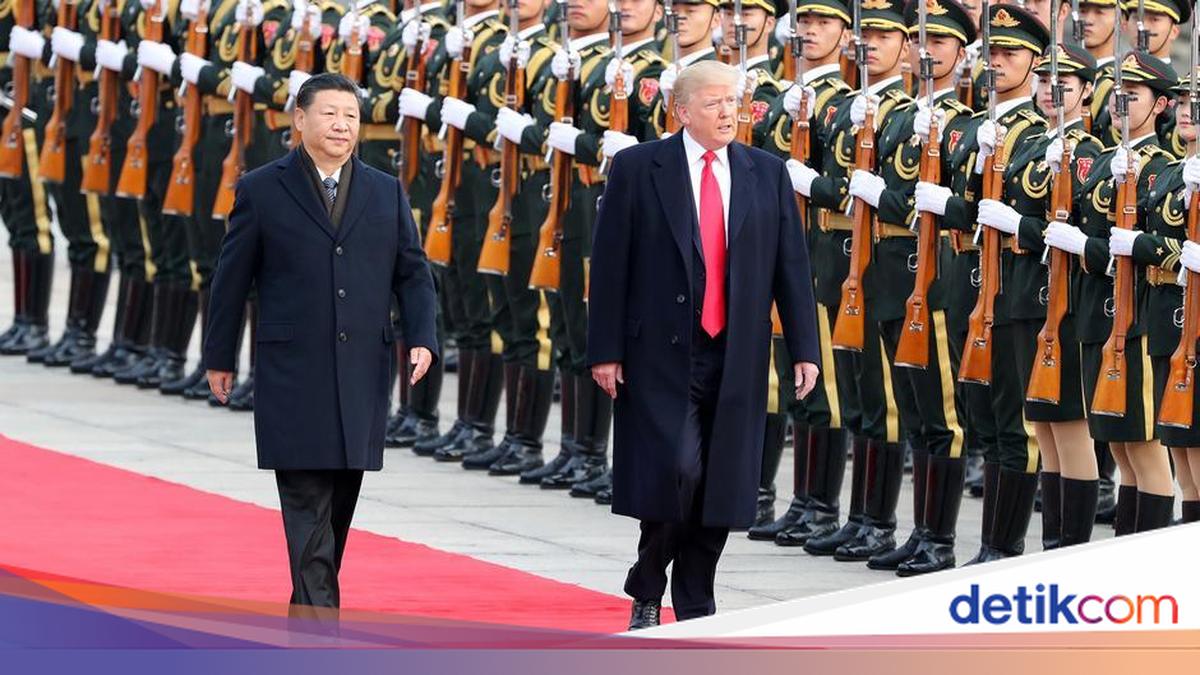
The scheduled meeting on 14 and 15 May is only generating modest expectations. This is the first time the two national leaders have met since implementing a rather painful trade war pause in October 2025. This dynamic indicates that Trump’s approach has failed to provide an advantage ahead of negotiations.
The meeting in China’s capital will be a fairly grand event. The leaders are scheduled to hold a summit at the Great Hall of the People, visit the UNESCO heritage site of the Temple of Heaven, attend a state banquet dinner, and share tea and lunch. However, the grandeur of the event does not necessarily reflect the expected outcomes.
“Trump seemingly needs China more than the other way around,” said Alejandro Reyes, a professor focusing on Chinese foreign policy at the University of Hong Kong, to Reuters. “He needs some sort of foreign policy win, a win that shows he is working to ensure global stability and not just disrupting global politics.”
Domestic pressure on Trump is indeed significant. More than 60 percent of Americans disapprove of the Iran war he launched, according to a Reuters and Ipsos survey last month. This situation corners Trump, who must therefore secure concrete results from his visit to Beijing.
Taiwan becomes a sensitive bargaining position
When in China, questioned about the US commitment to selling weapons to Taiwan, Trump did not answer directly. After all, the issue of Taiwan’s independence is extremely sensitive for Beijing.
“President Xi Jinping wants us not to do it and I will discuss that. It is one of many things I will talk about,” Trump told journalists in the Oval Office at the White House.
Trump, referring to Russia’s invasion of Ukraine, said about Taiwan that he “does not think it will happen.”
“I think we will be fine. I have a very good relationship with President Xi Jinping. He knows I do not want that to happen,” Trump continued.
However, Trump also noted that the United States is in a position that is “very, very far” compared to China.
In response to Trump’s statements, Taiwan’s Ministry of Foreign Affairs pledged to “continue strengthening cooperation” with the United States as the island’s primary security supporter. Taiwan also stated it would “build effective deterrence capabilities to jointly maintain peace and stability in the Taiwan Strait.”
Based on the “Six Assurances” of 1982, the main foundation of US policy towards Taiwan after the transfer of diplomatic recognition, the United States stated it would not “consult” with China regarding arms sales to Taiwan.
However, referring to the dynamics in Congress, a group of US senators led by Jeanne Shaheen, the top Democrat on the Senate Foreign Relations Committee, said that Trump must immediately approve a $14 billion US arms package to Taiwan.
“We urge you and your team to make clear that America’s support for Taiwan is unwavering,” the senators wrote. This group is mostly from the Democratic Party but also includes two centrist Republican politicians.
The senators also emphasised that when discussing economic issues, Trump must state that “America’s support for Taiwan is non-negotiable.”
Concerns arise from various parties that bargaining between Trump and Xi could embolden Beijing to take Taiwan by force. Even a shift in nuance in Washington’s words alone would raise anxieties about the commitment of Taipei’s most important supporter. That anxiety would impact all other US allies in Asia.
On the other hand, Wu Xinbo, a professor at Fudan University in Shanghai who serves on the advisory board of China’s Ministry of Foreign Affairs, said Trump must clarify that he “will not support independence or take actions that encourage separatist political agendas.”
Iran becomes pressure that has yet to yield results
Besides Taiwan, the Iran issue is also a heavy agenda item in this meeting. Trump has shown a changeable stance regarding China’s role in the conflict. On one hand, he often criticises China for not sufficiently pressuring Iran as its largest oil buyer. On the other hand, he also praises Xi Jinping’s government for helping to push Tehran back to the negotiating table when ceasefire talks nearly failed in April 2026.
However, ahead of this high-risk visit, the White House has set low expectations that Trump will be able to persuade Xi Jinping to change China’s stance.
Nevertheless, the Trump administration appears unwilling to let the Iran issue disrupt other equally complex agendas, such as trade and efforts to push China to block fentanyl precursor exports.
“We do not want this to be something that derails broader relations or agreements that may come out of our meeting in Beijing,” said US Trade Representative Jamieson Greer on Bloomberg TV last week.
Ahmed Aboudouh, an observer from the London-based think tank Chatham House focusing on Chinese politics in the Middle East, opines that Beijing has publicly affirmed its desire to see the war end. China has also worked diplomatically behind the scenes to help its ally Pakistan push for a peace agreement.
Additionally, Beijing has sent “subtle messages of dissatisfaction to Iran” for closing the Strait of Hormuz, and to the US over its blockade of Iranian shipments.
“They are very cautious, avoiding risks, and do not want to get involved in anything that would drag them into something they do not consider their problem,” Aboudouh explained.
Ahead of Trump’s arrival, Chinese Foreign Minister Wang Yi hosted his Iranian counterpart, Abbas Araghchi, in Beijing last week. Wang Yi used the moment to