
Trump Humiliated at Home as US Senate Votes to End Military Action Against Iran
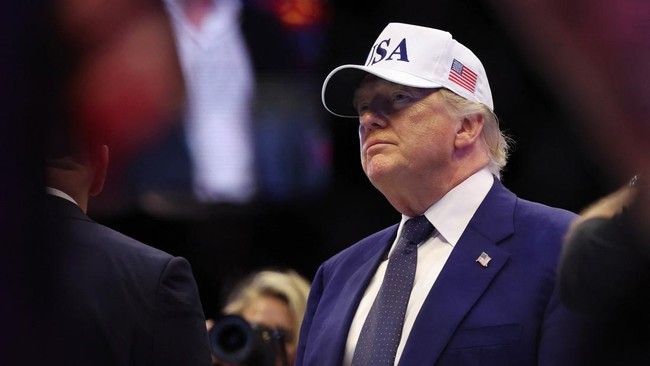
The United States Senate delivered the latest political blow to President Donald Trump by approving a resolution ordering the cessation of US military action against Iran. The historic decision reflects mounting Congressional unease over a war that has lasted nearly four months and sparked widespread debate about presidential authority to commit the country to conflict. In a vote held on Tuesday (23/6/2026) local time, the Senate passed the war powers resolution by a margin of 50 to 48. The resolution had already cleared the House of Representatives earlier this month. The result marks the first time since the War Powers Act was enacted in 1973 that both chambers of Congress have simultaneously passed a resolution directing a president to withdraw US forces from an armed conflict. Although likely largely symbolic and not necessarily carrying direct legal force, the vote remains a political setback for Trump. The Republican president has until now almost always enjoyed solid support from the majority of his party’s members in Congress. The Senate decision comes as the Trump administration is expected to seek Congressional approval to disburse tens of billions of dollars to fund the war against Iran. Republicans currently hold a slim majority in both the Senate and the House. However, with midterm elections approaching in November, a number of Republican legislators are beginning to show divergent stances on several key Trump agendas. In recent weeks, some Republican members rejected a US$1.8 billion funding proposal Trump called ‘anti-weaponization’ money to compensate political allies he claims were targeted by federal agencies. They also stalled passage of a US$70 billion bill intended to fund immigration enforcement policies. The Senate vote proceeded almost entirely along party lines. Four Republican senators joined all but one Democratic senator in supporting the resolution. Two other Republican senators were absent from the vote. The vote took place as the Trump administration is attempting to negotiate a peace agreement with Iran. Congressional support for the resolution is expected to add political pressure on Trump not to resume military operations should the diplomatic process fail. Under the War Powers Act, a concurrent resolution approved by the House and Senate does not need to be sent to the White House for presidential signature. When the law was drafted, Congress intended the mechanism as a means to halt military operations. However, legal experts assess the matter is far from settled. Never before has a war powers resolution passed both chambers of Congress. Moreover, a 1983 US Supreme Court ruling stated that such legislative action must be presented to the president for signature or veto to have legal force. The White House itself insists the War Powers Act is unconstitutional and therefore not binding on the executive branch. A White House official said on Tuesday that the Senate vote result was of little significance because the resolution does not reach the president’s desk and has no legal force. The official also highlighted that the resolution only passed because two Republican senators were absent. The official added that the resolution orders Trump to withdraw US forces from the conflict, whereas according to the White House, military operations have already ended following a ceasefire enacted on 7 April. Experts predict the debate over the law’s constitutionality will ultimately be decided by the courts. ‘The executive branch will likely ignore it on constitutional grounds, and it is unclear who would have legal standing to sue to enforce it,’ said Scott Anderson, a senior fellow at the Brookings Institution and senior editor of the online legal publication Lawfare. New York Congressman Gregory Meeks, who sponsored the resolution in the House, asserted that he views the resolution as legally binding and will pursue all available legal avenues to ensure the administration complies. Democrats also stressed that the US Constitution grants Congress, not the president, the authority to bring the country into war. ‘Congress must shoulder this responsibility,’ said Democratic Senator Tim Kaine of Virginia in a speech urging support for the resolution. The four Republican senators who backed the resolution in the Senate were Susan Collins of Maine, Rand Paul of Kentucky, Bill Cassidy of Louisiana, and Lisa Murkowski of Alaska. Meanwhile, Democratic Senator John Fetterman of Pennsylvania voted against the resolution. The two Republican senators who missed the vote were Mitch McConnell of Kentucky and David McCormick of Pennsylvania. Democrats pledged to continue pushing for additional votes on war powers, aiming to force Republican members to publicly record their positions on the matter. Congress also holds the right to review and vote on any peace agreement with Tehran if the deal touches upon Iran’s nuclear programme.