
Trump Grows ‘Closer’ to Putin as Zelenskyy Comes Under Pressure: Could Ukraine Be Sacrificed?
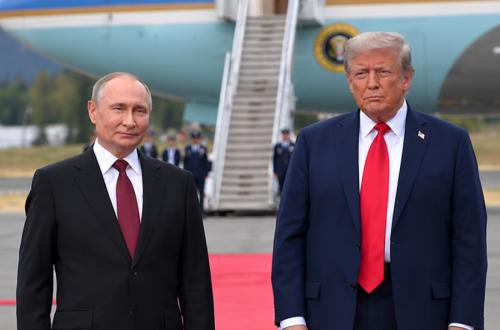
WASHINGTON — US President Donald Trump’s relationship with Russian President Vladimir Putin has again come under scrutiny after Washington adopted a series of policies seen as benefiting Moscow, while military support for Ukraine faces uncertainty. The situation has raised concern that efforts to end the Russia-Ukraine war could instead increase pressure on Kyiv to accept a deal that harms its national interests.
Those concerns intensified when Trump’s special envoy, Steve Witkoff, arrived in St Petersburg, Russia, on Wednesday (21 October 2026) for talks with Putin on ending the war in Ukraine. Reuters reported that Witkoff was due to meet the Russian leader a day after talks with Ukrainian President Volodymyr Zelenskyy and several European leaders in Oslo, Norway.
Witkoff’s arrival came amid deteriorating relations between Washington and Kyiv, following Trump’s easing of some sanctions on Russia, agreement to buy diesel from Moscow and delay in approving the transfer of several Patriot air-defence missiles urgently needed by Ukraine. The Trump administration has also faced questions over restrictions on military satellite communications used by Ukrainian forces and disruptions to early-warning information about Russian attacks.
Reuters reported on Tuesday (20 October 2026) that Trump had become more openly accommodating towards Russia. By contrast, he has repeatedly criticised Zelenskyy, saying he has not done enough to help Washington end a war that has lasted more than four years.
“Russia, frankly, has been nice regarding Ukraine,” Trump told reporters on Monday (19 October 2026), according to Reuters.
Trump has also said Zelenskyy is not helping efforts to end the war and suggested Ukraine should find someone else to negotiate. The remarks have further widened tensions between the two leaders as Ukraine continues to face Russian missile and drone attacks.
The Associated Press reported that former US ambassador to Ukraine John Herbst considers relations between Washington and Kyiv to be at one of their most worrying points under the Trump administration. Herbst, now affiliated with the Atlantic Council, said Washington’s policy direction towards Russia and Ukraine appears increasingly unfavourable to Kyiv.
The latest developments do not, however, mean that the United States has officially abandoned Ukraine or formed an alliance with Russia. Washington remains involved in peace talks with Kyiv and European countries, although several Trump administration decisions have raised disputes over the direction of its policy.
Russian diesel deal sparks controversy
One of the most notable policy changes came on Friday (9 October 2026), when Trump announced a deal to supply diesel fuel from Russia after talks with Putin. The agreement paves the way for more than 300,000 tonnes of Russian diesel to reach the US and international markets, with the possibility of further shipments in the coming months.
Reuters reported that Washington had temporarily eased some restrictions on the Russian fuel trade to allow the deal to proceed. The move marks a significant shift from the United States’ earlier efforts to use energy sanctions to curb Moscow’s revenue in response to its invasion of Ukraine.
Trump said the deal was needed to help bring down fuel prices, which had risen amid disruptions to global energy supplies. Energy prices have become a particularly sensitive issue ahead of the US midterm elections on 3 November 2026, as his administration faces political pressure over the cost of living.
The policy has drawn criticism from members of both the Democratic and Republican parties in Congress. They fear that additional revenue from energy sales could help Russia sustain its war effort.
Zelenskyy has also condemned the policy, saying it gives Russia an economic benefit while its forces continue to attack Ukrainian territory. Kyiv argues that easing economic pressure could reduce Moscow’s incentive to accept a lasting end to the war.
Kremlin investment envoy Kirill Dmitriev said on 14 October, in remarks reported by Reuters, that the diesel deal could open the way to broader economic cooperation between Russia and the United States. His comments suggest Moscow sees the resumption of trade relations as an opportunity to expand bilateral ties.
The US government has offered a different explanation for the policy. Energy Secretary Chris Wright said energy-supply cooperation could form part of a diplomatic approach that gives Russia an incentive to de-escalate the war.
Market analysts have questioned whether the diesel deal will effectively lower energy prices. They say additional supplies from Russia may not be large enough to offset global energy disruptions, which are also being affected by the war in the Middle East and the situation around the Strait of Hormuz.
Patriot missiles held up, threatening Ukraine’s defences
Another issue worsening relations between Washington and Kyiv is the delay in approving the transfer of Patriot interceptor missiles. The US-made air-defence system is one of Ukraine’s main tools for countering Russian ballistic-missile attacks on cities and strategic infrastructure.
The Washington Post reported on Monday (19 October 2026) that US Defence Secretary Pete Hegseth had yet to complete the approval process for transferring several Patriot missiles from allied countries to Ukraine. Hegseth had reportedly neither formally rejected the transfer nor granted the necessary approval.
Washington’s approval is required because Patriot missiles are US-made weapons, and their transfer to another country must comply with export rules. As a result, allied countries that have provided funding or offered missiles from their own stocks cannot necessarily send them to Ukraine immediately.
The delay is linked to the Prioritised Ukraine Requirements List (PURL), a procurement mechanism through which NATO members can fund purchases of US weapons for Ukraine. The programme has become increasingly important as the Trump administration reduces direct arms assistance and presses European countries to shoulder more of the cost.
Zelenskyy has said Ukraine’s stock of Patriot interceptors is running low as Russia steps up attacks on energy infrastructure and residential areas. The exact number of missiles still available has not been made public for operational-security reasons.
In an interview published by Bloomberg on 18 October, Zelenskyy accused the Trump administration’s policies of creating pressure on Ukraine to accept Russian demands. He linked this alleged pressure to the delayed interceptor transfers and the easing of economic pressure on Moscow.
“I am convinced that various steps have been taken to persuade Ukraine to surrender,” Zelenskyy told Bloomberg.
Zelenskyy’s statement is his assessment of Washington’s series of policies, not evidence that the Trump administration has officially decided to force Ukraine to surrender. The US government has denied that delays in arms support are politically motivated or intended to weaken Kyiv’s defences.
US Secretary of State Marco Rubio acknowledged on Tuesday (20 October 2026) that some interceptor missiles may not have been delivered through the PURL mechanism. However, Rubio said the delay was not the result of a political instruction intended to harm Ukraine.
“There is no deliberate political direction to harm Ukraine,” Rubio told reporters in Mumbai, India, according to Reuters.
Rubio stressed that demand for interceptor missiles is extremely high—not only from Ukraine, but also from the United States and other countries. He said decisions on transfers must take account of Washington’s own defence needs and limited weapons stocks.
Source: jawawa.id (https://jawawa.id/newsitem/trump-grows-closer-to-putin-as-zelenskyy-comes-under-pressure-could-ukraine-be-sacrificed-1792576339)
Originally published by Republika (https://news.republika.co.id/berita/tn90ct451/trump-kian-mesra-dengan-putin-zelensky-terdesak-apakah-ukraina-akan-dikorbankan), translated from Indonesian