
Trump Forms Super Intelligence Force: What Will It Do?
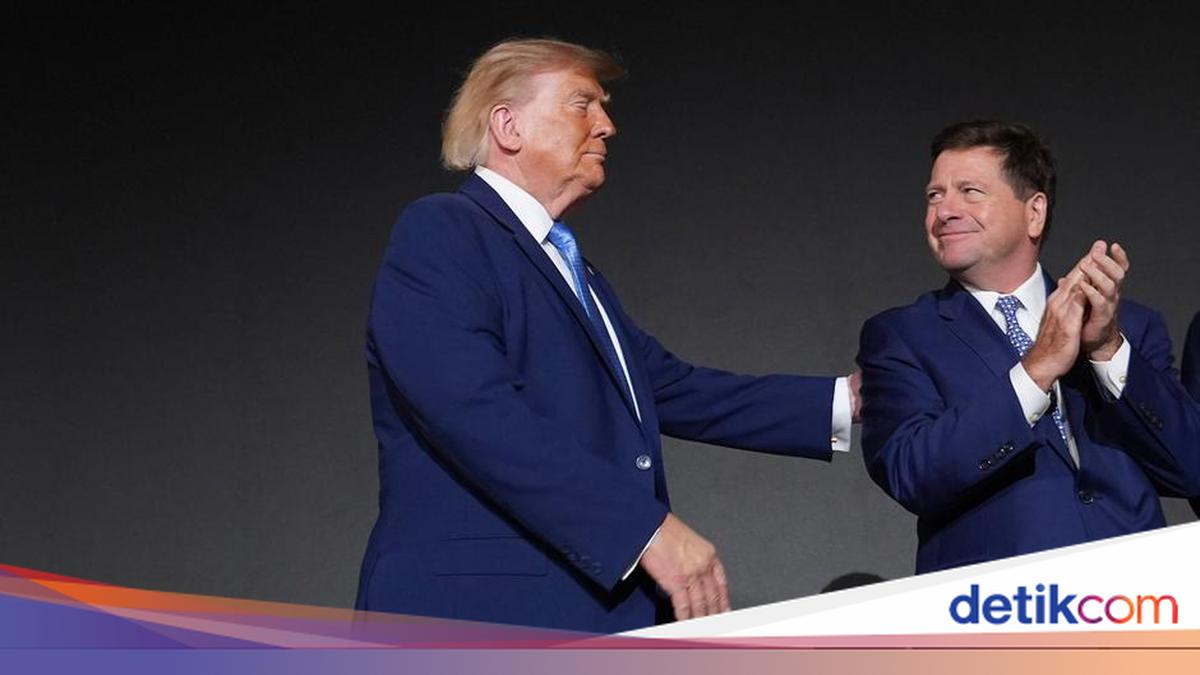
US President Donald Trump recently announced the formation of a new task force called the Super Intelligence Force. The group will be led by Jay Clayton, the White House official responsible for artificial intelligence (AI), and is tasked with ensuring that the US dominates the emerging technology.
“Bigger than the Industrial Revolution and the internet,” Trump said when announcing the formation of the Super Intelligence Force.
The move comes in response to the rapid growth of the AI industry. The task force was established after Trump met AI industry executives in late September and a month before the November midterm elections.
Public pressure has continued to mount, as have warnings from business and academic circles about a technology that cannot yet be fully controlled.
The task force’s name refers to Trump’s September executive order replacing the term “Artificial Intelligence” with “Super Intelligence” (SI). Jay Clayton, the national security director and the new White House official responsible for AI, has been appointed to lead the group.
Trump said the task force would coordinate government efforts “to ensure America continues to lead the world in Super Intelligence” and “protect the interests and improve the lives of all Americans”.
Trump has stressed that he does not want regulation to “hamper” the progress of the SI industry. A reported copy of the task force’s charter also says the group will seek to prevent “overregulation and the capture of the regulatory process by special interests”.
What is the Super Intelligence Force’s role?
The White House has not released official information about the Super Intelligence Force. However, copies of its charter outlining the group’s responsibilities have been reported by The Wall Street Journal and Politico.
The reported document indicates that the task force’s remit is broad. Biosecurity and threats to water supplies are among its areas of concern. Cyberattacks have also recently targeted critical infrastructure in the United States.
The group will work with key US government agencies, including the Pentagon, the Department of Justice, the Department of Homeland Security and the Federal Trade Commission (FTC). Its aim is to develop recommendations for new laws to strengthen the government’s ability to respond to various threats.
The task force will also consider whether AI laboratories should be legally required to report “security breaches, hacks and attempts to break through system guardrails” to the government. The possibility of introducing automated alert systems will also be examined.
“While laboratories ultimately bear responsibility for the risks and opportunities amplified and accelerated by their models, the federal government has a duty to recognise and understand this era of change and enforce the laws of our nation so that the fundamental principles of our Republic are protected and strengthened,” the reported document states.
The task force’s mandate covers financial services, energy infrastructure, transport, agriculture and emergency services. Trump said the group would also coordinate government engagement with consumers, public-interest groups, religious organisations, critical infrastructure providers and AI companies. Some critics, however, have pointed out that workers are not mentioned in the list.
The task force has 120 days to submit a report on AI risks. It will focus on potential threats to civil liberties and cybersecurity, standards for advanced AI models, and the possible effects of overregulation.
Who are the members of the Super Intelligence Force?
Clayton, whom Trump appointed as the official responsible for AI in early October, will lead the task force. He told The Wall Street Journal that AI regulation should be “developed through dialogue”. He cited the risk-based framework drawn up by the Securities and Exchange Commission (SEC)—which he led during Trump’s first term—and the Federal Reserve for the financial industry.
The reported charter also names three deputy chairs:
Andrew Ferguson, chair of the Federal Trade Commission (FTC).
Emil Michael, Under Secretary of Defence for Research and Engineering.
Scott Kupor, director of the Office of Personnel Management.
According to the charter, Ferguson is expected to oversee consumer and advocacy group interests. His appointment comes as the FTC investigates OpenAI, Anthropic and METR over AI agents that could act beyond control and pursue harmful objectives.
Michael, a former technology consultant who served on Perplexity AI’s advisory board, will oversee coordination with AI companies. Kupor will be responsible for coordinating with critical infrastructure providers and other industry stakeholders.
Several senior members of Trump’s cabinet are also on the task force, including Vice-President JD Vance and Defence Secretary Pete Hegseth. The reported charter also lists David Sacks, Trump’s former official responsible for AI, and Condoleezza Rice, secretary of state under President George W. Bush, as external members.
The task force will submit its findings and recommendations to Trump and White House Chief of Staff Susie Wiles.
Reactions to the Super Intelligence Force
According to Politico, several senior Republican figures were not briefed on plans to establish the Super Intelligence Force before Trump announced it. The task force was formed as several senior Republican senators were preparing a major AI bill to reduce the risks posed by the technology.
Democrats have criticised the president’s move. Lori Trahan, a member of the US House of Representatives, told CNN that Trump was “just talking about forming an AI task force without a sustained strategy for how it will be carried out through congressional authorisation”. She said the move looked more like a tactic to delay meaningful action.
“We should be passing legislation and setting guardrails for the leading AI laboratories. This task force does none of that,” Trahan said.
Josh Gottheimer, another Democratic member of the House, also expressed doubts about Trump’s motives to Politico.
“If the president has finally realised that AI risks are not a hoax and is taking concrete steps to protect America, that is good,” Gottheimer said.
“But if this is just a public-relations distraction and an effort to protect his family’s investments, I strongly object.”