
Trump Expands Denaturalisation Efforts in Largest Push in Modern US History
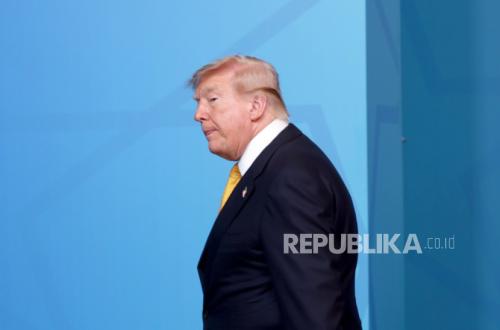
The administration of United States President Donald Trump is accelerating efforts to strip naturalised citizens of their nationality through the largest denaturalisation programme in recent decades. The Department of Justice (DOJ) is targeting at least 250 citizenship revocation lawsuits to be filed in federal courts by October 2026, a sharp increase compared with previous administrations.
Since the beginning of 2025, the DOJ has filed nearly 90 denaturalisation cases. If this pace continues, the Trump administration will record the highest number of citizenship stripping cases in modern US history. By comparison, the administration of Joe Biden filed only 24 cases over four years, whilst Trump’s first term saw 102 cases.
Under US federal law, citizenship can be revoked if the government successfully proves that the status was obtained through fraud, false statements, use of a false identity, or concealment of a criminal record that should have disqualified someone from becoming an American citizen.
The Trump administration insists the policy targets criminals and fraudsters deemed never entitled to citizenship in the first place. Secretary of Homeland Security Markwayne Mullin said that anyone who committed fraud during the naturalisation process has forfeited the right to retain American citizenship.
“The Department of Homeland Security is committed to revoking the citizenship of these fraudsters and removing them from the United States using every legal instrument available,” Mullin said, as reported by American media.
However, the policy has sparked debate among legal experts and former law enforcement officials. They argue the government’s move could transform denaturalisation — which for decades was used only in a limited way against war criminals, national security threats, or members of terrorist organisations — into a far broader immigration enforcement instrument.
Cassandra Robertson, a law professor at Case Western Reserve University, described the surge in cases as an escalation unseen in decades.
Meanwhile, Stacey Young, a former DOJ lawyer, said the programme is unlikely to have a significant impact on the Trump administration’s deportation targets because the denaturalisation process is extremely lengthy, costly, and requires complex legal proof.
“I am not convinced this policy will have a meaningful impact on the government’s deportation targets. However, it sends a message that citizenship obtained through naturalisation is not a permanent status,” she said.