
Trump Eases Russia Sanctions as Zelensky Urges US to Pressure Putin; Moscow Welcomes Move
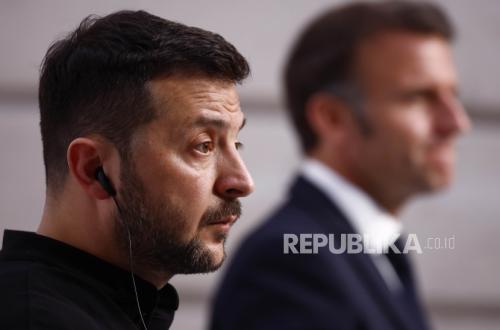
Ukrainian President Volodymyr Zelensky has said he is willing to continue US-mediated peace talks, despite growing tensions between Kyiv and Washington over President Donald Trump’s decision to ease economic pressure on Russia. Zelensky said Ukraine was ready to negotiate anywhere and in any format, but rejected a diplomatic process that would benefit Russian President Vladimir Putin.
Zelensky made the remarks on Saturday (17 October 2026), a day after Trump signed an executive order suspending the implementation of several sanctions and new tariffs on Russia. Washington’s decision drew criticism from Ukraine and several members of the US Congress, while Moscow welcomed it as an important development in relations between the two countries.
“The American negotiating track will continue. We hope they will put more pressure on Putin, not on us. Otherwise, that is truly unfair,” Zelensky wrote on social media platform X, as quoted by The Hill.
Zelensky said his government remained open to the possibility of direct talks with Washington representatives in the near future. He said the US side had indicated that a new meeting could take place the following week.
“The most important thing is peace. The Americans have indicated that a meeting between us and them could take place next week,” he said.
Zelensky’s willingness to continue diplomacy comes as the Trump administration takes steps that Kyiv believes could strengthen Russia’s bargaining position. In addition to granting exemptions from new sanctions, Washington had previously announced an agreement to supply Russian diesel in an effort to curb fuel prices on global markets.
Reuters reported on Saturday (17 October 2026) that deteriorating relations between Trump and Zelensky could threaten vital US support for Ukraine’s defence. The dispute involves not only sanctions policy, but also Kyiv’s access to intelligence, military communications technology and weapons supplies.
Sanctions suspended, Moscow welcomes move
Trump’s decision was set out in an executive order entitled Implementing the Lindsey O. Graham Sanctioning Russia and Iran Act of 2026, signed on Friday (16 October 2026). The law had been passed in September to increase economic pressure on Russia and countries assisting Moscow’s energy trade.
According to official White House documents, the law provides for sanctions against individuals, companies and sectors of the Russian economy. It also includes additional tariffs on Russian goods and on goods from certain countries that buy Russian oil and gas or help evade sanctions.
Trump, however, exercised the waiver authority granted by the law, citing the national interest of the United States. In the executive order, he said he had certified to Congress that granting the waiver was consistent with his country’s national interest.
The Financial Times reported on 17 October that the decision meant several new sanctions required by the law would not be imposed on schedule. The move came as the Trump administration sought to bring down energy prices ahead of the US midterm elections in November.
The decision does not mean that all US sanctions against Russia have been lifted. White House documents specifically retain a number of earlier restrictions imposed under other executive orders.
In Moscow, Trump’s decision was received positively. Russia’s state news agency TASS quoted Kirill Dmitriev, President Putin’s special envoy for investment and international economic co-operation, as describing the suspension of the Graham Act provisions as a historic development on 17 October.
“The Trump administration’s suspension of the Graham Act is an important and truly historic moment,” Dmitriev said on Telegram, according to TASS.
Dmitriev said the policy opened the way to more constructive economic relations between Russia and the United States. He argued that implementing the law could halt economic co-operation between the two countries and harm both the US economy and global markets.
“Instead of sanctions and confrontation, we have dialogue, mutually beneficial co-operation and shared responsibility for global stability,” Dmitriev said.
He also argued that economic co-operation between Russia and the United States could help build trust and create a foundation for lasting peace. His comments highlighted the fundamental difference between Moscow’s and Kyiv’s assessments of Trump’s decision.
For Russia, easing economic pressure is seen as an opportunity to improve relations with Washington. Ukraine, by contrast, believes reducing that pressure risks removing one of the tools used to push Russia to end its military operations.
Threat of power cuts in Ukraine
Zelensky’s concerns have deepened as Trump’s decision coincides with an escalation in Russian attacks on Ukraine’s energy infrastructure. The strikes pose a serious threat to electricity and heating supplies ahead of winter.
Deutsche Welle reported on 17 October that Zelensky had warned of Russian efforts to cause widespread power cuts in Ukraine. The Ukrainian president linked the attacks on the energy network to Washington’s policy, which he said was reducing pressure on Moscow.
According to the Financial Times, Zelensky said Russia had carried out one of its largest attacks on Ukraine’s energy sector. More than 15 key electricity generation and transmission facilities were targeted, he said, with serious consequences for the country’s energy supply.
Zelensky said the attack involved more than 320 drones, as well as a number of cruise and ballistic missiles. Those figures were provided by the Ukrainian government and reported by the Financial Times; they were not independently verified as a count of all the projectiles used.
“The suspension of US sanctions, easing pressure on the aggressor and financial gains for Putin will only encourage him to keep attacking,” Zelensky wrote on X.
He stressed that diplomacy must be aimed at genuinely ending the war, rather than giving Russia the opportunity to continue its military operations indefinitely.
Energy has become one of the main points of contention between Washington and Kyiv. Ukraine maintains that attacks on Russian oil-processing facilities are part of efforts to weaken Moscow’s economic and logistical capacity to wage war, while Trump believes those attacks are also driving up international energy prices.
The Financial Times previously reported that US officials had pressured Ukraine to halt attacks on Russian oil refineries. According to the report, which cited European officials, Washington had even linked the demand to possible restrictions on intelligence support and weapons procurement arrangements for Kyiv.
Trump denied that the United States had stopped sharing intelligence with Ukraine. Zelensky, however, expressed concern about the possibility of reduced access to information needed to counter Russian missile and drone attacks.
Ukraine’s dependence on US military and technological support means the diplomatic tensions have consequences extending far beyond the debate over economic sanctions.
Source: jawawa.id (https://jawawa.id/newsitem/trump-eases-russia-sanctions-as-zelensky-urges-us-to-pressure-putin-moscow-welcomes-move-1792295435)
Originally published by Republika (https://news.republika.co.id/berita/tn31tv451/trump-longgarkan-sanksi-rusia-zelensky-desak-as-tekan-putin-moskow-menyambut), translated from Indonesian