
Trump Designates Oval Office a National Monument, Prompting Controversy
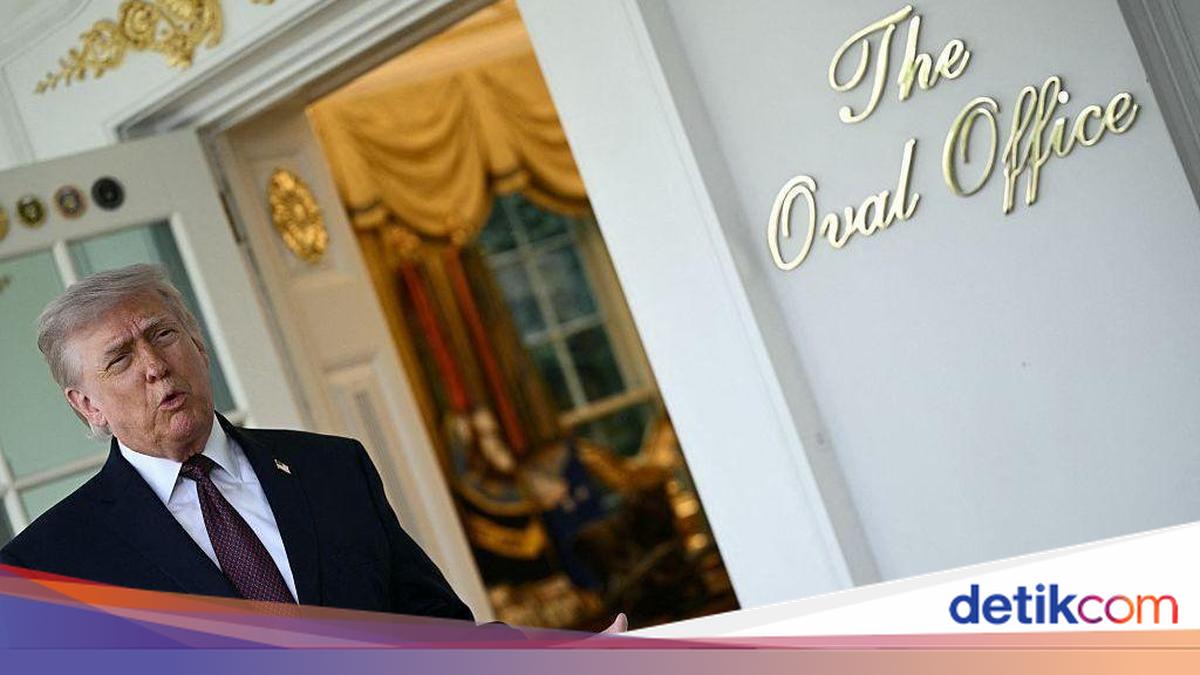
US President Donald Trump has signed an executive order that he says will prevent future presidents from making certain changes to the Oval Office at the White House. The order came after Trump made a series of major changes to the office’s decor and demolished the White House’s East Wing.
The Oval Office is the official workplace of the US president, in the White House’s West Wing in Washington, DC. It is one of the world’s most influential rooms, where many US political, economic, diplomatic and military decisions are developed or announced.
Trump, a former property developer, has drastically altered the appearance of the president’s official office during his second term, most notably by adding numerous gold-coloured ornaments.
“We’re making it a national monument, and nobody is going to be allowed to touch it, destroy it or knock it down just because some stupid people want to build something a little bit different in shape,” Trump told reporters on Thursday, 5 November.
The order came several months after Trump demolished the entire East Wing of the White House as part of a project that has since faced legal challenges. The project has also received approval from the US Congress. Construction is continuing, with plans to turn the area into a new ballroom.
The US president currently has the authority to make certain changes to the White House, but major projects require congressional approval.
Trump’s executive order, signed on Thursday, designates the Oval Office and a number of surrounding rooms as a national monument. The document also says the rules do not restrict the president’s authority to redecorate the monument, choose its furnishings or make routine operational and security changes, provided these do not significantly damage its historic structure or architectural character.
“We love the Oval Office, and this place is a symbol, just like the White House itself. It is a symbol of our country and of our country’s greatness,” Trump said.
He added that world leaders who had visited in recent months had praised the changes he had made to the room’s decor.
Trump said that before his alterations, the White House and Oval Office needed repairs because they were in “very bad” condition. He cited broken windows, cracked walls and damaged stonework.
However, many of the most conspicuous changes have been cosmetic, including the installation of a large gold plaque reading “Oval Office” outside the room, the paving of part of the Rose Garden and the addition of a new helicopter landing pad. Trump said the order would “make it impossible for anybody to destroy this incredible room”.
The entire White House complex is already a National Historic Landmark, a designation intended to protect buildings from sudden changes that could undermine their historical value.
As president, Trump has the authority to designate national monuments, which in some respects are similar to national parks. His order directs the National Park Service to maintain the Oval Office in a way that protects its historic character, architectural integrity and association with the presidency.
The document acknowledges that the White House already has legal protections in place. It argues, however, that “the Oval Office merits special recognition and separate protective stewardship as a historic structure of national significance”.
Congress has previously granted an exemption from the National Historic Preservation Act, allowing presidents to make changes they consider necessary.
The Oval Office in its current form has been in use since the early 1930s, after it was designed during Franklin D. Roosevelt’s presidency.
Greg Werkheiser, of Cultural Heritage Partners, a law firm focused on heritage preservation, said temporary changes such as replacing furniture and decor were entirely within a president’s authority.
“As long as they’re not damaging works of art and permanent architectural elements, they can generally do whatever they want,” Werkheiser told the BBC.
Werkheiser said the Trump administration had shown disregard for other historic sites in Washington and had sought, through several legal challenges, to weaken rules requiring the preservation of historic buildings.
Trump has pursued a series of major projects to beautify Washington and held three events over the past week to showcase the developments, even as his Republican Party suffered a heavy defeat to the Democrats in the midterm elections.
Werkheiser called Trump’s order “hypocrisy”, pointing to other projects promoted by the president in Washington, including renovations to the Kennedy Center and plans to build a new triumphal arch in the city.
“On the one hand, he talks about the importance of preserving the Oval Office, which has no legal significance because he can’t do that. But on the other hand, he is taking an axe to the laws that allow us to preserve other historic sites,” Werkheiser said.
In an interview with Time magazine in October, Trump suggested that the Oval Office might need to be demolished because of security concerns raised by the US Secret Service.
“I said, ‘No way, you can’t build a new one. This is a special place,’” Trump said at the time.
During the midterm election campaign, Democrats criticised Trump’s design changes. Former president Barack Obama said the gold touches Trump had added had “made the White House look like Saddam Hussein opened a Cheesecake Factory restaurant”.
Source: jawawa.id (https://jawawa.id/newsitem/trump-designates-oval-office-a-national-monument-prompting-controversy-1794282712)
Originally published by detikcom (https://news.detik.com/bbc-world/d-8746069/trump-tetapkan-oval-office-jadi-monumen-nasional-mengapa-tuai-kontroversi), translated from Indonesian