
Trump Delays Military Strike on Iran at Gulf States' Request
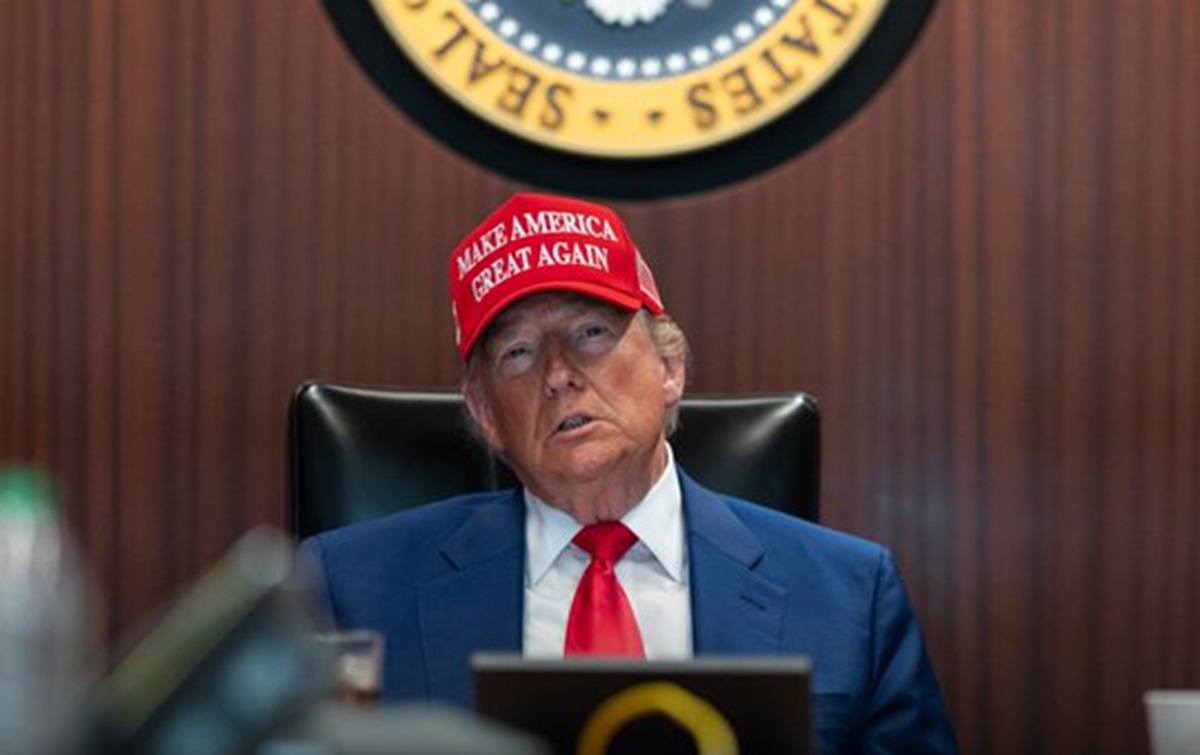
US President Donald Trump announced the postponement of a planned military strike against Iran on Tuesday, May 19. The decision was taken at the request of Gulf states amid ongoing ‘serious negotiations’. In a post on Truth Social, Trump said he had been directly approached by the leaders of Qatar, Saudi Arabia, and the United Arab Emirates (UAE). He claimed to have been told that a deal ‘very acceptable’ to the United States would soon be reached. ‘There will be no nuclear weapons for Iran,’ Trump wrote.
Nevertheless, Trump issued a firm warning, emphasising that the U.S. is prepared to ‘advance with a full-scale and large attack on Iran in an instant’ if the agreement is not satisfactory. In response, a senior Iranian military commander warned the U.S. not to commit ‘strategic mistakes and miscalculations’ again.
This move comes as public approval of him has wavered. A The New York Times/Siena poll shows around 64% of voters believe going to war with Iran would be wrong, and only 37% approve of Trump’s performance as president.
The conflict has escalated since February 28, when U.S. and Israeli forces launched large-scale air strikes against Iran, which Tehran retaliated with drone and missile fire. Gulf Arab states fear Iranian retaliation could target critical infrastructure like airports, petrochemical facilities, and desalination plants.
Although an April ceasefire has held relatively, Iran still controls the Hormuz Strait, a vital route for around 20% of the world’s oil supply, contributing to a rise in global oil prices. In retaliation, the U.S. imposed a port blockade to pressure Tehran.
Negotiations are still underway through mediator Pakistan. Relations between the two countries remain tense after Trump previously warned that time is running out for Iran.
Iranian Foreign Ministry spokesman Esmail Baghaei said their demands are ‘responsible’ and ‘humble’. Tehran’s demands include ending the war on all fronts, halting the U.S. sea blockade, compensating for war damages, and guaranteeing Iran’s sovereignty over the Hormuz Strait.
Separately, the United States is reported to have put forward five demands, including Iran operating only a single nuclear site and surrendering its stock of highly enriched uranium to the United States. However, Trump signalled a possible concession by stating a willingness to accept a 20-year suspension of Iran’s nuclear programme, rather than a total halt. (BBC/Z-2)
Iran submitted a 14-point peace proposal including a mechanism for the Hormuz Strait. Trump is said to be hesitant to accept Tehran’s plan amid the port blockade.
Trump cancelled a visit by U.S. officials to Pakistan to discuss the Iran ceasefire, calling Iran ‘a time-waster’. According to him, the crisis was triggered by the United States, seen as increasingly unilateral and force-based, with the aim of maintaining global dominance. He criticised the blockade of the Hormuz Strait, arguing that it would cause problems for the United States rather than Iran.
In a Truth Social post, Trump rejected what he described as media narratives portraying Iran as the party at an advantage.
Tensions in the Hormuz Strait flared again after Iran issued a hardline statement.
War in the region has triggered the largest disruption to oil supplies in modern history. Economists predict U.S. inflation could rise to around 6% in Q2 2026 due to the oil crisis at the Hormuz, with growth slowing to about 2.2%.
ADNOC is accelerating the West-East pipeline to Fujairah Port to secure Emirati oil exports amid Iran’s blockade of the Hormuz Strait.
The Middle East conflict is forcing merchant ships to reroute to Africa, increasing operational costs by around US$1 million per vessel.