
Trump Defeated by Iran Conflict, Facing Growing Hostility at Home
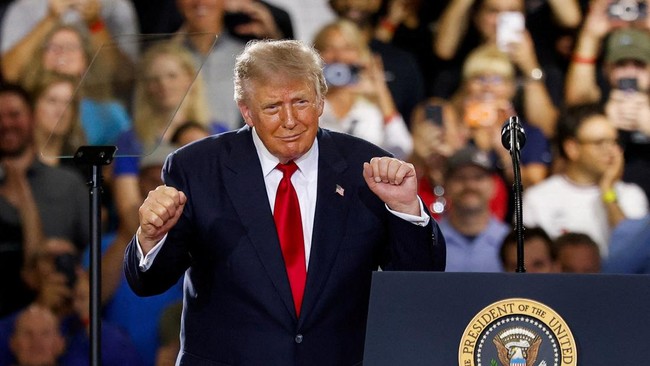
US President Donald Trump’s approval rating has plummeted to a record low in his political career, hitting 32%. This drastic decline is driven by public dissatisfaction, including from his fellow Republicans, regarding his handling of the rising cost of living amidst an unpopular war with Iran.
According to a Reuters/Ipsost poll concluded on Sunday, overall support for Trump dropped from 35% the previous week. More surprisingly, support from his own Republican Party has also plummeted to 73%, down from 82% the week before. This comes despite his return to the White House in January 2025 with promises to tame inflation and end foreign wars, at which time he enjoyed a 47% approval rating.
Only 17% of total respondents approve of Trump’s handling of cost-of-living issues, a key issue believed by US citizens to be a decisive factor in the upcoming November elections.
Dissatisfaction among Republicans regarding inflation has continued to grow since Trump launched a war against Iran in February, which caused petrol and diesel prices to soar. For the first time, the number of Republican supporters who disagree with Trump’s handling of living costs has surpassed those who agree, at 51% to 44%.
The poll found that only 34% of respondents approve of the attacks on Iran. This bloody conflict has severed the world from a significant portion of the oil and gas supply produced in the Middle East, threatening to trigger even higher inflation in the US and other regions as businesses pass higher fuel costs on to consumers.
This stands in stark contrast to Trump’s claims earlier this month, where he promised that the war with Tehran would end within just a few weeks.
“This war will end shortly after the election. This conflict will only last for a few weeks,” he stated.
However, the reality is that Iran shows no signs of surrendering, and in recent weeks, Tehran and its allies have threatened further disruptions to the oil market. Approximately 82% of respondents, including nine out of ten Democrats and three-quarters of Republicans, believe the conflict is likely to continue for a long period.
The four-day data collection period was also marked by Trump’s controversial actions, including expelling three major news organisations from the White House. He even mused that the iconic Kennedy Center for the Performing Arts in Washington—named after the late President John F. Kennedy—could be demolished if his own name was not added to the building.
The impact of Trump’s declining popularity is directly visible in voter preferences ahead of the midterm elections on 3 November. Registered voters now prefer Democrats over Republicans by a margin of 43% to 35%. This 8-point lead represents the largest advantage for Democrats in a Reuters/Ipsos poll this year, risking the difficulty of Trump’s agenda for the remainder of his two-year term if Republicans lose control of either chamber.
While this provides a national picture of which party the public wants leading Congress, the figures do not fully capture the nuances of the competition per district and state, which ultimately determines control of the Senate and the House.
Ironically, Trump’s 32% rating is currently lower than the worst record of his predecessor, Democrat Joe Biden. Biden’s presidency, which was also marked by an inflation surge before he ended his candidacy due to poor debate performance regarding his age, hit a low of 35% in late October 2024.
On other issues, Trump remains popular among Republicans regarding immigration policy, with 79% support. However, overall, only 36% of US citizens support his approach, while 55% oppose it. Some Republican allies in Congress have warned that his aggressive campaign to deport undocumented individuals risks alienating voters whose families have recently immigrated to America, such as Hispanic constituents.
Meanwhile, regarding crime management, only 35% of respondents approve compared to 50% who disapprove. This online poll collected 1,277 responses from US adults nationwide with a margin of error of 3 percentage points.