
Trump Confident of Imminent Peace Deal with Iran
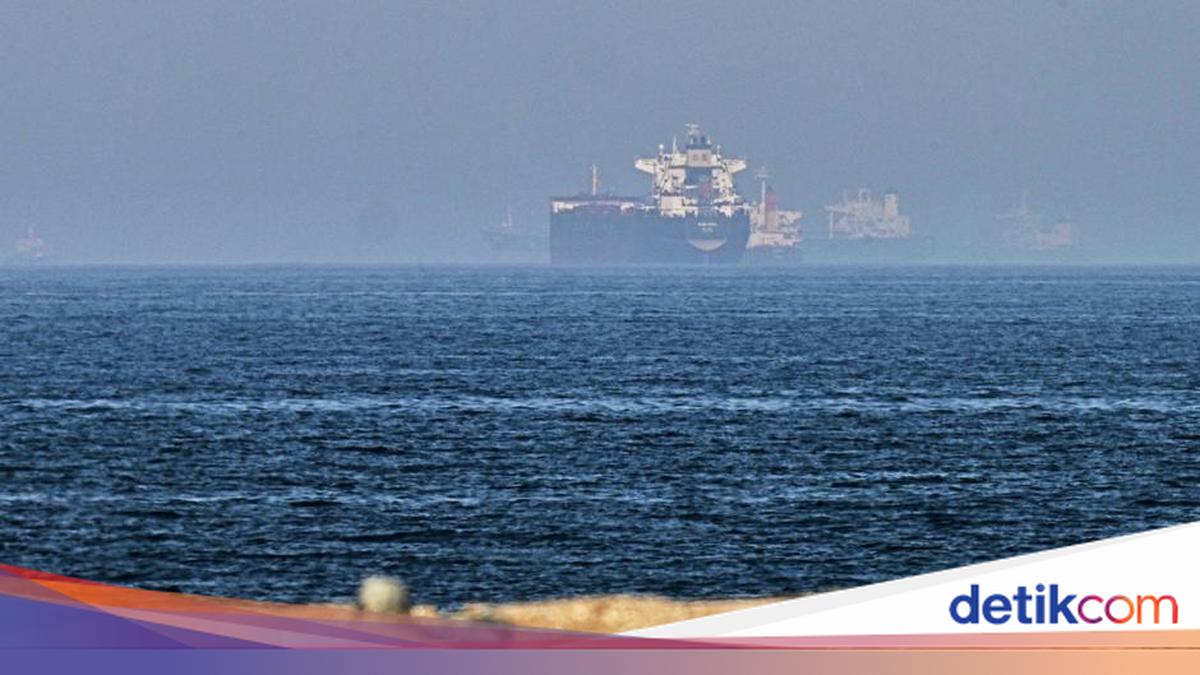
United States President Donald Trump has said that a deal concerning the Strait of Hormuz could be reached as soon as Wednesday or Thursday this week. Meanwhile, Iran and Oman are reported to be moving closer to an agreement to reopen the strategic shipping lane, which could potentially help bring the war to an end.
Trump made the remarks when asked by journalists accompanying him on a trip to California about an Axios news report suggesting that an announcement regarding the Strait of Hormuz could be made on Wednesday.
“It could happen. Tomorrow or the day after,” Trump said on Tuesday evening California time, which was already Wednesday morning in the Middle East. “A lot of progress has been made.”
Oil prices fell on hopes of a deal that would allow tankers to move freely in and out of the Persian Gulf to deliver crude oil to various parts of the world. Brent crude, the international benchmark, fell 1.2% to US$78.43 per barrel in early trading on Wednesday.
Two regional officials who spoke to the Associated Press said the draft agreement being discussed between Iran and Oman provides for ships entering the Persian Gulf through a lane under Iranian control and exiting through a lane managed by Oman. According to them, ships would be charged a service fee for the provision of security and preservation of the maritime environment. The two officials spoke on condition of anonymity because the negotiations are ongoing and sensitive.
Previously, the Trump administration rejected any form of agreement that would give Iran control over the Strait of Hormuz, which before the United States and Israel attacked Iran on 28 February was an open international waterway.
Around one-fifth of the world’s oil and natural gas supplies normally pass through the strait. However, since the war began and Iran launched a series of attacks, shipping activity in the region has shrunk drastically.
In a conversation with journalists on Monday, Trump reiterated his opposition to plans to impose tariffs on ships transiting the Strait of Hormuz. “I will not let them charge. If anyone is going to charge, we will do it,” Trump said.
Regional officials said discussions are still ongoing and the final form of the agreement could still change. They also mentioned that any deal would likely be linked to the lifting of the United States blockade on Iranian ports.
Iranian Foreign Ministry spokesman Esmail Baghaei said on Tuesday that Tehran’s talks with Oman are focused on “establishing a safe shipping lane for ships entering and exiting,” which respects sovereign rights while taking into account the national security interests of Iran and Oman. “The final outcome of these negotiations will be announced after the talks are concluded,” he said, as quoted by Iran’s official news agency, IRNA.
US Secretary of State Marco Rubio also acknowledged that the talks are showing progress, “but have not yet reached a final agreement.” Rubio had previously rejected the possibility of a deal that would give Iran control over the Strait of Hormuz. Last month he said such a move would set a “very dangerous precedent” for other regions of the world.
US Treasury Secretary Scott Bessent told CNBC that “there is a possibility we could reach a deal today or tomorrow to reopen the strait and move towards a more normal conflict situation.”
The Emir of Qatar, Sheikh Tamim bin Hamad Al Thani, said he also spoke by telephone with Trump on Tuesday as his country seeks to act as a mediator to end the war. According to the Emir’s office, the two discussed various ways to bridge differences so that the chances of achieving a sustainable diplomatic settlement would be greater.
Trump is facing mounting pressure to end the unpopular war. The conflict has driven up fuel prices ahead of the US midterm elections and drained supplies of certain US military munitions.
In recent days, Trump has alternated between threatening major attacks and expressing support for diplomatic efforts.
On Monday, Trump said the United States is still in talks with Iran. According to him, this is a “last chance” for Tehran to reach a deal and avoid further US military escalation.
“The first phase is the opening of the strait. The second phase is denuclearisation. And that will take time,” Trump said.
Iran denies it is negotiating with the United States and insists that the talks taking place are only with Oman.
An Indian-flagged merchant ship sank on Tuesday in the Red Sea, off the coast of Yemen, after being struck by a small boat laden with explosives, according to Yemeni and Indian authorities. The Yemeni coast guard managed to rescue the entire crew, consisting of 13 Indian nationals and one Yemeni.
No party has claimed responsibility. However, the Iran-backed Houthi group has repeatedly attacked ships transiting the Red Sea near Yemen.
Last month, the Houthis announced the closure of the Bab el-Mandeb Strait to ships linked to Saudi Arabia in retaliation for Riyadh’s blockade of Yemen and attacks on the international airport in Sanaa, the capital controlled by the rebel group.
Earlier on Tuesday, a cargo ship also reported being hit by an “unknown projectile” while transiting the Strait of Hormuz, according to the United Kingdom Maritime Trade Operations Centre.
The centre stated that the attack occurred at around 2.00 a.m. local time when the ship was approximately 37 kilometres northeast of Al Khasab, a port city in Oman. British maritime security firm Ambrey said the vessel sustained damage.
Shipping traffic in the two strategic Middle Eastern maritime lanes, the Strait of Hormuz and the Bab el-Mandeb Strait, was almost unchanged on Tuesday compared with the previous day, according to ship tracking data.
The United States Army has expended most of its global stockpile of long-range precision missiles during the five-month war against Iran, according to an exclusive Reuters report.
The information was revealed by three sources familiar with the data and has raised concerns about US military readiness for other conflicts in the future. The missiles in question are primarily the Army Tactical Missile System (ATACMS) and the Precision Strike Missile (PrSM), both surface-to-surface missiles belonging to the US Army. Two sources said the United States has used “almost all” of its stockpile of both missile types.
The extent to which ATACMS and PrSM stocks have been depleted has not previously been reported. The long-range missiles, each worth more than US$1 million, are a critical part of America’s arsenal because they allow highly accurate strikes from a safe distance.
US-supplied ATACMS also played an important role in the war in Ukraine by enabling Ukrainian forces to strike targets inside Russian territory. Meanwhile, the PrSM is a newer, more advanced generation that will gradually replace the shorter-range ATACMS.
The drastic reduction in long-range precision missile stocks means President Trump may have to rely more on riskier manned aircraft bombing missions if he decides to launch another major attack on Iran. The three sources declined to disclose the exact number of missiles the United States still possesses.
However, as the war drags on, the three sources admitted they are concerned that the dwindling missile stocks could reduce America’s ability to deter threats from countries such as Russia and China.
Another source said that despite the very high use of precision weapons, the United States is still able to replenish its supplies. According to the source, US Central Command (CENTCOM), which oversees military operations in the Middle East, can still draw stocks from US military depots around the world.
Responding to Reuters’ questions about missile stockpile data, the White House released a statement from Trump. “We have far more ammunition than any country in the world, even far more than we need,” Trump said.
He also said the American defence industry is currently producing ammunition in the largest quantities in history, while expanding factory capacity and production facilities at an unprecedented rate.
Analysts agree that production of certain types of ammunition, including artillery shells and various missiles, is indeed at record levels. However, they caution that stockpiles could still prove insufficient if the war lasts a long time.
Lockheed Martin, the manufacturer of ATACMS, PrSM, and the THAAD missile defence system, has not responded to questions regarding Trump’s statement or the state of missile stockpiles. Raytheon, the maker of Tomahawk cruise missiles and Patriot interceptors, has also not commented.
Pentagon chief spokesman Sean Parnell said: “The American military is the most powerful in the world and has everything it needs to carry out operations whenever and wherever the President decides. We have conducted various successful operations across multiple combatant commands while ensuring the US military retains adequate weaponry to protect our people and our interests.”
According to Reuters, data on the depletion of weapons stocks has been circulating within the federal government over the past week. The information has been a topic of discussion in internal Trump administration deliberations over how long the United States can continue strikes against Iran without reducing stockpiles to levels that would jeopardise readiness for crises in other regions.
One source said the reduction in ATACMS and PrSM stocks is a consequence of the Trump administration’s decision to favour long-range missiles over sending manned fighter jets to bomb targets in Iran.
Because they can strike from a safe distance, these missiles are considered vital if the United States has to face a country with strong air defence systems such as China.
According to a March report by the Center for Strategic and International Studies (CSIS), PrSM missiles have been used in strikes against targets inside Iran. The report also noted that initial PrSM stocks were relatively small because it is a new weapons system. However, the US military has ordered the missiles in large quantities for delivery in 2027.
The US Army has stated that ATACMS will be phased out and production shifted to PrSM. Two sources said military leaders have warned President Trump in recent weeks that stocks of defensive weapons, including Patriot interceptor missiles used to counter ballistic missiles, are also continuing to decline.
Last week, several media outlets reported that Trump decided not to launch the next major attack on Iran, partly because his military advisers warned about the depletion of American weapons stocks. However, a US official denied those reports. The official said Trump cancelled the follow-up attack plan due to pressure from Gulf states.
The conflict in the Middle East has also sparked debate over Trump’s authority to continue military operations against Iran without congressional approval. To date, the administration has not submitted a declaration of war or a request for authorisation for the use of military force to the US Congress.
Last week, CSIS estimated that between February and July around 65% of Patriot interceptor missile stocks had been used. The think tank also estimated that the number of THAAD interceptor missiles in US stockpiles has fallen by at least 38% compared with when the war began.
Patriot and THAAD are air defence systems that detect and destroy incoming missiles, and are among the most effective defence systems the United States possesses. Although Reuters could not directly view the stockpile data, two sources said the figures in the CSIS report match internal US government data.
In addition, the United States has also expended nearly half of its global stockpile of Tomahawk cruise missiles since the war began, according to one source. Reuters has not been able to independently verify that figure.
Tomahawk is a US Navy missile launched from destroyers, cruisers, and submarines. For years it has been the Navy’s primary weapon for striking heavily defended targets without risking pilot safety.
Raytheon, the RTX business unit that produces Tomahawk, is currently working on a long-term contract with the Pentagon to increase production of the missile, alongside increased production of various other munitions, as Washington seeks to rebuild its weapons stockpiles.