
Trump Claims Success in Opening Peace Door with Iran, World Disagrees
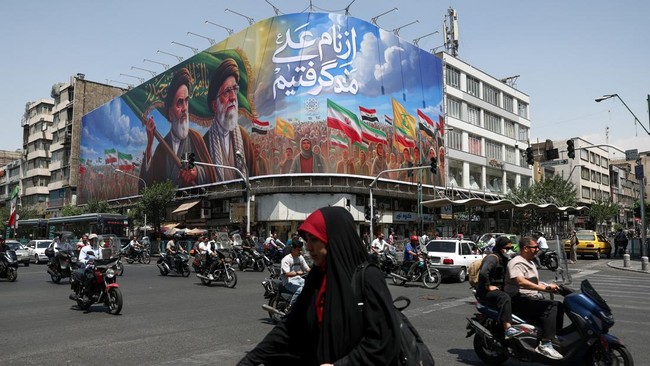
United States President Donald Trump loudly praised the success of a peace memorandum of understanding (MoU) with Iran amid the luxury of the Palace of Versailles last week. Trump asked sceptics to trust the positive response from the Wall Street exchange as tangible proof of his diplomatic success. Trump claimed he had succeeded in ending the global economic chaos that erupted after he ordered the bombing of Iran in late February. The signing of this emergency 60-day MoU was deemed crucial because the alternative to the agreement’s failure was a worldwide economic depression. “Nothing is as smart as the capital market, and the market really likes it,” Trump said confidently while claiming credit for the recovery of positive sentiment in global stock markets. However, entering the weekend, that optimism began to waver after plans for follow-up peace talks in Switzerland were abruptly cancelled before being restored. The situation grew tenser after Tehran stated that the bombing by Israel in Jordan provided strong justification for them to re-close the vital shipping lanes in the Strait of Hormuz. In the latest development, during the talks that were finally held in Switzerland, which were briefly marred by a walkout from the Iranian delegation, mediators Pakistan and Qatar said the discussions at Lake Lucerne were held in a “positive and constructive atmosphere” and resulted in “encouraging progress”. The parties agreed on a 60-day roadmap towards a final agreement, the commencement of further technical talks, and a communication channel to prevent incidents in the Strait of Hormuz. The mediators also announced the establishment of a Lebanon deconfliction cell to help ensure compliance with the cessation of military operations under the memorandum. Both sides also agreed to form a High-Level Committee to oversee the process. Chief negotiators will regularly report to the committee and lead working groups focusing on nuclear issues, sanctions, implementation monitoring, dispute resolution, and “other matters”. Although there is no certainty, hope remains that the sea lane transporting about 20% of the world’s oil supply can be fully operational within a few weeks. The full reopening of the strait is projected to prevent the risk of acute shortages of strategic energy commodities like jet fuel in the international market. The energy market itself immediately responded positively to the prospect of supply recovery, with Brent crude oil prices briefly falling below US$80 per barrel for the first time since the start of the war, before rising again following Trump’s statements that he was ready to bomb Iran again. Various governments around the world are still calculating the economic losses resulting from this unwanted conflict. The adverse effects of the war are felt differently in each region, with Gulf countries suffering the most from the halt of their main export taps and bomb attacks from Iran. Analysts project the region’s economy will plunge directly into a deep recession. “We estimate that gross domestic product (GDP) growth in the Gulf region will contract sharply to minus 2.6% this year,” stated an official report from the Oxford Economics analyst team regarding the regional economic downturn. On the other hand, economic growth in the United States as a net energy exporter remains strong, supported by massive investment trends in artificial intelligence and SpaceX’s mega-launch plans. However, US consumers still have to pay US$1 more per gallon for petrol compared to last year, triggering national inflation to soar to 4.2%. This high annual inflation rate poses a serious challenge for the newly appointed Federal Reserve Chair, Kevin Warsh, who was initially expected to aggressively lower benchmark interest rates. The reality on the ground suggests that Warsh will likely have to raise borrowing costs gradually to calm domestic market turmoil. “With the economy remaining strong and inflation rising, the Fed will likely raise interest rates most aggressively, perhaps up to four times to a range of 4.5% to 5% by the end of next year,” explained Dario Perkins, Head of Global Research at consultancy TS Lombard, as quoted by The Guardian. Perkins added that US economic resilience is supported by consumers who are recklessly draining their savings to keep spending, unlike consumers in Europe who are much more cautious due to war anxiety. In the European Union, the European Central Bank (ECB) has even raised interest rates for the first time since 2023 to suppress the inflation surge triggered by acute dependence on gas imports. Meanwhile, the impact of inflation in the United Kingdom was relatively subdued at 2.8% in April with interest rates still on hold, although market confidence indices and the domestic employment sector were reported to be weakening. Banks project that price pressures on goods will continue in the UK market in the coming months. “All data points to incoming price pressures, with inflation potentially creeping up by another percentage point, although the dampening effect on GDP growth is predicted to be relatively small at only about a quarter of a percentage point,” explained Sanjay Raja, Chief UK Economist at Deutsche Bank. In other parts of the world, many developing countries are forced to impose fuel rationing and subsidies due to soaring commodity prices and are bracing for a surge in agricultural fertiliser costs. This phenomenon of demand destruction due to consumers’ inability to afford goods is considered the reason why hopes for peace remain high.