
Trump Claims Iran Requested Ceasefire, Tehran Issues Strong Denial
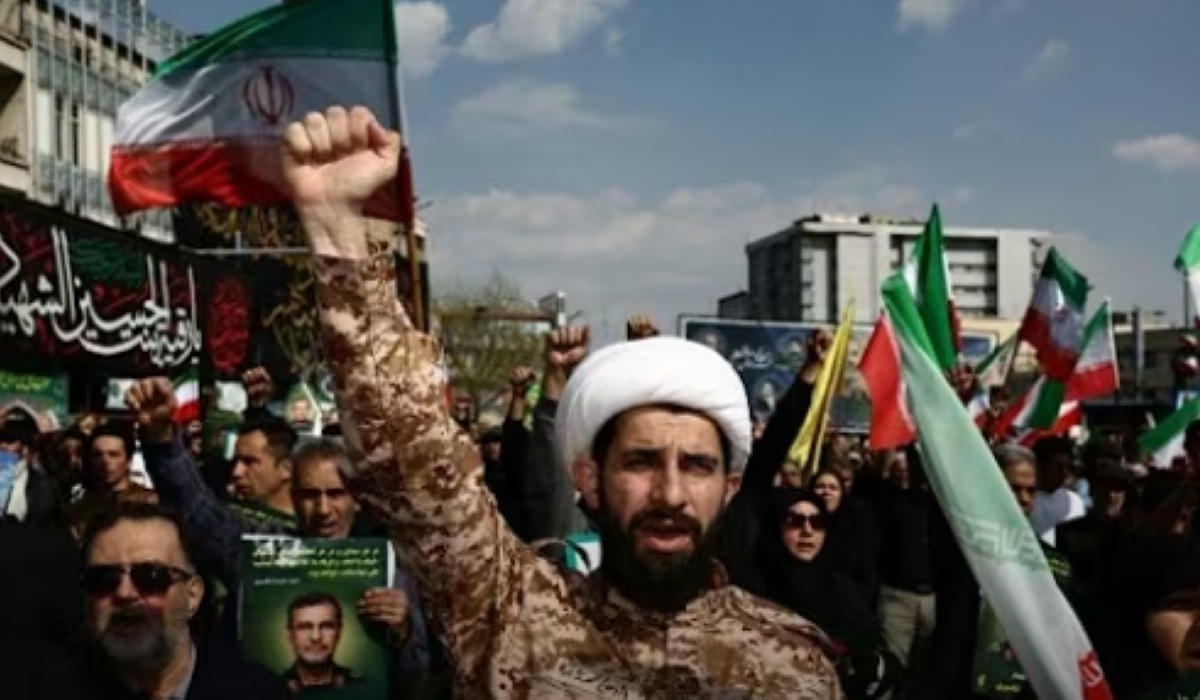
Geopolitical tensions between the United States and Iran have entered a new phase following US President Donald Trump’s claim that the new leadership in Tehran has requested a ceasefire. However, the claim was immediately met with strong denial from Iranian authorities, who described the statement as inconsistent with reality.
Through his social media platform, Truth Social, Trump stated that the current Iranian regime is far more intelligent and less radical than its predecessor. He claimed that the ceasefire request had been conveyed to Washington.
Nevertheless, Trump imposed very stringent conditions. He emphasised that the United States would only consider the request if the Strait of Hormuz is fully opened.
“Washington will only consider that request when the Strait of Hormuz is ‘open, free, and clear’,” Trump said on Wednesday (1/4/2026) local time. He even issued a harsh threat that the US would continue attacks until Iran is returned to the Stone Age if the condition is not met.
In response to the statement, Iran’s Foreign Ministry Spokesman Esmaeli Baqaei firmly denied the narrative constructed by Trump. Baqaei stated that the claim regarding Tehran’s request for a ceasefire is baseless information.
In line with that, Iran’s Foreign Minister Abbas Araghchi had previously clarified Tehran’s position. He emphasised that the communication with the US is not formal negotiation, but rather limited message exchanges, either directly or through intermediaries in the region.
In an interview with NBC News earlier this week, Trump expressed optimism that the conflict with Iran would soon end. He even claimed that Washington had achieved total regime change and was communicating with Iran’s Parliament Speaker, Mohammad Bagher Ghalibaf.
Trump repeatedly praised Iran’s new leadership as far more reasonable. However, the contrasting statements between Washington and Tehran indicate that a real agreement on the ground is still far from certain, especially with the ongoing military threats from the White House side.
To date, the situation in the Strait of Hormuz remains a crucial point determining the direction of global security and economic stability, given that the route is the lifeline of world energy distribution.
According to sources, Trump telephoned Mohammed bin Salman to discuss opportunities for an Iran ceasefire. The US sent a proposal to Tehran, with the conflict triggering a surge in global energy prices.
Iran’s Foreign Minister Abbas Araghchi emphasised that Tehran is prepared for war for six months and denied any negotiations with the US amid regional conflict.
The US Department of Defense reportedly expressed concerns after the United States used more than 850 Tomahawk cruise missiles in the conflict against Iran.
A surge in fuel prices in the US of up to 35% due to the Iran conflict has sparked public anger. Petrol prices have exceeded US$4 per gallon, exacerbating the cost-of-living burden on the public.
Fuel prices in the US have surpassed $4 per gallon due to the Iran war. US citizens complain about the surge in living costs and the economic impact that is beginning to drain household savings.
UN diplomat Mohamad Safa has resigned and revealed concerns over scenarios involving the use of nuclear weapons against Iran amid global tensions.
Iran does not want a ceasefire, but a total end to the war, along with guarantees of freedom from future attacks and compensation.
US President Donald Trump announced the withdrawal of troops from Iran within 2-3 weeks after claiming that the mission to prevent nuclear proliferation and achieve regime change in Tehran has been accomplished.
US President Donald Trump is reportedly angry with Israeli Prime Minister Benjamin Netanyahu regarding attacks on Iran’s desalination plant on Qeshm Island.