
Trump Claims Energy Deal with Xi: China to Buy US Oil
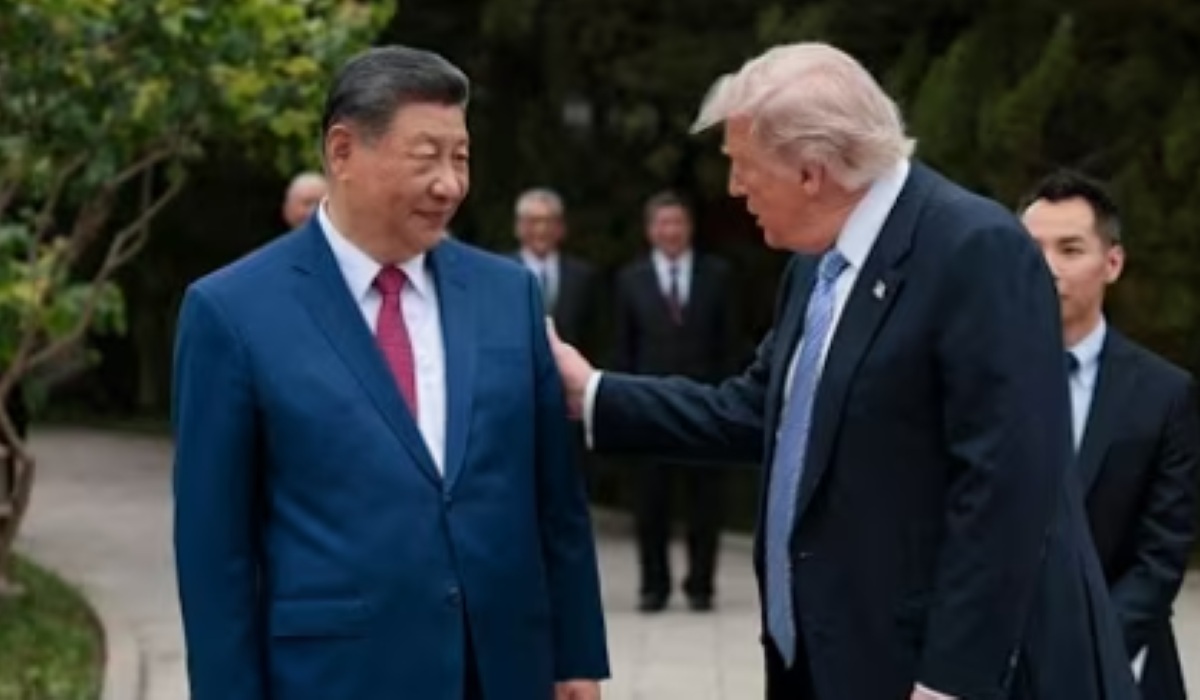
PRESIDENT of the United States Donald Trump provided the latest insight into the dynamics of his relationship with Chinese President Xi Jinping and the future of economic cooperation between the two countries. In an interview on the Hannity show, Trump highlighted China’s dependence on energy and the United States’ potential as a major supplier.
Responding to Sean Hannity’s question about Xi Jinping’s ability to influence Iran given that China is one of Tehran’s largest oil customers, Trump gave a diplomatic but strategic view.
“Yes, look, he didn’t come with weapons. He didn’t come with rifles and didn’t come shooting,” said Trump. He referred to China’s approach to influence, which emphasizes economic power.
Trump revealed that one of the important points of the ongoing agreement is China’s commitment to buy oil from the United States. This is done to meet China’s very large energy needs. Currently, about 40 percent of China’s oil needs come from the Middle East.
“One thing I think we will agree on, they agreed to buy oil from the United States. They will go to Texas. We will start sending Chinese ships to Texas, Louisiana, and Alaska. That’s a big thing. Not long from now,” he explained.
When confirmed about other commodities such as liquefied natural gas (LNG), Trump affirmed that this cooperation includes the entire energy sector. “Yes. All. Energy. They have an insatiable appetite for energy and we have unlimited energy,” he added.
Trump claimed that under his leadership, the United States has achieved extraordinary levels of energy production. He stated that US oil and gas production now exceeds the combined production of Saudi Arabia and Russia.
In the interview, Trump boasted about the achievements of the domestic energy sector, which surpassed other global energy giants. He mentioned that the US now produces twice as much oil and gas compared to the combined production of Saudi Arabia and Russia before the war.
“You know, now under me, we now produce more than if you combine Saudi Arabia and Russia. We produce twice as much oil and gas as they do. Imagine that. It’s amazing,” he concluded.
This step is seen as part of Trump’s Energy Dominance strategy. The goal is to strengthen the United States’ economic bargaining position on the global stage while reducing the dependence of allies and rivals on energy supplies from unstable regions. (RCP/I-2)
President Donald Trump called the US-China relationship G-2 during his visit to Beijing, marking recognition of China as an equal superpower.
President Donald Trump left Beijing with a commitment to stabilize relations with Xi Jinping, although the Taiwan issue and the Iranian crisis remain major challenges.
US Foreign Minister Marco Rubio revealed the contents of the meeting between Donald Trump and Xi Jinping in Beijing, ranging from the Iranian crisis, the status of Taiwan, to the fate of Jimmy Lai.
Xi Jinping warned Donald Trump about the ‘Thucydides Trap’ and the Taiwan issue during a meeting in Beijing. See an analysis of US-China rivalry here.
Trump also claimed that Xi gave assurances that Beijing would not send military equipment to help Iran in a conflict involving the US and Israel.
President Donald Trump called the US-China relationship G-2 during his visit to Beijing, marking recognition of China as an equal superpower.
President Donald Trump left Beijing with a commitment to stabilize relations with Xi Jinping, although the Taiwan issue and the Iranian crisis remain major challenges.
Xi Jinping warned Donald Trump about the ‘Thucydides Trap’ and the Taiwan issue during a meeting in Beijing. See an analysis of US-China rivalry here.
A secret report reveals that China is filling the weapons gap in the Middle East as the US runs out of missiles due to the Iranian war. A threat to Washington’s hegemony.
China changed the spelling of Marco Rubio’s name to avoid 2020 sanctions, allowing the US Foreign Minister to meet Xi Jinping in Beijing.