
Trump Claims Deal With Iran, Teheran Says US Backtracked
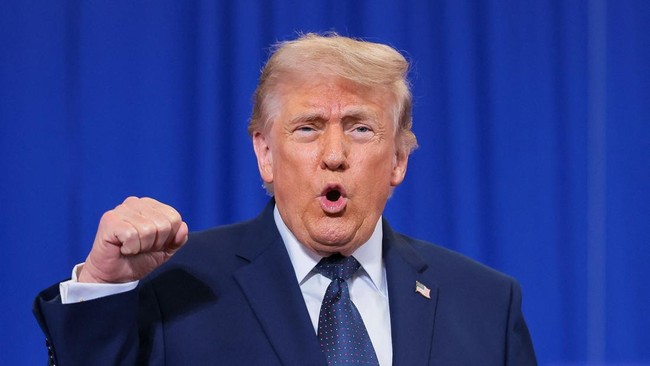
United States President Donald Trump made a sudden claim on Thursday that his country had reached a major peace agreement with Iran to end the total war in the Middle East. The surprise move was followed by Trump cancelling all scheduled air strikes on Iranian territory that were set to launch that evening.
Speaking to the press in the Oval Office, Trump stated that the draft agreement was now only awaiting the finalisation of official documents. He expressed optimism that the historic signing would take place soon and pledged to immediately reopen the Strait of Hormuz for global energy supply routes.
“Discussions and final points, both in concept and major details, have been approved by all parties involved, including the United States, Israel, Saudi Arabia, the United Arab Emirates, Qatar, Turkey, Pakistan, Bahrain, Kuwait, Jordan, Egypt, and others,” Trump wrote on his Truth Social account regarding the list of nations supporting the cancellation of the attack.
Trump argued the missile strike was called off because diplomatic channels had reached the highest leadership level in Iran and were agreed upon by consensus. This was despite the fact that just hours earlier, Trump had issued a terrifying threat that the US military would strike Iran “very hard tonight” and was preparing to seize Kharg Island to dominate the Persian nation’s oil and gas market.
Teheran immediately denied Trump’s unilateral claim shortly after the White House press release circulated. Iranian state media, Fars, firmly announced via its Telegram channel that their highest authorities had not yet approved any text related to a memorandum of understanding with the United States.
Fars assessed Trump’s sudden manoeuvre as a tactical retreat from his military threats. The outlet claimed the US had completely failed to insert new points beneficial to its position into the draft agreement previously proposed by Iran.
“The reality to date is that not only has Iran not given a final response, but it is the United States that has returned to their previous demands,” Fars reported regarding the state of the negotiating table.
Nevertheless, the Iranian media indicated that the opportunity for peace was not entirely closed. Authorities in Teheran assessed there was a possibility to re-examine the text of the agreement, given that the White House ultimately softened its stance and accepted the draft originally proposed by Iran.
Meanwhile, the plan to sign the memorandum of understanding was also directly consulted by Trump with Israeli Prime Minister Benjamin Netanyahu via telephone. The Israeli Prime Minister’s Office officially confirmed the high-level discussion between the two allied leaders.
“Although Israel is not a party to the direct negotiations with Iran, the Prime Minister greatly appreciates Trump’s commitment that the final agreement at the end of negotiations will still include strict limitations on Iran’s nuclear capability,” the official release from Netanyahu’s office stated in response to Washington’s decision.
Despite the clarity of the actual agreement remaining murky—Trump having claimed a deal was close more than 30 times since the war broke out on 28 February—global financial markets reacted instantly. International stock indices reportedly surged sharply, while crude oil prices plummeted to their lowest levels shortly after the cancellation of the attack was broadcast.
However, beyond the market euphoria, the US military stressed that the naval blockade operation against Iranian logistics ports in the Gulf of Oman would remain fully enforced without any reduction. The blockade will only be officially lifted once all transaction documents and the peace signing are legally finalised by both parties.