
Trump Calls US-China a G-2, Xi Jinping Promotes a Multipolar World
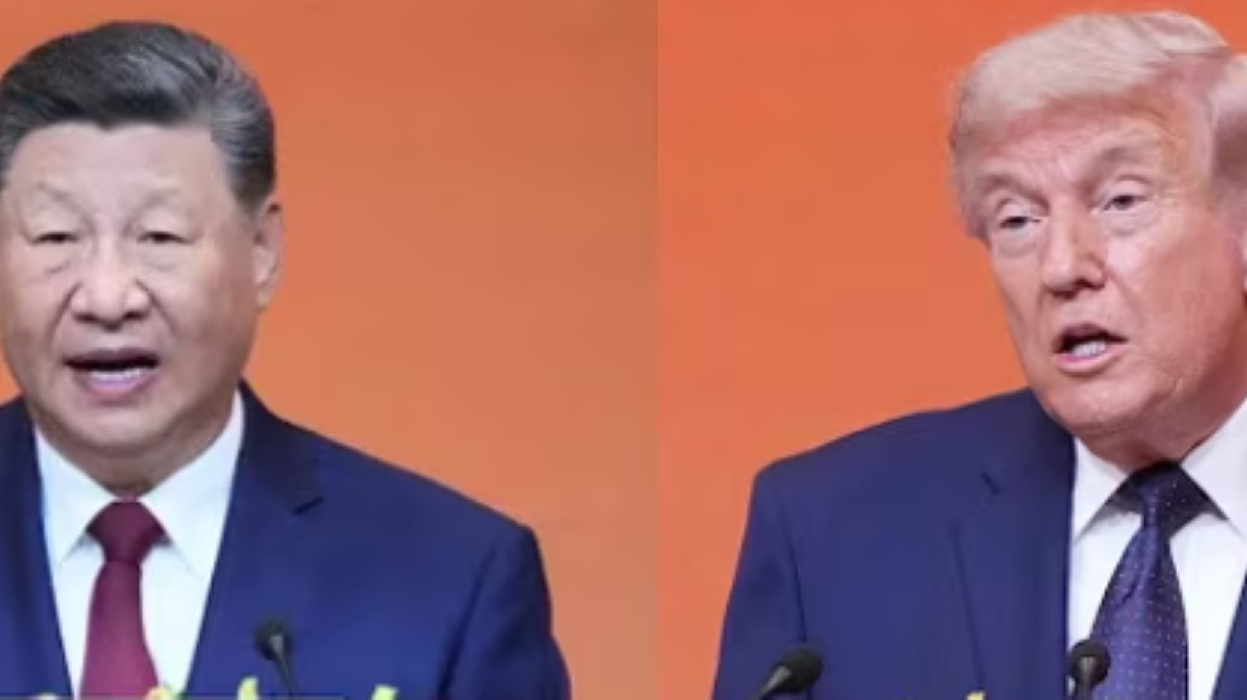
US President Donald Trump has formally introduced the term ‘G-2’ to describe the dynamics of the relationship between the United States and China. He used this term after an intensive bilateral meeting with President Xi Jinping in Beijing this week.
‘These are two great countries. I call it G-2. This is G-2,’ Trump said in an interview with Sean Hannity of Fox News, which aired on Friday (May 15, 2026). Trump believes that this moment will be recorded in history as an important turning point in the world order.
For analysts, Trump’s use of the term G-2 is a major diplomatic victory for Xi Jinping. For decades, Chinese leaders have sought to have the US recognize their position as an equal partner. Through the grandeur of the welcoming ceremony and gestures of mutual respect, Xi has successfully projected the image of two superpowers dominating the world.
Julian Gewirtz, former director of China at the US National Security Council, noted that Xi used the opulence of this visit to make it clear to the world that the US and China are two dominant and balanced powers. ‘There is no turning back,’ he said.
Although the G-2 narrative dominates, strategic details on several crucial issues, such as the Iran war, have not yet yielded firm commitments. However, several important points have been achieved in the economic sector:
Interestingly, although Trump is enthusiastic about the term G-2, Beijing has officially refrained from using the term. China prefers the narrative of stability and a multipolar world. This is believed to be to avoid diplomatic awkwardness, given that Xi Jinping is scheduled to host his close ally, Russian President Vladimir Putin, later this month.
The visit concluded with a symbolic gesture: Xi hosted Trump for tea at Zhongnanhai, China’s secretive leadership complex. In return, Trump announced plans for a reciprocal visit by Xi Jinping to the United States on September 24.
‘We will do it openly. You will go home with a very great impression, just like I was very impressed with China,’ Trump said before departing on Air Force One. (The Washington Post/I-2)
President Donald Trump left Beijing with a commitment to stabilize relations with Xi Jinping, even though the issues of Taiwan and the Iran crisis remain major challenges.
US Foreign Minister Marco Rubio revealed the content of the meeting between Donald Trump and Xi Jinping in Beijing, ranging from the Iran crisis, the status of Taiwan, to the fate of Jimmy Lai.
Donald Trump revealed China’s plan to buy energy from Texas to Alaska to meet their needs, while also discussing Xi Jinping’s influence over Iran.
Xi Jinping warned Donald Trump about the ‘Thucydides Trap’ and the issue of Taiwan during a meeting in Beijing. See the analysis of US-China rivalry here.
Trump also claimed that Xi gave assurances that Beijing would not send military equipment to help Iran in the conflict involving the US and Israel.
President Donald Trump left Beijing with a commitment to stabilize relations with Xi Jinping, even though the issues of Taiwan and the Iran crisis remain major challenges.
Donald Trump revealed China’s plan to buy energy from Texas to Alaska to meet their needs, while also discussing Xi Jinping’s influence over Iran.
Xi Jinping warned Donald Trump about the ‘Thucydides Trap’ and the issue of Taiwan during a meeting in Beijing. See the analysis of US-China rivalry here.
A secret report reveals that China is filling the weapons gap in the Middle East as the US runs out of missiles due to the Iran war. A threat to Washington’s hegemony.
China changed the spelling of Marco Rubio’s name to avoid sanctions in 2020, allowing the US Foreign Minister to meet Xi Jinping in Beijing.
Copyright @ 2026 Media Group - mediaindonesia. All Rights Reserved