
Trump Busy with Wars, American Fresh Graduates Struggle to Find Jobs
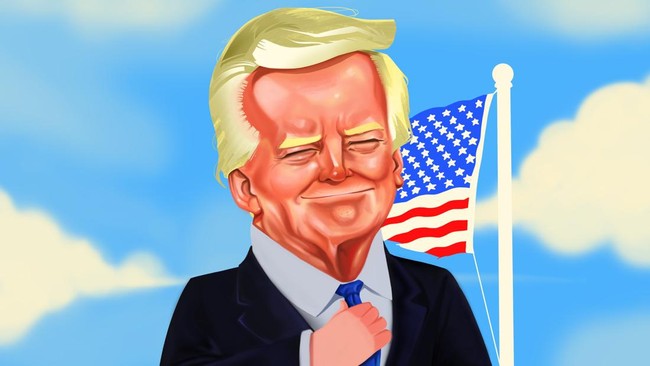
Prospects for new graduates in the United States are facing serious pressure. The poor job prospects for new US graduates are occurring amid Donald Trump’s 2.0 administration with its slogan “Make America Great Again” (MAGA), focusing on nationalism and economic policies. Trump is instead spotlighted for his policies that have drawn widespread protests, from trade wars to the Iran conflict. Citing The New York Times, the current labour market conditions are described as the worst since the Covid-19 pandemic, marked by rising unemployment, declining job opportunities, and increasingly fierce competition for entry-level positions. Data from the Federal Reserve Bank of New York shows that the unemployment rate for graduates aged 22-27 reached 5.6% at the end of last year, higher than the national unemployment rate of 4.2%. Meanwhile, more than 40% of graduates are working in jobs that do not require a bachelor’s degree. This phenomenon is sparking widespread concern amid structural economic changes and the acceleration of technologies like artificial intelligence. Low Hire, Low Fire Phenomenon One of the main causes of weakening job opportunities for new graduates is the widespread slowdown in recruitment. Instead of large-scale layoffs, companies are holding back on hiring new workers. This condition is known as low hire, low fire, where hiring activity is declining, but layoff rates remain low. Adam Ozimek, Chief Economist at the Economic Innovation Group, describes this as a slowdown in labour turnover. “This is a general slowdown in hiring and labour mobility. Those seeking their first job are likely the most affected,” he said. The impact is starting to be felt on various campuses. Alli Goossens from North Dakota State University revealed that the number of companies attending job fairs has decreased because many companies are now more conservative in recruiting. Changing Labour Structure Tightens Competition In addition to the economic slowdown, the increasing number of university graduates is also intensifying competition in the job market. Industries that have traditionally been primary destinations for new graduates are experiencing slowdowns. These industries include technology, media, accounting, and consulting. On the other hand, demographic changes are worsening the situation. More senior workers are staying in the workforce longer, thus slowing career progression and reducing the need to recruit new workers. Luke Pardue from the Aspen Institute describes this as a complex phenomenon. He assesses that there is still no definitive answer as to what is actually causing the weakening of the job market for college graduates. As a result, there is a “build-up” of labour at various levels, making it increasingly difficult for new graduates to enter entry-level positions. AI in the Spotlight, But Not the Main Cause Amid this situation, artificial intelligence (AI) is also drawing attention. Anthropic CEO Dario Amodei has even warned that AI could eliminate up to half of entry-level jobs in the next five years. A report from the Stanford Digital Economy Lab also shows a significant decline in jobs for novices in sectors vulnerable to AI, such as technology and software development. However, economists assess that AI has not yet become the main factor in the current weakening of the job market. Grace Zwemmer, an economist from Oxford Economics, believes that this condition is still part of an economic cycle that has occurred before.