
Trump Backs Netanyahu, but JD Vance Is Reluctant to Intervene in Israel’s Election
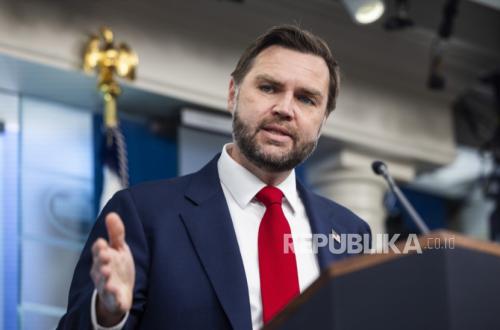
JAKARTA — A difference of opinion has emerged at the highest levels of the US government ahead of Israel’s general election. Vice-President JD Vance declined to endorse Prime Minister Benjamin Netanyahu’s bid to remain in office, a day after President Donald Trump publicly backed the Israeli leader. The contrast comes as Netanyahu faces a tight domestic political contest, while the Iran war and the Palestinian conflict remain international concerns.
Vance said he would rather focus on the US midterm elections, due to take place on 3 November 2026. He also said he did not want to interfere in Israel’s domestic political contest.
“I support American candidates, and that is my focus: the midterm elections,” Vance told journalist Mark Halperin in an interview aboard Air Force Two on Monday (19 October 2026).
Asked whether he supported Netanyahu as Trump did, Vance declined either to endorse or reject the Israeli prime minister.
“I am not in a position to withhold my support for him, but I am also not in a position to support him,” Vance said.
Vance said Trump’s political backing carried considerable weight in both American and international politics. He nevertheless stressed that he would not get involved in Israel’s election.
The remarks drew attention because Vance has previously backed political leaders outside the United States. In April 2026, he travelled to Hungary to support Prime Minister Viktor Orbán ahead of the country’s parliamentary election.
That endorsement did not help Orbán stay in power. His party lost the election on 12 April, ending his 16-year rule and paving the way for Péter Magyar to become the new prime minister.
Vance’s decision not to follow Trump’s lead in Israel’s election highlights the two US leaders’ different political approaches. However, Vance did not express opposition to Netanyahu or to the strategic relationship between the United States and Israel.
Trump says Netanyahu is the leader Israel needs
On Sunday (18 October 2026), Trump publicly voiced his full support for Netanyahu ahead of Israel’s legislative election on 27 October.
In a post on Truth Social, Trump praised Netanyahu’s leadership, particularly his handling of Iran and various security conflicts in the Middle East.
Trump warned that the United States might have to shoulder responsibility for confronting the Iranian threat alone if Israel were led by someone other than Netanyahu.
“If Israel has the wrong leader — anyone other than Bibi — America will have to do the job itself, and I don’t want to do that,” Trump wrote.
Trump also described Netanyahu as a strong, courageous and brilliant leader who had faced numerous pressures, including opposition within Israel.
In Trump’s view, Netanyahu is a partner Washington needs to confront security challenges in the Middle East. He then declared his full support for Netanyahu’s efforts to remain prime minister.
Netanyahu responded by thanking Trump, calling him a friend of Israel and stressing the importance of cooperation between the two countries, particularly to prevent Iran from obtaining nuclear weapons.
The relationship between Trump and Netanyahu has long been an important factor in the two countries’ Middle East policies. They have worked together on various security priorities, including military operations against Iran that began on 28 February 2026.
Their relationship, however, has not been free of disagreements. Washington and Tel Aviv have also faced tensions over military strategy, the resolution of the Gaza conflict and diplomatic approaches to Iran.
Trump’s latest endorsement comes as Netanyahu seeks to hold on to power amid political pressure resulting from prolonged conflict in the region.
Netanyahu faces risk of losing majority
Israel’s legislative election on Tuesday (27 October 2026) will be a major test of whether Netanyahu’s government can continue.
It is the first national election since Hamas’s attack on Israel on 7 October 2023, which was followed by a protracted war in the Gaza Strip and escalating conflicts in Lebanon and Iran.
Netanyahu is contesting the election amid criticism of his security policies, his handling of the Palestinian conflict and Israel’s socio-economic conditions.
His Likud party faces competition from several opposition forces, including Yashar, led by former Israeli Chief of Staff Gadi Eisenkot.
The contest also involves political groups led by Naftali Bennett and Yair Lapid, right-wing parties, ultra-Orthodox groups and parties representing Arab Israelis.
An aggregation of polls by the Middle East Forum, based on data from seven polling organisations collected between 4 and 18 October 2026, projected that parties supporting Netanyahu would win about 54 seats in the Knesset.
Non-Arab opposition parties were projected to secure 52 seats, while Arab parties were forecast to win around 14.
The Knesset has 120 seats, and forming a government requires the support of at least 61 members of parliament.
The projection suggests that Netanyahu’s bloc would fall short of a majority, although it is not an election result and does not determine the make-up of the government that will emerge after the vote.
The same aggregation projected that Likud would win around 23 seats, down from the 32 it secured in the 2022 election.
Meanwhile, the Jewish Power Party, or Otzma Yehudit, led by National Security Minister Itamar Ben-Gvir, was projected to win around eight seats.
Reuters reported on Tuesday (20 October 2026) that support for Ben-Gvir was growing, particularly among younger voters drawn to his hard-line nationalist and security policies.
Ben-Gvir is known as one of the far-right figures in Netanyahu’s government.
The political contest suggests that coalition-building will be a key factor after the election.
Source: jawawa.id (https://jawawa.id/newsitem/trump-backs-netanyahu-but-jd-vance-is-reluctant-to-intervene-in-israels-election-1792497076)
Originally published by Republika (https://news.republika.co.id/berita/tn7cr4451/trump-dukung-netanyahu-jd-vance-justru-enggan-ikut-campur-pemilu-israel), translated from Indonesian