
Trump at an Impasse: Is the US-Iran Conflict Heading Towards an Endless War?
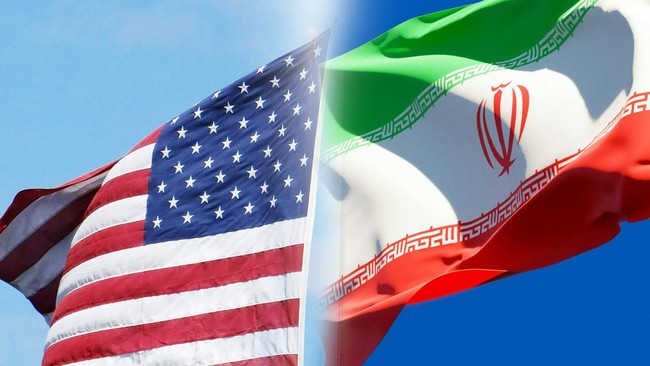
The United States and Iran have halted attacks in the last 48 hours after nearly two weeks of trading strikes, a pause that comes after the US bombarded Iran for 13 consecutive nights. On Sunday, 26 July 2026, Iran stated it would hold back its attacks as long as the US also ceased its bombing, though Tehran doubts the pause will last long. The conflict reignited after Iran attacked vessels in the Persian Gulf 12 times since 6 July, bringing shipping in the Strait of Hormuz—a transit point for roughly a fifth of the world’s oil supply—to a near standstill once again. A ceasefire in April and a memorandum of understanding in June subsequently collapsed. The US resumed bombing Iran on 7 July, demanding Tehran stop its attacks on shipping, open the Strait of Hormuz, and return to discussions on its nuclear programme. According to The Economist, the movement of US jet fighters, special forces, and medical equipment towards the Middle East indicates that President Donald Trump is still considering a larger-scale war. On 23 July, Trump stated the US was ready to launch a ‘massive attack’, yet Washington has few options to force Iran to comply with its demands. The US could expand strikes on Iran’s critical infrastructure, bomb nuclear facilities again, or take the riskiest step of launching a ground war. The first option involves widening attacks on critical infrastructure. The US has struck hundreds of targets since bombing resumed on 7 July, including coastal air defence systems, missile depots, military operations centres, aircraft hangars, drone storage, and military logistics infrastructure. US Central Command says the strikes aim to further degrade Iran’s ability to threaten commercial shipping in the Strait of Hormuz. However, signs have emerged in the past week that the target list is broadening. Trump previously threatened to destroy Iran’s bridges, power plants, and water facilities, and these threats now appear to be materialising. The US has attacked roads, tunnels, bridges, and railway lines leading to Bandar Abbas, the southern port city that handles most of the country’s trade, making it increasingly difficult to connect with the rest of Iran. The US also struck a seawater desalination plant in Bonji, Hormozgan Province, which Iranian state media said disrupted water supplies for around 10,000 people in 20 villages. Iran retaliated by attacking power plants and water facilities in Kuwait, causing fires at several sites. The White House denied bombing civilian facilities, stating its attacks only target military objectives, including logistical infrastructure. On 21 July, the Chairman of the US Joint Chiefs of Staff, General Dan Caine, said he was unaware of any strike on the Bonji water facility. Deliberately targeting civilian infrastructure can be classified as a war crime, though the Pentagon under the Trump administration has repeatedly downplayed the role of the Geneva Conventions and international law in its military operations. Expanding strikes on Iranian infrastructure carries significant risks, potentially worsening conditions for civilians and provoking Iran to broaden its attacks to other countries in the region. A second option is to strike Iran’s nuclear facilities again. These sites were attacked by the US and Israel last year and again in February 2026. The strikes are believed to have caused serious damage to uranium enrichment facilities at Natanz and Fordow, which house underground halls containing centrifuges used to enrich uranium to near weapons-grade levels. Fordow was hit with bunker-buster bombs last summer, but another facility at Natanz, known as Pickaxe Mountain, appears untouched. On 22 July, Trump again threatened to bomb the mountain, having previously acknowledged on 13 July that the US had seen no activity at the site but still intended to destroy it. The Institute for Science and International Security estimates the facility is still under construction and not yet operational, though the Wall Street Journal reported Iran has moved thousands of centrifuges there. Trump could order strikes on the facility’s power grid, ventilation shafts, and entrance tunnels, or use bunker-buster bombs to attack the underground halls directly. However, James Acton of the Carnegie Endowment doubts US weapons could collapse the tunnels or destroy the equipment inside, noting that very deep underground facilities like Pickaxe Mountain are essentially indestructible with non-nuclear weapons. Striking the facility might slow Iran’s nuclear programme, but destroying centrifuges would not necessarily force Tehran to reopen the Strait of Hormuz, and Iran could simply rebuild the facility.