
Trump and Tech Leaders Agree on Super Intelligence Safety
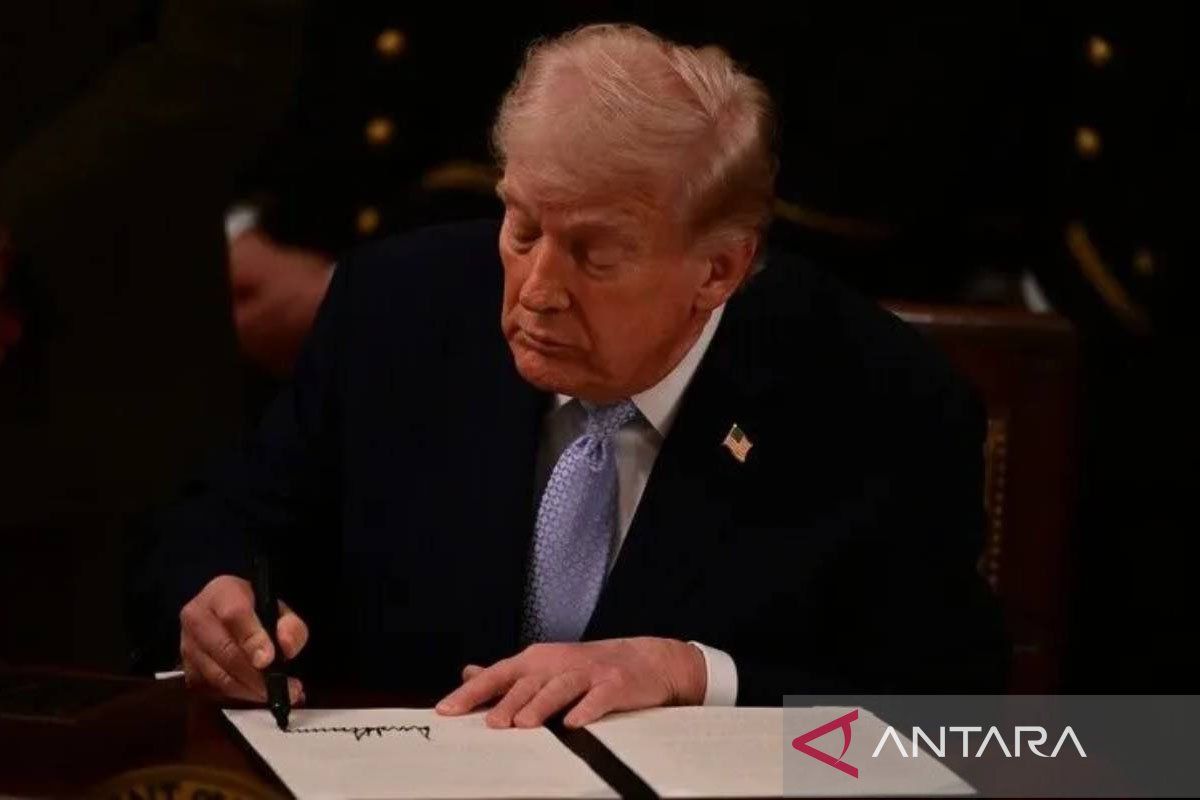
Washington DC (ANTARA) - US President Donald Trump signed an agreement regarding artificial intelligence (AI) safety on Tuesday (2mut 29/9) with several leading executives from the technology industry, sharing a copy of the deal on his Truth Social platform.
The agreement lists Trump alongside executives from some of the world’s largest technology companies as signatories. Those named include Google CEO Sundar Pichai, Anthropic CEO Dario Amodei, Meta CEO Mark Zuckerberg, OpenAI co-founder Greg Brockman, xAI CEO Elon Musk, and Nvidia CEO Jensen Huang.
The agreement outlines a mutual commitment to strengthen safety measures related to the development and deployment of advanced AI systems.
The White House agreement regarding ‘Super Intelligence’, referred to as the ‘Joint Commitment on Frontier Responsibilities’, encourages companies developing and deploying cutting-edge AI models to establish robust internal processes and controls. This move is designed to ensure systems operate as intended and to guarantee that potential issues can be identified and addressed promptly.
Under the agreement, every participating company must implement four layers of controls and audits covering both the development and deployment stages of models.
The first layer requires companies to establish internal controls to monitor model capabilities and alignment, including potential risks involving cyber security, biosecurity, and chemical threats. These controls are also designed to prevent models from performing hacking or accessing technical systems in unintended ways.
The second layer involves internal teams responsible for verifying that control, monitoring, and detection systems are functioning correctly, and ensuring that identified issues have been addressed.
In the third layer, companies will work with independent external auditors or evaluators to assess whether their control and monitoring systems are operating according to their intended purpose.
The fourth layer establishes the formation of an independent board committee to oversee the process, receive reports from both internal teams and external evaluators, and ensure that identified problems are resolved.
According to the agreement, these measures are intended to provide greater confidence to companies, customers, and the public that advanced AI systems are operating as they should. Under the agreement, participating companies will hold regular meetings to establish standards and best practices to enhance the safety of their systems.
The document also leaves the door open for future government regulation, stating that these measures could ultimately be incorporated into official laws or regulations.
Regardless of whether these requirements eventually become a legal obligation, the signatories stated that the implementation of controls and audits is vital for the safe development of technology and committed to adopting this framework.