
Trump and Pezeshkian Formally Sign US-Iran Memorandum
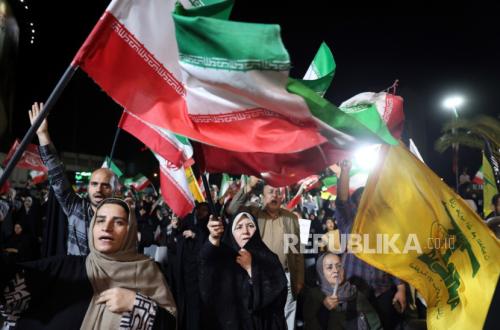
Iranian Foreign Ministry spokesman Esmaeil Baghaei has stated that a memorandum of understanding with the United States has been signed electronically. Speaking to state television station Press TV, Baghaei said the agreement has now been officially signed by both parties electronically. The deal was inked by US President Donald Trump and his counterpart Masoud Pezeshkian. The US President told reporters that he signed the MoU with Iran at the Palace of Versailles in the French capital, Paris. “It’s signed,” Trump said as he left Versailles. “I signed it at Versailles,” he added. “Just signed it.” The agreement contains 14 points, the main one stating a permanent cessation of the US-Iran war and all aggression in the region, including Lebanon. The lifting of the blockade of the Strait of Hormuz, economic compensation, and the removal of sanctions against Iran are also stipulated in the memorandum. Meanwhile, Iranian news agency IRNA published photographs of the Iranian president signing the interim agreement with the US, holding pages bearing his signature and Trump’s signature. “The text of the Memorandum of Understanding to end the war between the US and the Zionist regime against the Islamic Republic of Iran was signed in the early hours of Thursday, 18 June 1405, by the presidents of Iran and the United States,” the agency reported. The memo had previously been signed digitally on Sunday by Vice President JD Vance and Iran’s chief negotiator Mohammad Bagher Ghalibaf, and witnessed by Trump. According to Baghaei, the negotiating teams are still scheduled to convene in Geneva, but the digital execution of the document means no physical signing ceremony will be held in Switzerland. He said the US naval blockade of Iranian ports was initially scheduled to be lifted within 30 days in exchange for Iranian transit concessions in the Strait of Hormuz. However, following the Israeli government’s attack on Dahiyeh and Iran’s subsequent threats, negotiations quickly shifted towards accelerated US implementation, with Iranian ships already entering and leaving ports without hindrance. Iran’s specific reciprocal commitments under the agreement will formally commence after the document is signed. The Iranian Foreign Ministry spokesman stressed that securing a ceasefire and ending the war in Lebanon carries equal weight for Tehran as Iran’s domestic interests. Lebanon’s name appears three times in the first clause of the MoU, which explicitly mandates respect for Lebanon’s territorial integrity and national sovereignty. Iran deliberately focused solely on ending the war at this initial stage, setting aside the nuclear issue. The signed text outlines a strict 60-day timeframe, commencing immediately, to negotiate exclusively on the nuclear programme and sanctions removal, with an option to extend if necessary. Iran’s defence capabilities and missile programme remain off the negotiating table. Baghaei stated that his country’s missiles are only for firing, not for negotiation, and Tehran will not discuss its defence assets in any process or with any party. However, Tehran is also prepared to take action amid distrust of the US, said Iranian Parliament Speaker Mohammad Bagher Ghalibaf. “My pessimism and distrust of America is the greatest. Even if the agreement is final and approved by a Security Council resolution, it still cannot be trusted at all,” he said in comments carried by semi-official Iranian news agency Tasnim. “My distance from the field of diplomatic struggle is not far from the field of military struggle, and it is our hand that is on the trigger,” he added. When asked about his view on the 60-day negotiation countdown with Iran, US President Donald Trump said it was not a hard deadline. “As long as they keep their attitude, I don’t really care,” he said. “Otherwise, is it a threat that we will bomb? You could say anything, but it will most likely happen,” he stated.