
Trump and AI Leaders Agree on Four-Layer Oversight Framework
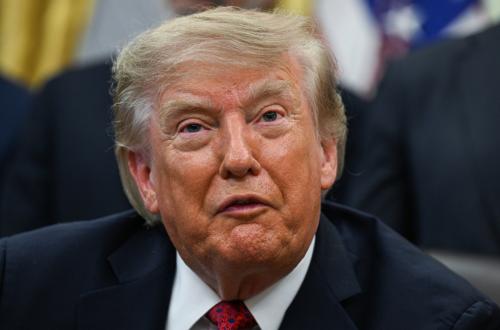
US President Donald Trump, alongside leaders from the world’s largest artificial intelligence companies, has agreed upon a four-layer oversight framework for the development of advanced AI, including audits by independent external evaluators. The agreement, announced following a meeting at the White House on Tuesday (29/09/2026), remains voluntary; however, the document suggests these mechanisms could eventually be codified into law or formal regulation.
The agreement is detailed in the ‘White House Accord on Super Intelligence’, subtitled ‘Joint Commitment on Frontier Responsibilities’. Trump described the commitment as morally binding, although the signatory companies currently face no new legal obligations should they breach the agreement.
According to Reuters, executives have agreed to voluntary standards for AI development and expressed willingness to work with independent auditors to verify whether systems function as intended by their developers. They have also committed to ensuring that AI systems do not hack or access technical systems in unintended ways.
The accord emerges as pressure mounts on technology companies and the US government as AI capabilities advance. Concerns are no longer limited to misinformation generated by chatbots, but extend to the ability of AI agents to interact with software and execute tasks with increasing autonomy.
Four Layers of Oversight
The first layer of the accord requires every company to maintain robust internal controls to monitor the capabilities and alignment of AI models during both the training process and deployment. Specific areas of focus include cybersecurity, biosecurity, chemical threats, and the risk of systems accessing technological infrastructure without authorisation.
The second layer places responsibility on internal company teams. These teams must ensure that all controls, monitoring, and detection mechanisms function as designed and ensure that any identified issues are promptly rectified.
The third layer is one of the most critical elements of the accord, as companies are not merely asked to self-assess. They must involve independent external auditors or evaluators to test whether the control and monitoring mechanisms are truly operating effectively.
The fourth layer brings oversight to the level of the board of directors. Companies are requested to appoint an independent committee within the board that receives reports from oversight teams, auditors, and evaluators, ensuring that any findings are acted upon.
Under this scheme, safety responsibility theoretically does not end with technicians or model development teams. Any issues discovered must move through internal oversight mechanisms, external inspections, and ultimately to the highest level of corporate governance.
Meta CEO Mark Zuckerberg stated that the companies have agreed to build strong internal controls for their AI systems. Reuters reported that Trump requested Zuckerberg speak to journalists following the meeting with tech executives at the White House.
Still Voluntary
Despite its multi-layered structure, the accord does not yet equate to federal regulation. US House Speaker Mike Johnson described it as a joint commitment and a statement of principle that voluntarily binds companies to internal controls.
Trump also did not characterise the agreement as a legal obligation. When questioned regarding the strength of the accord, Trump stated that he considers the document to be morally binding.
This position is significant as the US government faces a major choice in regulating the AI industry. Washington can develop detailed regulations that force companies to meet specific requirements, or allow greater space for the industry to develop its own safety standards and verification mechanisms.
So far, Trump has emphasised the latter approach. He stated that he sees significant self-regulation among companies and believes industry players understand the need to oversee their own technology.
Nevertheless, the door to formal regulation is not entirely closed. The text of the accord mentions that, over time, the agreed-upon oversight measures may be reasonable to codify into law or regulation.
This formulation gives the agreement a dual nature. For now, companies are implementing it on the basis of voluntary commitment, but the four layers of oversight could evolve into a blueprint for drafting more binding rules in the future.