
Trump Alters Routine Child Vaccination Rules, Health Risks Loom
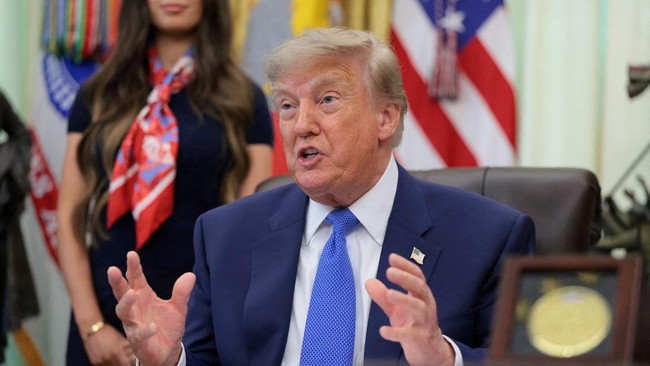
US President Donald Trump signed an executive order on Monday supporting a reduction in the number of recommended routine childhood vaccinations to 11 types. The move has sparked controversy as Trump once again erroneously linked immunisation to the risk of autism, a claim that has been debunked by decades of scientific research. The policy is a continuation of efforts by the US government under the direction of Health and Human Services Secretary Robert F. Kennedy Jr. In addition to cutting the number of vaccinations, the order requests the separation of the combined measles, mumps, and rubella (MMR) vaccine into three single doses administered at different medical visits. "This updated recommendation finally aligns the United States with other developed nations. More importantly, it aligns us with common sense and knowledge," Trump said during a briefing on Monday. Health experts have criticised the policy of splitting the MMR doses, arguing it increases the risk of children missing immunisations due to the need for more frequent doctor visits. Trump acknowledged that the new scheme would be inconvenient for parents but argued it was worthwhile to reduce autism rates, despite a lack of scientific evidence supporting the claim that combination vaccines trigger autism. "For MMR, we want separate visits, different times. The vaccine is broken into three separate single doses and given at different visits," Trump said. This is not the first time the administration has targeted the MMR and related MMRV vaccine, which adds varicella to prevent chickenpox. Last year, a key vaccine advisory panel for the Centers for Disease Control and Prevention also relaxed recommendations for the MMRV vaccine for children under 4 years old. However, health experts maintain that separating the doses increases the risk of missed schedules and immunisations because it requires more frequent doctor visits. Speaking to reporters after signing the order, Trump admitted that taking a child to the doctor multiple times could be difficult for some parents, but he argued it was worth it. "It is inconvenient, having to go five times, but I think it will have a big impact on autism," he said. The White House confirmed that the change in recommendations would not affect vaccination insurance coverage, even as the nation faces declining childhood immunisation rates and record measles infections in recent decades.