
Trump Accused of Insider Trading: How Strong is the Evidence?
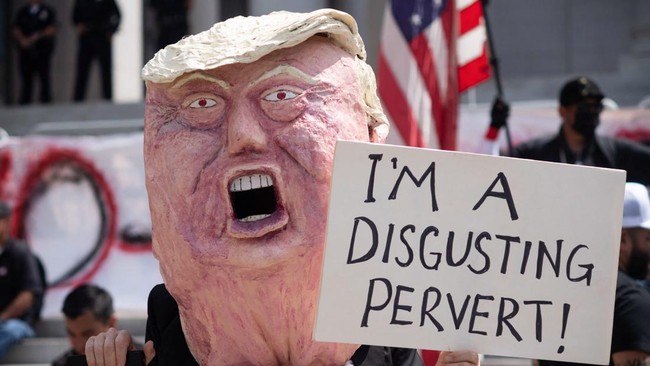
A string of anomalies in financial market transactions and prediction platforms has reignited questions about potential information leaks ahead of crucial decisions by US President Donald Trump. Based on exchange data compiled from various global financial reports, including analyses of futures market activity, there are recurring patterns where trading volumes surge sharply just minutes to hours before important policies are announced. Amid heightened geopolitical tensions, particularly the escalation of conflict in Iran that directly impacts global energy prices, this phenomenon has sparked discourse on transparency and the potential misuse of non-public information by certain parties. Suspicious Transaction Trails in Various Investment Instruments One of the most striking indications occurred in the commodities market ahead of late March. Data shows a massive influx of US$580 million into crude oil futures contracts in a very short time. This surge in transaction volume occurred without preceding economic data releases or any public news. Interestingly, about 16 minutes after this transaction anomaly, President Trump officially announced the postponement of strikes on several energy infrastructure sites in Iran on 26 March 2026. This specific transaction pattern is not limited to traditional commodities markets but also extends to prediction platforms. A day before the armed conflict with Iran began on 28 February 2026, analyses from various media noted a surge in activity from hundreds of anonymous accounts on the Polymarket platform that aggressively bet on the likelihood of a US military strike. A similar incident was recorded in early January 2026, when a speculator successfully multiplied their capital from US$32,000 to over US$400,000 by accurately predicting the capture of Nicolás Maduro in Venezuela, just hours before the official government announcement. In the previous year, the stock market also recorded an unusual surge in buy transactions moments before the government announced a 90-day delay on import tariff policies that were then pressuring the market. Connections Between Business Entities and the Inner Circle Beyond anonymous financial market activities, media publications have also spotlighted business manoeuvres involving the president’s family and closest associates. Attention has focused on a cryptocurrency project managed by the Trump family, which is reported to have generated billions of dollars in value. Some investors in the project are known to include international crypto figures with histories of settling fraud cases with US exchange authorities, as well as foreign parties currently lobbying in Washington on chip and AI regulations. The family’s business expansion also touches the defence sector, where the president’s son is reported to have investments in a drone technology company competing for Pentagon procurement contracts. Meanwhile, Jared Kushner, who also serves as an envoy on Iran issues, is known to be seeking large investment funds for his private equity firm from several Gulf region governments directly affected by the conflict. These dynamics intersect with records of presidential pardons granted to more than 70 donors and political allies previously entangled in white-collar financial crimes, including one individual who received clemency after their family donated US$3.5 million to a supporting political action committee. Restructuring of Legal Oversight Institutions Concerns over market integrity have grown stronger alongside structural overhauls in federal oversight agencies. Reports indicate that the current administration has drastically downsized the Public Integrity Section in the Department of Justice, a division established post-Watergate to handle corruption cases involving public officials. This division is reported to have seen its staff reduced from 36 attorneys to just two, and its authority to open new cases has been revoked. Similar steps are evident in enforcement policies against corporate entities. The government has recorded the cancellation of 159 federal enforcement actions against 166 companies, with more than 30 of those companies being entities that donated to inauguration events or related operations. On the other hand, reports from internal sources mention that a high-ranking enforcement official at the Securities and Exchange Commission (SEC) has recently resigned, allegedly due to obstacles from agency leadership in investigating cases intersecting with the administration’s circle. Nevertheless, the SEC spokesperson has denied these claims, stating that internal debates among staff are normal. Government Clarifications and Focus on New Task Force In response to these various reports, the White House has consistently dismissed all allegations related to conflicts of interest or abuse of authority. Government spokesperson Kush Desai emphasised that all federal employees are bound by strict ethics regulations prohibiting the use of confidential information for financial gain. He described narratives cornering the integrity of government officials without concrete evidence as baseless and irresponsible reporting. Presidential legal adviser David Warrington also provided assurances that the head of state has no involvement in business deals conflicting with his constitutional duties. White House officials added that financial contributions do not influence presidential pardon decisions. As a form of commitment to budget governance, the government highlighted their aggressive campaign to crack down on misuse of federal programme funds.