
Truck Overturns in Tomang, DPRD Member Kenneth Highlights Weak Heavy Vehicle Oversight
A trailer truck carrying iron overturned on the Tomang Flyover at KM 13.400, Grogol, West Jakarta, on Wednesday morning (24/6/2026). The incident caused part of the iron load to scatter and fall onto the arterial road below.
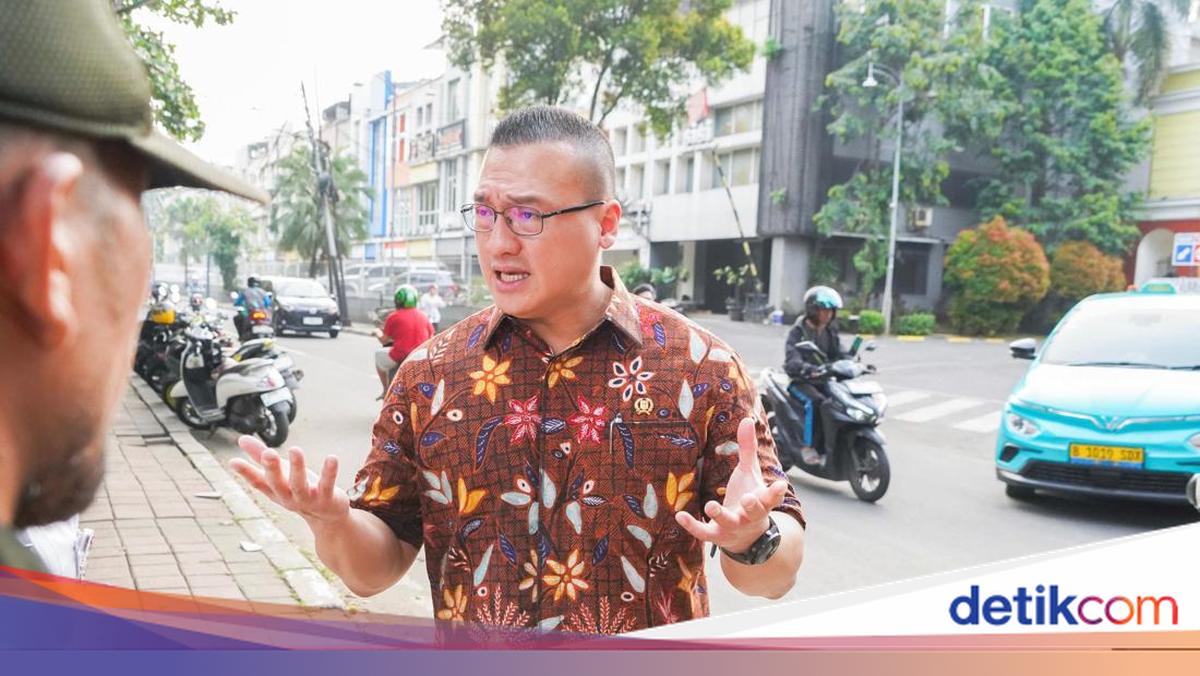
Responding to the event, Jakarta DPRD member Hardiyanto Kenneth assessed that it was evidence of persistently weak supervision of heavy transport vehicles operating in the capital. He stated that the incident not only caused severe traffic congestion but also endangered the safety of road users and could have resulted in fatalities.
“This incident not only caused severe traffic disruption, but also endangered the safety of road users and could have resulted in casualties. This must serve as a serious alarm for all relevant parties that supervision of heavy vehicle operations in the Jakarta area needs to be tightened seriously,” Kenneth said in a statement on Thursday (25/6/2026).
According to the politician, the issue of container trucks in Jakarta has yet to be properly resolved, despite the provincial government having imposed operational hour restrictions for heavy vehicles. “Although the Jakarta Provincial Government has issued Governor Regulation No. 89 of 2020 on Traffic Restrictions for Freight Vehicles, its implementation is often inconsistent. I assess that coordination between the Transportation Agency, the Police, and Port Operators is not yet optimal. The operating hours for trucks in Jakarta must be locked in with firm rules; if only warnings are given, they will be ignored,” he stressed.
He called on Jakarta Governor Pramono Anung to strictly enforce truck operating hours at night. This is intended to prevent road damage, reduce congestion and traffic disruption, and lessen negative environmental impacts. “Ideally, trucks should only be allowed to pass through Jakarta between 10 p.m. and 5 a.m. I question how a trailer with a heavy load was still able to travel on an arterial road that has been regulated with restrictions. The rules regarding operating hours and routes for freight vehicles were not created without reason, but to maintain public safety and prevent congestion and accidents in high-traffic areas,” he said.
The member of the DPRD’s Commission C asserted that if violations are found, law enforcement officers must impose strict sanctions on both the driver and the vehicle owner company without discrimination. Additionally, he requested that the Jakarta Provincial Government, the Police, and the Transportation Agency immediately conduct a comprehensive evaluation of the supervision system for heavy vehicles entering Jakarta.
“Do not let incidents like this keep recurring simply because of weak field supervision. Surveillance technology, ETLE cameras, vehicle weighing, and transport document checks must be optimised so that non-compliant vehicles can be immediately acted upon,” he emphasised.
Kenneth also urged a thorough investigation to uncover the exact cause of the accident, including the possibility of overloading, driver negligence, an unroadworthy vehicle condition, or violations of the designated route. “The investigation results must be conveyed transparently to the public, so that people know the real root of the problem,” he said.
Beyond stricter law enforcement, Kenneth believes the government needs to provide comprehensive and sustainable solutions to prevent similar incidents from recurring. One necessary step is to strengthen the digital surveillance system for freight vehicles through data integration between the Transportation Agency, the Police, toll road operators, and port operators.
“All heavy transport vehicles entering the Jakarta area must be registered in a GPS-based monitoring system, so that their movements, travel routes, and compliance with operating hours can be supervised in real time. Thus, vehicles that violate the rules can be immediately detected and acted upon without having to wait for an accident to occur,” explained the Chairman of IKAL PPRA Batch LXII.
Furthermore, Kenneth also pushed for the construction and optimisation of parking pockets or buffer zones in Jakarta’s buffer areas. These facilities could serve as waiting locations for trucks arriving early before the designated operating hours, thereby preventing a buildup of heavy vehicles on the capital’s main roads.
Kenneth also requested periodic inspections of freight vehicle conditions, particularly the braking system, tyre roadworthiness, and load securing standards. According to him, many accidents involving heavy trucks are triggered by technical factors that could actually be prevented through routine supervision and strict roadworthiness tests.
“Going forward, a combination of technological surveillance, consistent law enforcement, improved logistics infrastructure quality, and awareness from freight transport business operators is needed. If all parties work together, I am confident the number of accidents involving heavy vehicles can be significantly reduced,” he said.
He added that Jakarta, as the centre of national economic activity, requires a logistics distribution system that runs smoothly but does not sacrifice public safety. Therefore, a balance between the operational interests of freight transport and the safety of road users must be the government’s primary concern in formulating future transport policies. “The safety of citizens must be the top priority. Do not wait for fatalities to occur before carrying out a large-scale crackdown. Rule enforcement must be carried out consistently and sustainably so that Jakarta becomes a safe city for all,” he concluded.