
Tropical Chinese City Enjoys Success Thanks to Coffee Industry
Haikou (ANTARA) - In the heart of the Xinglong coffee culture park, the aroma of roasting coffee beans fills the air as barista Liang Dongru stands before his roasting machine, his eyes focused and his movements steady.
“The key is low heat and slow roasting,” he says. “In the process, we add butter, white sugar, and a pinch of salt, which makes the coffee flavour smoother, richer, and more delicate.”
Xinglong, known as the Xinglong Overseas Chinese Tourism Economic Zone, is located in Hainan, China’s southernmost island province.
Under the jurisdiction of Wanning City, this zone has been a settlement for generations of returning overseas Chinese and their families since the 1950s.
These returning residents brought back coffee plants along with roasting expertise, which has since driven coffee cultivation and processing in Xinglong.
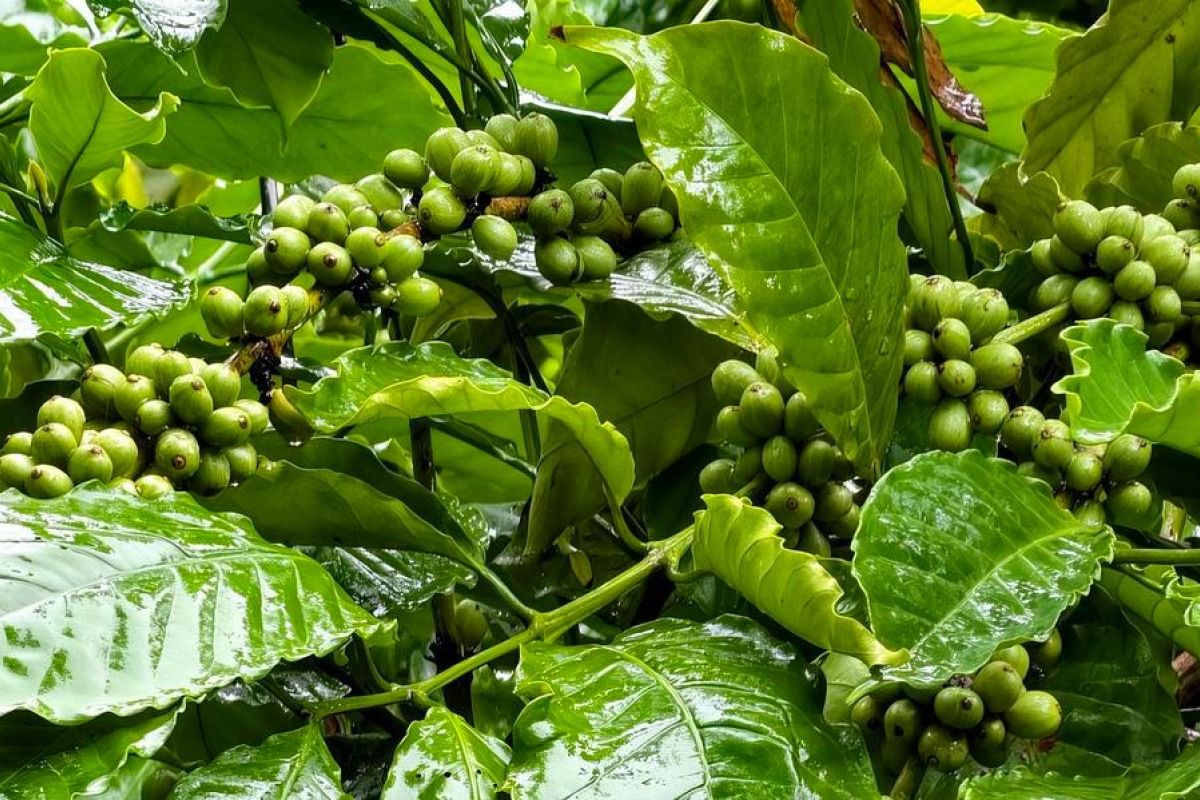
Made from locally grown Robusta beans and roasted with butter, sugar, and a pinch of salt, Xinglong coffee offers a classic flavour that is both strong and aromatic.
Coffee, a beverage that was uncommon for most Chinese people before the country opened up nearly five decades ago, has become increasingly popular since then, with Nestle, one of the world’s largest coffee companies, introducing instant coffee in the 1980s.
In the late 1990s and early 2000s, international coffee chains such as Starbucks and Costa Coffee entered the Chinese market, introducing a new wave of coffee culture.
The scale of the country’s coffee industry is projected to reach 354.9 billion yuan (1 yuan = Rp2,614) by 2025, an increase of 13.3 per cent year-on-year, with annual per capita consumption rising to 28.57 cups, according to several industry reports.
As a core region for Robusta coffee production in China, Wanning has built a comprehensive coffee industry chain in recent years, integrating cultivation, processing, e-commerce, local culture, and tourism.
Since 2021, Wanning has nurtured the “Xinglong Barista” programme, with more and more young people pursuing coffee making as a career. As of July this year, the city has trained 2,476 professionals for the coffee industry.
A large number of industry players from China’s Belt and Road Initiative partner countries have also visited the tropical city to learn techniques for seedling and cultivation of crops such as coffee, pepper, and cocoa.
Last December, an international coffee trading and operational centre was inaugurated in Xinglong, utilising the tariff exemption policies of the Hainan Free Trade Port.
“Xinglong coffee continues to attract attention from all over the world,” says Ye. “With more partners, we will advance international cooperation in coffee bean trade and coffee culture exchange.”
Source: jawawa.id (https://jawawa.id/newsitem/tropical-chinese-city-enjoys-success-thanks-to-coffee-industry-1789221627)
Originally published by Antara (Indonesian) (https://www.antaranews.com/berita/5738108/kota-tropis-di-tiongkok-nikmati-kesuksesan-berkat-industri-kopi), translated from Indonesian