
Trilogy of Civilisation for Pancasila
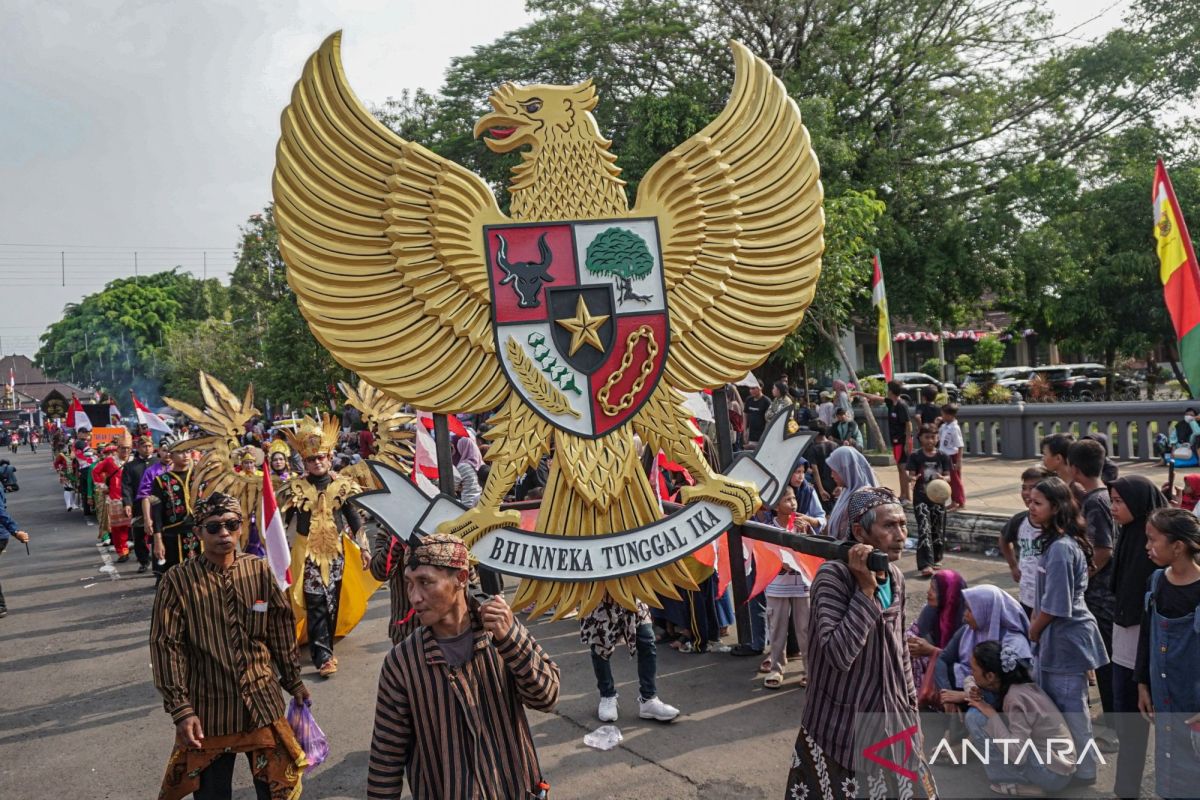
JAKARTA (ANTARA) – Today, June 1, 2026, Indonesia marks Pancasila Day, an opportune moment to reflect on the state ideology as the nation’s most valuable treasure. Without Pancasila, the country’s survival would be unimaginable given the potential for ethnic, religious, racial, and group diversity to fragment it. Pancasila has successfully served as a shared consensus among citizens of high heterogeneity to coexist peacefully. It acts as a ‘kalimatin sawwa’ (common ground) comprising five universal principles: belief in God, humanity, nationalism, people’s sovereignty, and justice—ethical values that transcend time and space. In essence, Pancasila functions as the binding force that keeps the diverse nation intact.
The question remains: having unified as the Unitary State of the Republic of Indonesia (NKRI), has the country achieved the civilisation it aspired to, particularly social justice as per Pancasila’s fifth principle? Muslim intellectual Dr Nurcholis Madjid, known as Cak Nur, recognised that building civilisation is humanity’s duty as stewards of the Earth. The task extends beyond nation-building and independence declaration to continuous civilisation development.
In the Muslim context, Cak Nur proposed a renowned trilogy of Islam, Indonesian identity, and modernity as the foundation for Muslims to contribute to civilisation in Pancasila-unified Indonesia. During his time, many Muslims were hesitant to accept Indonesian identity and modernity, viewing them as incompatible with Islam. Now, thanks to Cak Nur’s efforts, urban middle-class Muslims are increasingly confident that Islam and Indonesian identity need not conflict; instead, Islam must actively engage in modernity to advance civilisation.